30 Nov Antipasto Salad from the Folk School Cookbook
Today we’re sharing the perfect...
On behalf of the John C. Campbell Folk School, we are writing to share an update on campus operations as we monitor the forecast for upcoming inclement weather.
At this time, all classes scheduled for the Jan. 25 session remain running as planned.
However, we urge you to make safe travel and attendance decisions based on the conditions and emergency orders in your area. Note that a State of Emergency is in place in North Carolina, with areas along and north of I-40 under particular concern. I-26 through Asheville will also be of concern.
Please note that the following Monday activities are cancelled due to the weather forecast:
Morningsong with Mark Taylor at 7:54 a.m.
Monday Folk School Storytelling Series with Donald Davis at 4:45 p.m.
Concert with Rick Taylor & Bruce Threlkeld at 7 p.m.
By 3 p.m. today, we will provide an additional update directly to all students who are affected by any scheduling changes for classes for the week of Jan. 25.
Your comfort and safety, both on and off campus, are important to us. Thank you for your patience as we navigate this weather event.
Today we’re sharing the perfect...
This recipe turns humble pork...
Having grown up just 12 miles down the road from Brasstown, many of Tommye Scanlin’s earliest
Folk School memories date back to her youth. In the mid-1960s, she and her boyfriend would often catch a glimpse of campus on their way to the drive-in movie theater in Peachtree. Since those drive-in, drive by days, Tommye’s Folk School story has come full circle.
Tommye was officially introduced to Folk School classes by Bob Owens, a potter who also happened to be the head of the Art Department at North Georgia College where Tommye taught art and textiles. “I was learning about weaving at the time,” Tommye says, “trying very hard to figure it out on my own. In the summer of 1974, I had the chance to take a weaving class.” During her week as a student, she learned to read weaving drafts and added to her growing love of the craft. “With my newly gained knowledge, I doubled down on my weaving and within a year or so began to show and sell my woven works.”
Author Nanette Davidson meticulously collected,...
Weavers' Work Week is an annual tradition at the Folk School where skilled weavers are invited to come for a week and volunteer their time to do projects around campus and make improvements in the studio. Let's learn more about the week from Pam Howard, longtime Weaving Resident Artist.
[caption id="attachment_18687" align="alignright" width="246"]
Pam Howard at the loom[/caption]
CP: What is Weavers' Work Week, and how did it start?
PH: The idea for Weavers' Work Week started in 1992. A weaving teacher, Betty Hancock Smith and her weaving student, Dee Richard were talking about how hard it was sitting all week on the loom benches. Those two got to talking about what if weavers were invited to come to the school and weave fabric to make the cushions. They asked Jan Davidson, former director and Ruth Truett, former programs director. It was approved, and in the spring of 1993 the first Weavers' Work Week happened.
I was assisting Betty in her weaving class in 1992, and I was the first weaver that was asked to participate. I have been to every one since. From 1993 to 2000, Betty was in charge of organizing the yearly event. In 2000, I became the Resident Weaver and took it over organizing it. Things went on fairly smoothly till 2008 when I had health issues and inherited relatives I had to take care of. After the dust settled and things had calmed down in my life, I thought it was time to restart the tradition of WWW. So, on February 4, 2015 I sent a letter to the “powers that be” and got Weavers' Work Week back on the schedule.
When Janet Davis recently volunteered...
Do you have a basic understanding of your DSLR camera and want to learn more in-depth techniques for improving your photography? Check out The Photographic Tool Box on July 22–27, 2018 with instructor Stephanie Gross. Summertime at the Folk School provides an abundance of photographic material: pastoral landscapes, interesting folks, gardens, old buildings, barns, music, dance, craft studios. Stephanie has a BFA in Photography from the Rhode Island School of Design and has been making and thinking about photography for 25 years. Enjoy our interview!
CP: How did you get started in photography?
SG: I had an amazing photography teacher in high school who is an incredible photographer and was also a great teacher (not always the case). We're still friends and I occasionally shoot with him. I assisted him after I graduated high school, through college.
I was interested in both photography and ceramics. I chose RISD because I could do both. I could make pots, but they were a creative dead end for me. Photography was scary and I had to struggle to learn to make pictures, but it's been that struggle that's kept me interested for 30+ years.
CP: What is your favorite subject matter to shoot?
SG: Stories, specifically people with stories. I suppose that's anyone from the right point of view, but it's more the search for what makes someone or some place interesting that's my favorite.
Even in the most boring situations, I start to look at faces, at the light, playing with the background, composition, etc. It's like a game. You know something fascinating is going on, but how do you show it?
Corie Pressley has lived in...
Did you get a chance...
Challah created by students in Emily's class.[/caption]
[caption id="attachment_17763" align="aligncenter" width="630"]
(L-R) Emily's mom at the Biltmore, Emily in front our our outdoor wood fired oven, Emily's mom's quilts at Show & Tell.[/caption]
My recent trip to the Folk School was a little different than usual. For one thing, after ten years of teaching “The Science of Bread,” I shifted gears slightly and taught “Making Traditional Breads.” Thankfully, science still applies in traditional breads.
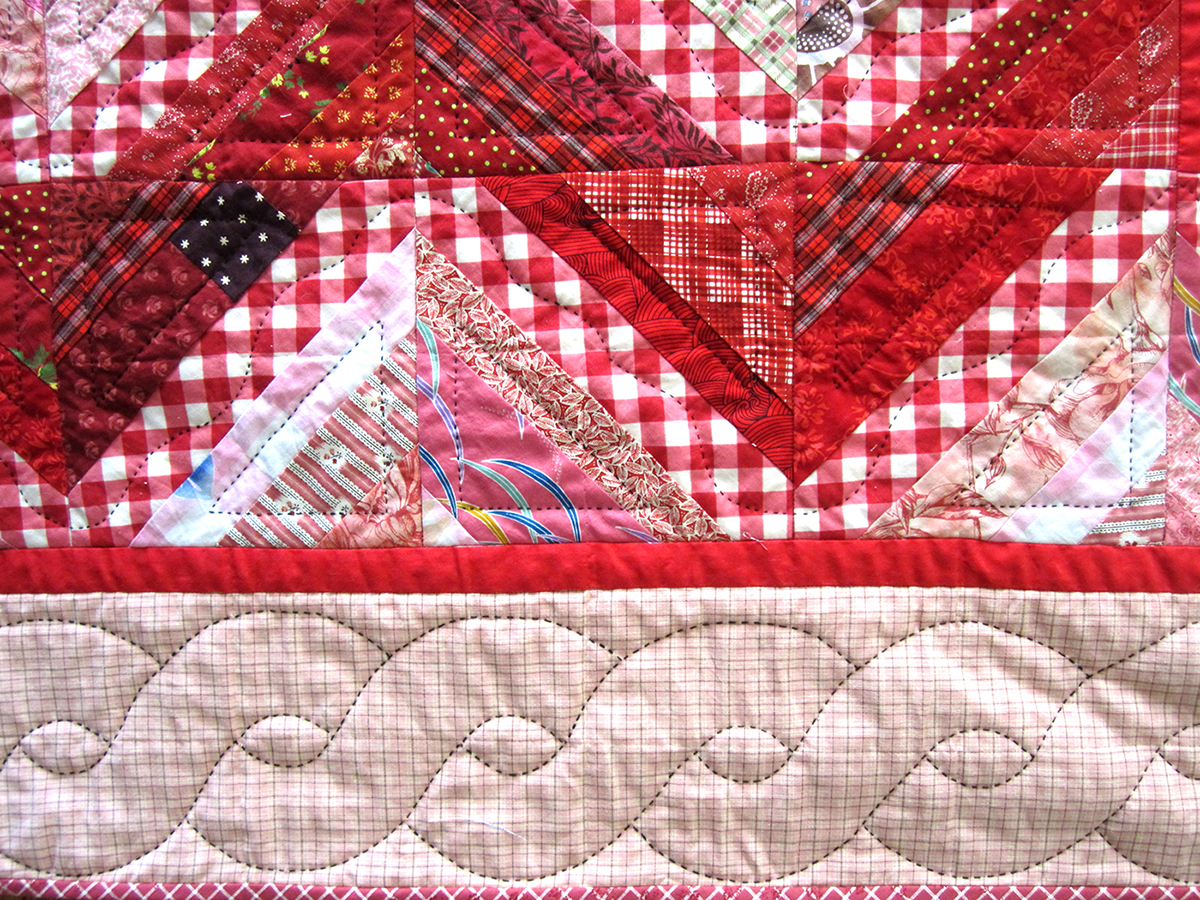
The other difference was that my mom accompanied me for the first time, to take a quilting class. While I was busy lighting the wood-fired oven, hunting down recipes, and mixing doughs to demonstrate with in class, Mom was putting in long hours at the studio, turning the bags of scrap fabric she’d brought into quilts. Three times each day we met for meals in the Folk School dining hall.