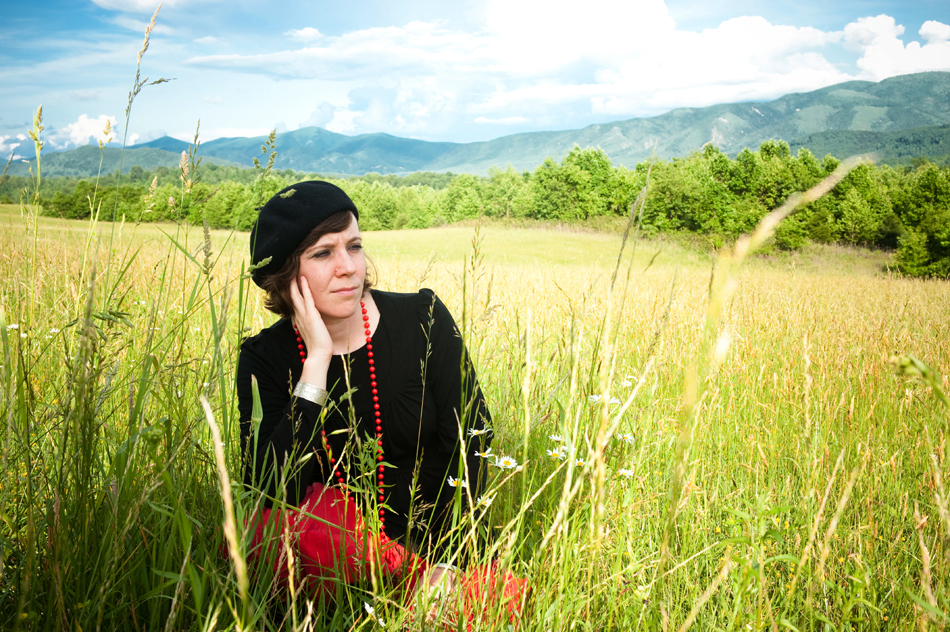
 Do you have a basic understanding of your DSLR camera and want to learn more in-depth techniques for improving your photography? Check out The Photographic Tool Box on July 22–27, 2018 with instructor Stephanie Gross. Summertime at the Folk School provides an abundance of photographic material: pastoral landscapes, interesting folks, gardens, old buildings, barns, music, dance, craft studios. Stephanie has a BFA in Photography from the Rhode Island School of Design and has been making and thinking about photography for 25 years. Enjoy our interview!
 CP: How did you get started in photography?
SG:
CP: How did you get started in photography?
SG: I had an
amazing photography teacher in high school who is an incredible photographer and was
also a great teacher (not always the case). We're still friends and I occasionally shoot with him. I assisted him after I graduated high school, through college.
I was interested in both photography and ceramics. I chose RISD because I could do both. I could make pots, but they were a creative dead end for me. Photography was scary and I had to struggle to learn to make pictures, but it's been that struggle that's kept me interested for 30+ years.
CP: What is your favorite subject matter to shoot?
SG: Stories, specifically people with stories. I suppose that's anyone from the right point of view, but it's more the search for what makes someone or some place interesting that's my favorite.
Even in the most boring situations, I start to look at faces, at the light, playing with the background, composition, etc. It's like a game. You
know something fascinating is going on, but how do you
show it?




 Photo by Nicole McConville[/caption]
CP: When did you first come to the Folk School? When were you a host?
JK: I grew up with relatives in Penland and would visit the school for community days, but couldn’t align my work schedule in a way that would allow me to take a class there when I was a young full-time teacher. Someone suggested I take a look at the John C. Campbell Folk School and it was absolute love at first sight. The week-long classes, offered year-round, were a dream come true.
I saved my pennies and booked a clay class over my spring break in 2005. I was teaching in a Haywood County public school and this class just lined up with my vacation days. Ted Cooley was our class assistant and two young women I knew from Asheville were the Hosts. I immediately saw the potential for myself there. I took a few more classes as a student, and then, in 2009, I served six months as Host. I was the last six-month host (the school went to a four-month system after that) but I wished it was still a 2-year position, as it was in Ellie Wilson’s time. I would have signed up instantly for that!
Photo by Nicole McConville[/caption]
CP: When did you first come to the Folk School? When were you a host?
JK: I grew up with relatives in Penland and would visit the school for community days, but couldn’t align my work schedule in a way that would allow me to take a class there when I was a young full-time teacher. Someone suggested I take a look at the John C. Campbell Folk School and it was absolute love at first sight. The week-long classes, offered year-round, were a dream come true.
I saved my pennies and booked a clay class over my spring break in 2005. I was teaching in a Haywood County public school and this class just lined up with my vacation days. Ted Cooley was our class assistant and two young women I knew from Asheville were the Hosts. I immediately saw the potential for myself there. I took a few more classes as a student, and then, in 2009, I served six months as Host. I was the last six-month host (the school went to a four-month system after that) but I wished it was still a 2-year position, as it was in Ellie Wilson’s time. I would have signed up instantly for that!