31 Mar Flourishing at the Folk School: Corie Pressley
Corie Pressley has lived in...



Corie Pressley has lived in...
...
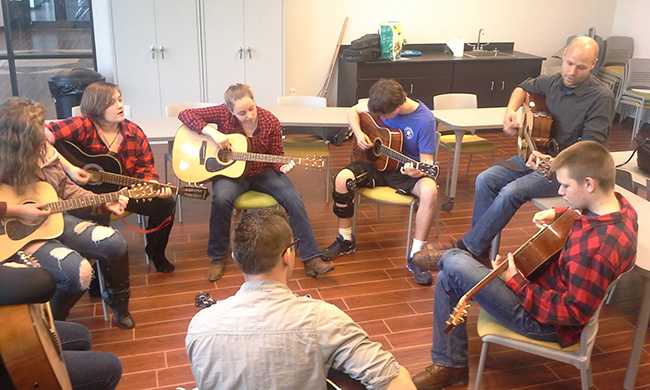 Johnny Scroggs leads a guitar lesson[/caption]
...
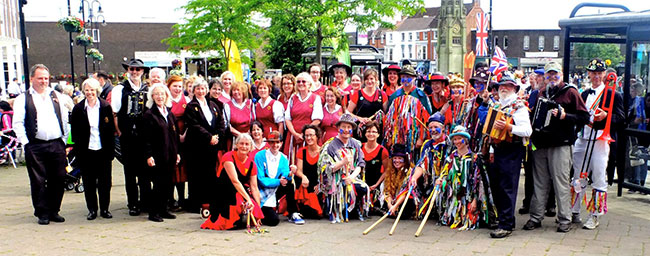 The Brasstown Morris Teams in England. (Carl and his red trombone are on the far right.)[/caption]
There are all sorts of traditions that are alive and well at the Folk School. The Brasstown Fire Department always brings the firetruck to spray down all the children during Little/Middle Folk School, we always dance the Salty Dog Rag during the evening break at Saturday night dances, and the Brasstown Brigade always helps us bring in the New Year with their black powder muskets. One of my favorite Folk School traditions is the Brasstown Follies, the talent show that happens each Winter Dance Week the night before New Years Eve. For as long as I've been coming to Winter Dance Week, the Follies have been organized and MC'ed by Carl Dreher - dancer, musician, magician, and all around Brasstown enthusiast. So enthusiastic, in fact, that he and his wife Charlotte Bristow recently retired and decided to move here from Texas. Let's meet Carl...
[caption id="attachment_12107" align="alignright" width="253"]
The Brasstown Morris Teams in England. (Carl and his red trombone are on the far right.)[/caption]
There are all sorts of traditions that are alive and well at the Folk School. The Brasstown Fire Department always brings the firetruck to spray down all the children during Little/Middle Folk School, we always dance the Salty Dog Rag during the evening break at Saturday night dances, and the Brasstown Brigade always helps us bring in the New Year with their black powder muskets. One of my favorite Folk School traditions is the Brasstown Follies, the talent show that happens each Winter Dance Week the night before New Years Eve. For as long as I've been coming to Winter Dance Week, the Follies have been organized and MC'ed by Carl Dreher - dancer, musician, magician, and all around Brasstown enthusiast. So enthusiastic, in fact, that he and his wife Charlotte Bristow recently retired and decided to move here from Texas. Let's meet Carl...
[caption id="attachment_12107" align="alignright" width="253"]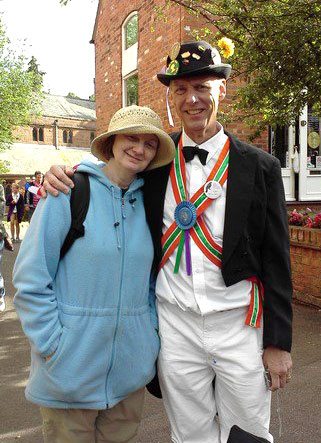 Carl & Charlotte at Kenilworth Castle.
 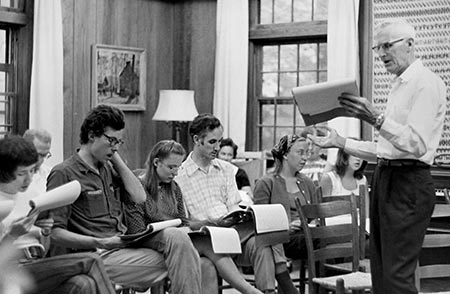 Shape Note Singers with Richard Moss in the Keith House at the Folk School, 1978[/caption]
For anyone who loves to belt it out in the shower, was moved by the church scene in Cold Mountain with everyone belting it out together, or is simply a fan of “belting it out” in life, Shape Note singing is for you!
Every time I have participated in a sing, I have been overcome with the sort of pure emotion that stems from being truly “in the moment” without even realizing it. It is incredibly refreshing and I whole-heartedly recommend it as a great way to spend a summer-time Saturday.
My top 10 favorite things about Shape Note singing (in no particular order):
#1. You don’t have to know how to read music or find harmonies. You can just relax and follow the singing leaders and shapes that resemble each note on the page.
#2. Sitting next to a seasoned singer helps you sound like a seasoned singer (It’s the same theory as a lead biker “breaking the wind” for the riders behind them).
#3. The more raw, gutsy and untrained your way of singing, the better it sounds.
#4. You are not alone! This is true togetherness through song. It is basically a room full of 4 part harmonies happening simultaneously. A perfect opportunity to melt into the crowd.
#5. The harmonies are so different from what you typically hear. They sound so old and heart wrenching… SO beautiful.
#6. Singing increases oxygen to the brain, releases endorphins and reduces stress. All good things, right?
#7. It is a different way to meet folks from our region. At the Folk School sing North Carolina, South Carolina, Georgia, Tennessee and even Alabama are often represented.
#8. It is a safe space for people of all different beliefs and is simply intended as a mode to celebrate joyful living.
#9. The Saturday sing doesn’t drain your go-out-and-have-fun budget. It’s free!
…and last, but not least
Shape Note Singers with Richard Moss in the Keith House at the Folk School, 1978[/caption]
For anyone who loves to belt it out in the shower, was moved by the church scene in Cold Mountain with everyone belting it out together, or is simply a fan of “belting it out” in life, Shape Note singing is for you!
Every time I have participated in a sing, I have been overcome with the sort of pure emotion that stems from being truly “in the moment” without even realizing it. It is incredibly refreshing and I whole-heartedly recommend it as a great way to spend a summer-time Saturday.
My top 10 favorite things about Shape Note singing (in no particular order):
#1. You don’t have to know how to read music or find harmonies. You can just relax and follow the singing leaders and shapes that resemble each note on the page.
#2. Sitting next to a seasoned singer helps you sound like a seasoned singer (It’s the same theory as a lead biker “breaking the wind” for the riders behind them).
#3. The more raw, gutsy and untrained your way of singing, the better it sounds.
#4. You are not alone! This is true togetherness through song. It is basically a room full of 4 part harmonies happening simultaneously. A perfect opportunity to melt into the crowd.
#5. The harmonies are so different from what you typically hear. They sound so old and heart wrenching… SO beautiful.
#6. Singing increases oxygen to the brain, releases endorphins and reduces stress. All good things, right?
#7. It is a different way to meet folks from our region. At the Folk School sing North Carolina, South Carolina, Georgia, Tennessee and even Alabama are often represented.
#8. It is a safe space for people of all different beliefs and is simply intended as a mode to celebrate joyful living.
#9. The Saturday sing doesn’t drain your go-out-and-have-fun budget. It’s free!
…and last, but not least
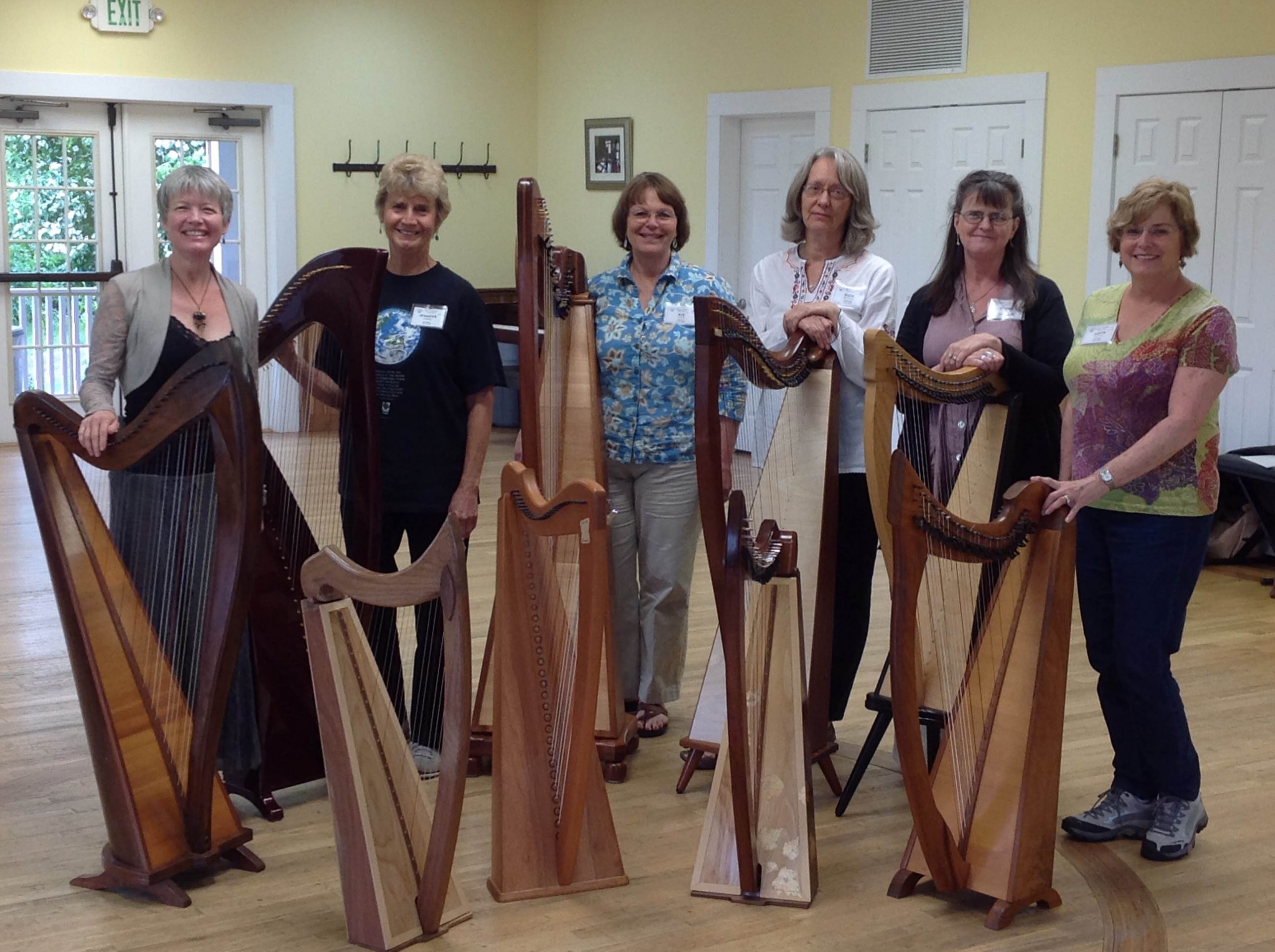
 Folk Harp Class with instructor Lorinda Jones[/caption]
The four f's of why I continue to teach at John C Campbell Folk School.
I can teach music lessons on a weekly basis, twenty minutes from my house, so why would I drive 6.5 hours, sleep in a different bed, and not have continual access to internet for a week?! Because when I pull in the drive to the Keith House Community Room, I get the feeling one gets when they have returned home after a long absence. When I open the door in the mornings to the music studio and see the light streaming through the doors, highlighting the wood of the instruments, and I look out at the beautiful view of the mountains, it is like nothing else I can describe. And after just a couple of days with my students, it is like being reunited with family, even though we may have only just met on Sunday.
This year was no different. Well, it is always different, but I experienced those same feelings of being home, being united, and being inspired.
Folk Harp Class with instructor Lorinda Jones[/caption]
The four f's of why I continue to teach at John C Campbell Folk School.
I can teach music lessons on a weekly basis, twenty minutes from my house, so why would I drive 6.5 hours, sleep in a different bed, and not have continual access to internet for a week?! Because when I pull in the drive to the Keith House Community Room, I get the feeling one gets when they have returned home after a long absence. When I open the door in the mornings to the music studio and see the light streaming through the doors, highlighting the wood of the instruments, and I look out at the beautiful view of the mountains, it is like nothing else I can describe. And after just a couple of days with my students, it is like being reunited with family, even though we may have only just met on Sunday.
This year was no different. Well, it is always different, but I experienced those same feelings of being home, being united, and being inspired.
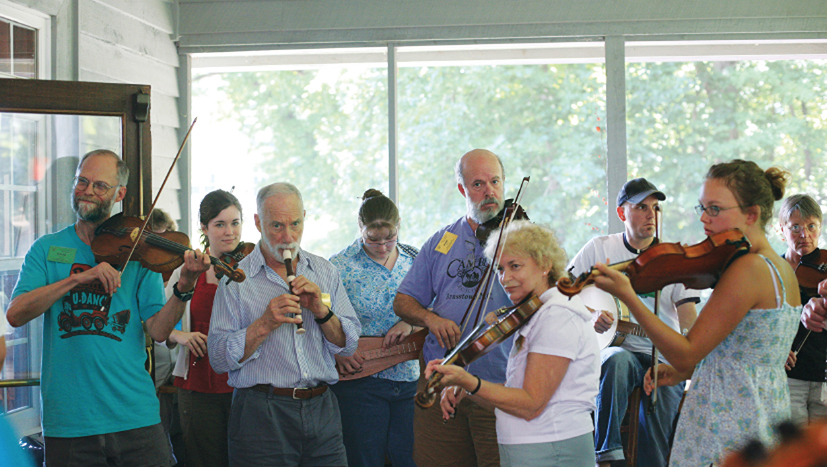 Dance Musicians Week students serenade folks as they enter the Dining Hall for lunch.[/caption]
[caption id="attachment_10346" align="alignright" width="256"]
Dance Musicians Week students serenade folks as they enter the Dining Hall for lunch.[/caption]
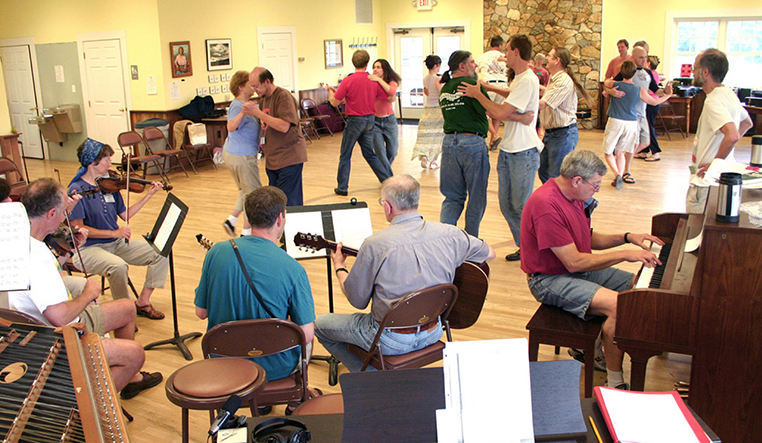
[caption id="attachment_10346" align="alignright" width="256"]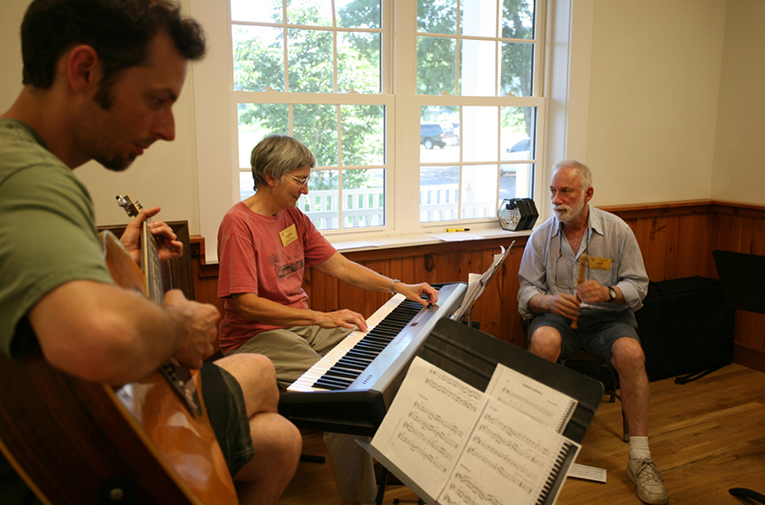 Student learn to play together as a dance band.[/caption]
In 2001, I received a message from Bob Dalsemer asking if I would join the instructor team for Dance Musicians Week at the John C. Campbell Folk School. Lifelong mentor, fiddler, caller and instructor extraordinaire David Kaynor had thrown my name out to Bob, the music and dance coordinator at the school at the time. At that point I was living in Western Massachusetts playing with David and the Greenfield Dance Band and had been devoting much of my time to being a touring singer songwriter. I had been in the contra dance scene picking tunes for about a decade. My musical influences were a woven patchwork of the folks that had surrounded me growing up in New York—Jay Unger, Lyn Hardy, Molly Mason, Sonny Ochs, Pete Seeger. Being born into a family of activists and labor organizers, community was most important and music was (and is) the vehicle and the glue that tied it all together. We were raised to believe that music and dance for music and dance’s sake is not enough. Community first.
[caption id="attachment_10347" align="alignleft" width="195"]
Student learn to play together as a dance band.[/caption]
In 2001, I received a message from Bob Dalsemer asking if I would join the instructor team for Dance Musicians Week at the John C. Campbell Folk School. Lifelong mentor, fiddler, caller and instructor extraordinaire David Kaynor had thrown my name out to Bob, the music and dance coordinator at the school at the time. At that point I was living in Western Massachusetts playing with David and the Greenfield Dance Band and had been devoting much of my time to being a touring singer songwriter. I had been in the contra dance scene picking tunes for about a decade. My musical influences were a woven patchwork of the folks that had surrounded me growing up in New York—Jay Unger, Lyn Hardy, Molly Mason, Sonny Ochs, Pete Seeger. Being born into a family of activists and labor organizers, community was most important and music was (and is) the vehicle and the glue that tied it all together. We were raised to believe that music and dance for music and dance’s sake is not enough. Community first.
[caption id="attachment_10347" align="alignleft" width="195"]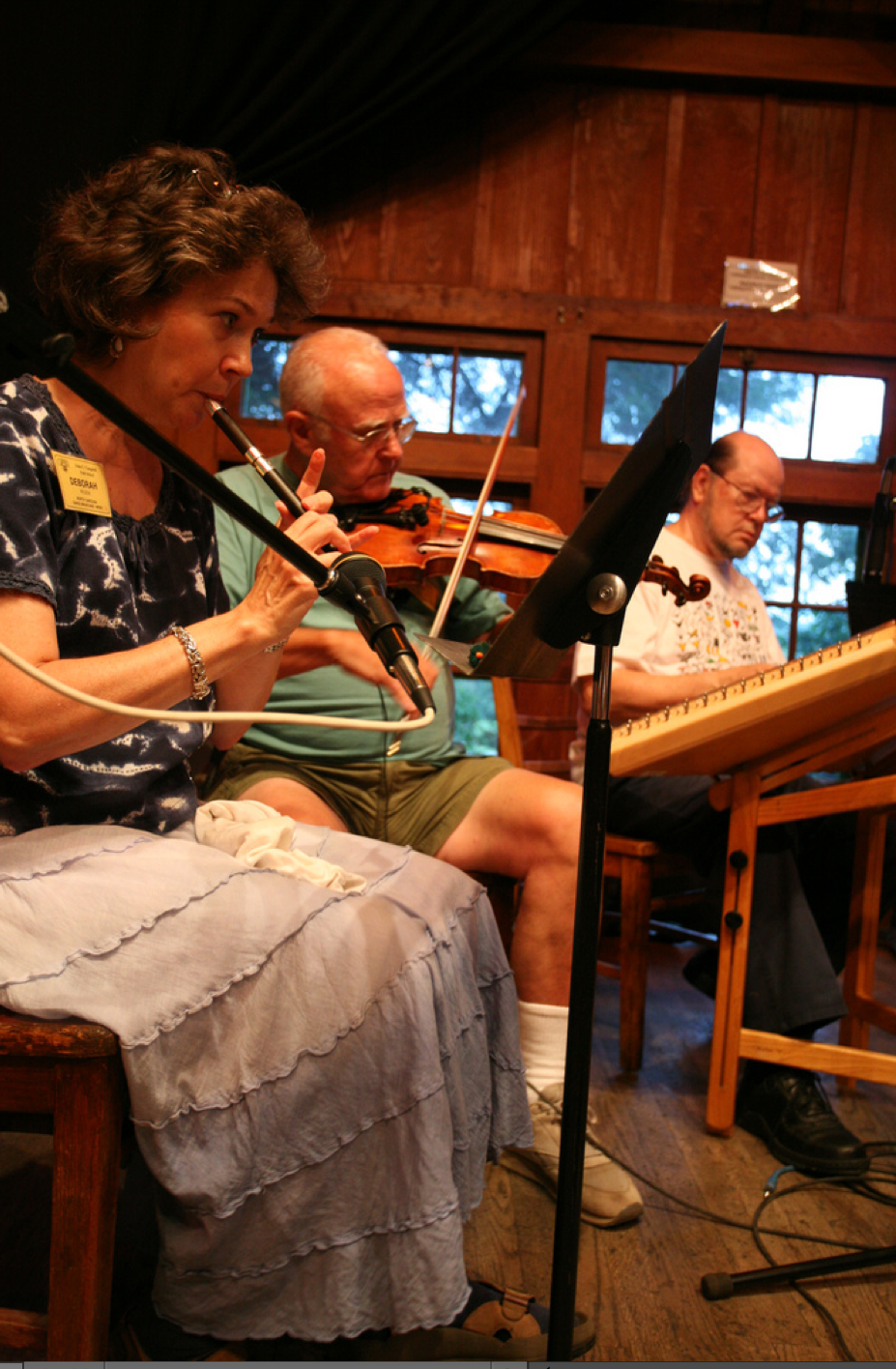 A band of DMW students takes the stage for one of the nightly contra dances.[/caption]
“Sing behind the plow!” is one of the great mottos of the John C. Campbell Folk School. Upon first look into the Folk School it seemed to be a kind of Brigadoon, a place stuck in time. Of course, I mean that in the best way. At that point in my life I was lamenting the waning of “community” in “community dance” and was excited to see a place nestled in the far west mountains of North Carolina, founded in the 1920s by the grandmother of the twentieth-century folk music revival, Olive Dame Campbell. Mrs. Campbell based the philosophy of the Folk School on the Danish tradition of folkenhojskolen which aims to foster culture and tradition through noncompetitive adult education—metalwork, quilting, woodwork, photography, cooking—happening alongside a rich tradition of music and dance, with folks from the surrounding Brasstown community invited to weekly concerts and dances and given special admittance into classes. I heard a student once comment “This place is like a kind of Whoville!” referencing the idealistic village from How the Grinch Stole Christmas. This is exemplified best by the very fact that each dance ends with a short goodnight song, sung with hands joined in a circle. The facilities are surrounded by hills, rivers, lush gardens, outdoor folky sculptures and paths through the woods. Best of all, the dancers are not contra “dancers”—they are mostly just folks from the community. Their gauge of a great experience is more based on who they got to see that night, not how slick the floor was or what tempo the band had played. I had found my place, or maybe the place found me!
A band of DMW students takes the stage for one of the nightly contra dances.[/caption]
“Sing behind the plow!” is one of the great mottos of the John C. Campbell Folk School. Upon first look into the Folk School it seemed to be a kind of Brigadoon, a place stuck in time. Of course, I mean that in the best way. At that point in my life I was lamenting the waning of “community” in “community dance” and was excited to see a place nestled in the far west mountains of North Carolina, founded in the 1920s by the grandmother of the twentieth-century folk music revival, Olive Dame Campbell. Mrs. Campbell based the philosophy of the Folk School on the Danish tradition of folkenhojskolen which aims to foster culture and tradition through noncompetitive adult education—metalwork, quilting, woodwork, photography, cooking—happening alongside a rich tradition of music and dance, with folks from the surrounding Brasstown community invited to weekly concerts and dances and given special admittance into classes. I heard a student once comment “This place is like a kind of Whoville!” referencing the idealistic village from How the Grinch Stole Christmas. This is exemplified best by the very fact that each dance ends with a short goodnight song, sung with hands joined in a circle. The facilities are surrounded by hills, rivers, lush gardens, outdoor folky sculptures and paths through the woods. Best of all, the dancers are not contra “dancers”—they are mostly just folks from the community. Their gauge of a great experience is more based on who they got to see that night, not how slick the floor was or what tempo the band had played. I had found my place, or maybe the place found me!
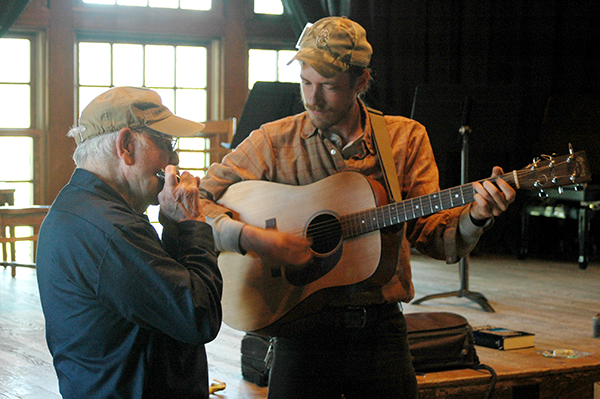 Cory and fellow Tinsmithing student play music in the Community Room after Show and Tell[/caption]
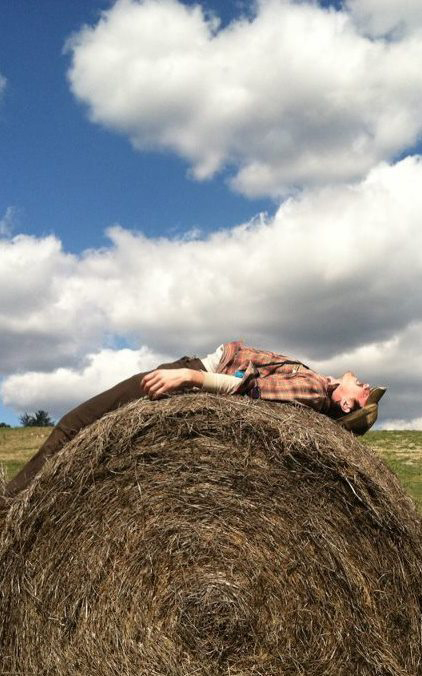 Laying on the hay in the Folk School field[/caption]
CP: When were you a Work/Study?
CS: March 14 – May 15, 2010. I remember the date clearly because I recall being mesmerized by the St. Patrick’s Day Party at the Murphy L & N Train Depot. Dale’s imitation of a leprechaun trapped in a brown paper bag - I thought that was brilliant!
CP: What have you been up to since your W/S session?
CS:I am currently a student at Berea College. I have been there for three years pursuing my undergraduate degree. I’ve also done a bit of working and traveling. I went to Ireland and Japan with the Berea Bluegrass Band. For a while before I went to Berea, I was working with Meredith Dahle (former host) at Sugarboo Farms in Blairsville. That was great because I could still be involved at the Folk School.
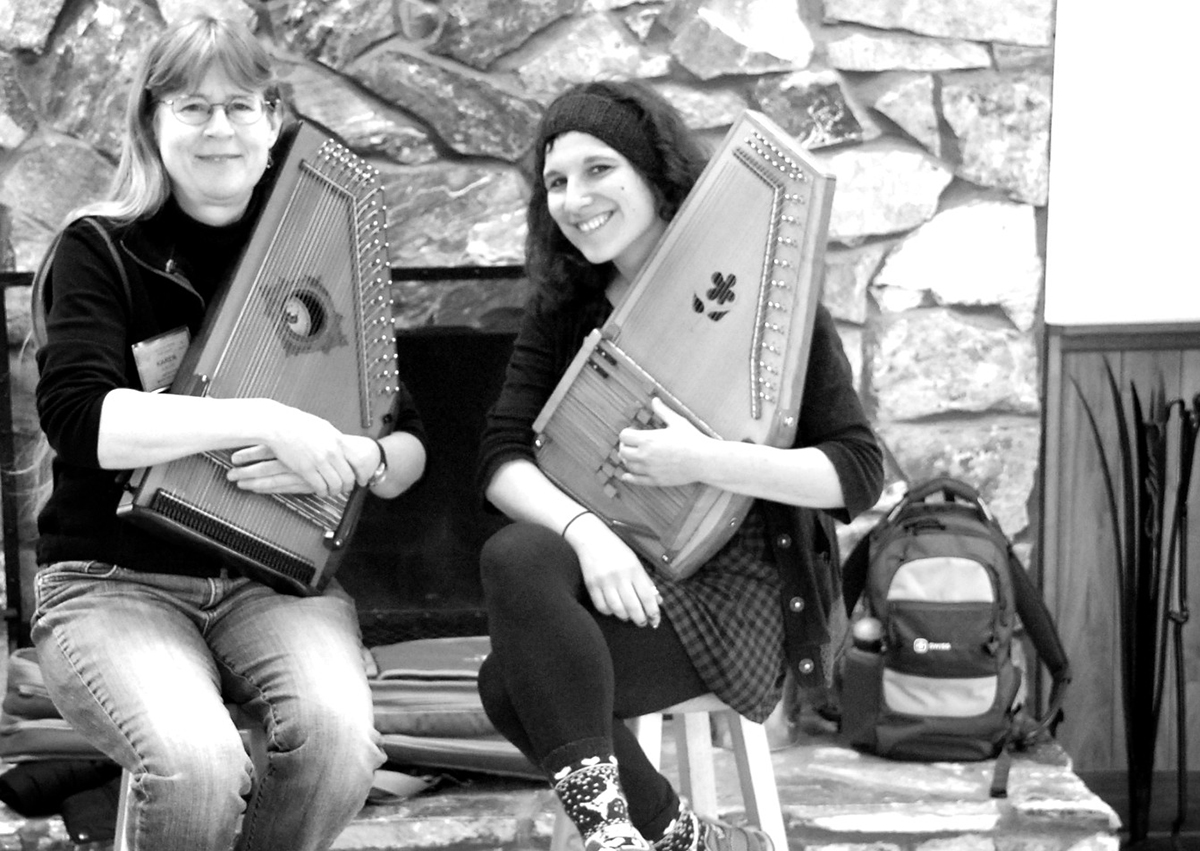 Karen Mueller & Leah Dolgoy in front of the hearth in the Music Studio, Davidson Hall[/caption]
LD: How did you get started playing the autoharp and the dulcimer?
KM: I have played both instruments since high school. I started because there was a bluegrass festival that I discovered in my hometown of Winfield, Kansas. I wasn’t raised with bluegrass music. I knew folk, rock, pop, and classical music, but the more I was around bluegrass and old time, the more I liked it. I saw people playing these instruments really well, doing things I didn’t know you could, which piqued my curiosity. My dad and I built my first dulcimer and I taught myself to play both instruments from recordings and just by watching people whenever I could. [Karen also plays guitar, mandolin and ukulele.]
[caption id="attachment_9814" align="alignright" width="228"]
Karen Mueller & Leah Dolgoy in front of the hearth in the Music Studio, Davidson Hall[/caption]
LD: How did you get started playing the autoharp and the dulcimer?
KM: I have played both instruments since high school. I started because there was a bluegrass festival that I discovered in my hometown of Winfield, Kansas. I wasn’t raised with bluegrass music. I knew folk, rock, pop, and classical music, but the more I was around bluegrass and old time, the more I liked it. I saw people playing these instruments really well, doing things I didn’t know you could, which piqued my curiosity. My dad and I built my first dulcimer and I taught myself to play both instruments from recordings and just by watching people whenever I could. [Karen also plays guitar, mandolin and ukulele.]
[caption id="attachment_9814" align="alignright" width="228"]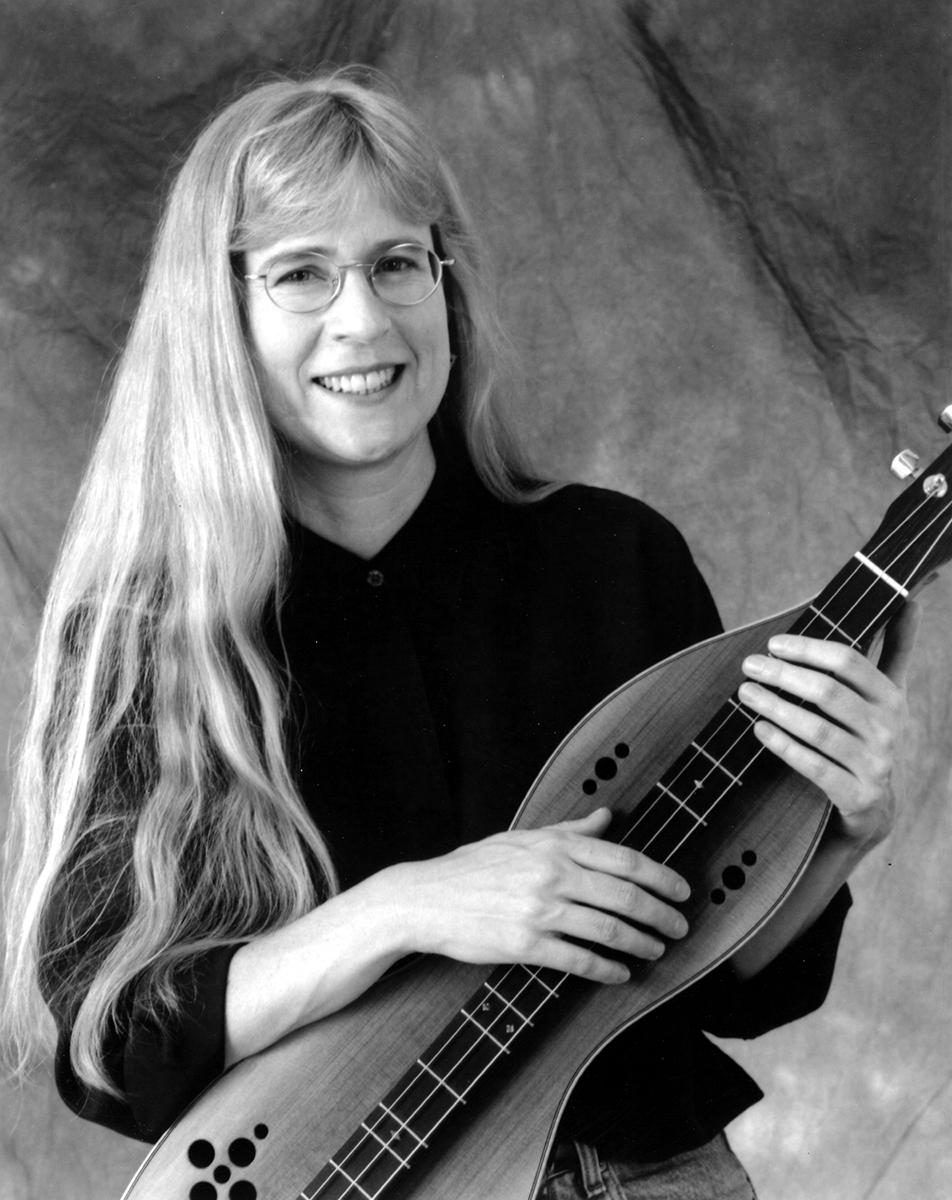 Karen and her dulcimer[/caption]
LD: When you were a kid, what did you want to be when you grew up?
(laughs) I had no idea! I was really into art. I was thinking about visual arts, but I did well academically too. I didn’t see myself being a professional musician. I loved music more than anything, but I didn’t want to pursue the classical arena. I had really intense classical piano studies until I was about 15 and then I was ready to take a break. I picked up the classical guitar just as intensely. Once I picked up the strings, I really felt more in touch with that than with the piano.
To pursue music at college would have required I go to the conservatory and take the classical route and I was just done with that. I didn’t see a career as a folk musician being a viable option. That career just had to gradually develop over time. When I was in college at the University of Kansas I tried to meet other musicians in the community even though I was studying all the time. I met some people that I played with regularly and we formed a band. When I graduated, I thought I would take that proverbial year off and decide whether to pursue grad school and in what discipline (I was in Art History and English, with a minor in Fine Arts and had done journalism too).
So I took a year off and got a job with a jewelry maker doing really high-end gold and silver smithing and still played pretty seriously with my band from college. I also got a Celtic band going. Both bands rehearsed twice a week, and gigged on the weekends, so I learned the craft of being in a working band: the playing as well as the administrative end of it. Meanwhile I still had the security of a full time job. I was earning more with the band than I was with the full time job so I just kept going with that.
When I moved to Minneapolis, I hooked up with a music school and music store to give lessons and still did temping and office work while I was building up my student base. I started touring more as a solo artist, was quickly playing in 4 bands, and then gradually I realized that I had enough students that I didn’t have to do the other stuff. I had no illusions that it was going to be easy or that it was going to happen because I said it was going to happen. It really was a day-by-day thing. I get a lot of calls now inviting me to events, so I don’t have to do the same kind of outreach anymore. And your network of contacts keeps spreading so you get more ideas of where and how to set up things over time.
LD: If you could collaborate with a musician living or dead, who would it be?
I’ve covered songs by Sting, and now he is playing the lute too. That would be a trip!
I would add Maybelle Carter, Eliza Gilkyson, and the Swedish band Väsen to that list too.
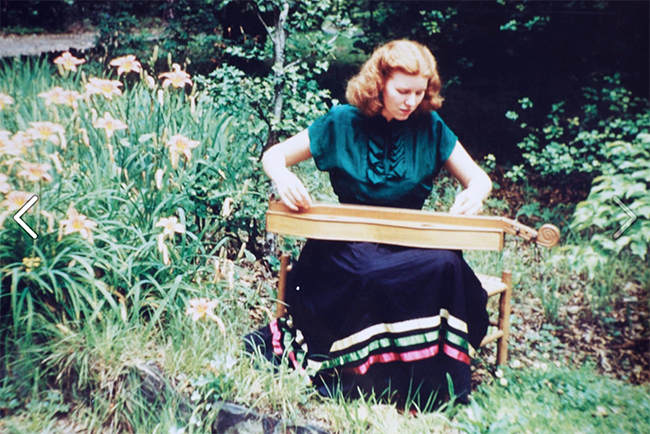
Karen and her dulcimer[/caption]
LD: When you were a kid, what did you want to be when you grew up?
(laughs) I had no idea! I was really into art. I was thinking about visual arts, but I did well academically too. I didn’t see myself being a professional musician. I loved music more than anything, but I didn’t want to pursue the classical arena. I had really intense classical piano studies until I was about 15 and then I was ready to take a break. I picked up the classical guitar just as intensely. Once I picked up the strings, I really felt more in touch with that than with the piano.
To pursue music at college would have required I go to the conservatory and take the classical route and I was just done with that. I didn’t see a career as a folk musician being a viable option. That career just had to gradually develop over time. When I was in college at the University of Kansas I tried to meet other musicians in the community even though I was studying all the time. I met some people that I played with regularly and we formed a band. When I graduated, I thought I would take that proverbial year off and decide whether to pursue grad school and in what discipline (I was in Art History and English, with a minor in Fine Arts and had done journalism too).
So I took a year off and got a job with a jewelry maker doing really high-end gold and silver smithing and still played pretty seriously with my band from college. I also got a Celtic band going. Both bands rehearsed twice a week, and gigged on the weekends, so I learned the craft of being in a working band: the playing as well as the administrative end of it. Meanwhile I still had the security of a full time job. I was earning more with the band than I was with the full time job so I just kept going with that.
When I moved to Minneapolis, I hooked up with a music school and music store to give lessons and still did temping and office work while I was building up my student base. I started touring more as a solo artist, was quickly playing in 4 bands, and then gradually I realized that I had enough students that I didn’t have to do the other stuff. I had no illusions that it was going to be easy or that it was going to happen because I said it was going to happen. It really was a day-by-day thing. I get a lot of calls now inviting me to events, so I don’t have to do the same kind of outreach anymore. And your network of contacts keeps spreading so you get more ideas of where and how to set up things over time.
LD: If you could collaborate with a musician living or dead, who would it be?
I’ve covered songs by Sting, and now he is playing the lute too. That would be a trip!
I would add Maybelle Carter, Eliza Gilkyson, and the Swedish band Väsen to that list too.