14 Nov Donate Today: Together, We Make A Great Folk School
[vc_row css_animation="" row_type="row" use_row_as_full_screen_section="no" type="full_width"...



[vc_row css_animation="" row_type="row" use_row_as_full_screen_section="no" type="full_width"...
[vc_row css_animation="" row_type="row" use_row_as_full_screen_section="no" type="full_width"...
[vc_row css_animation="" row_type="row" use_row_as_full_screen_section="no" type="full_width"...
“Our worlds are crazy. We have so many demands on our time and attention, and we get so wrapped up in delivering for other people.” Jo was seeking something that would kick off the first week of an annual four-week sabbatical; one that would be decidedly “therapeutic and peaceful.”
“I didn’t use my car once the entire week. I slept in Mill House and would walk up that hill through the mist each morning to Keith House for MorningSong. Like where else do you get that: someone singing to you in the morning while you drink your coffee?!”
 After months of discussion with our Folk School family, we have a new mission statement: The Folk School transforms lives, bringing people together in a nurturing environment for experiences in learning and community life that spark self-discovery.
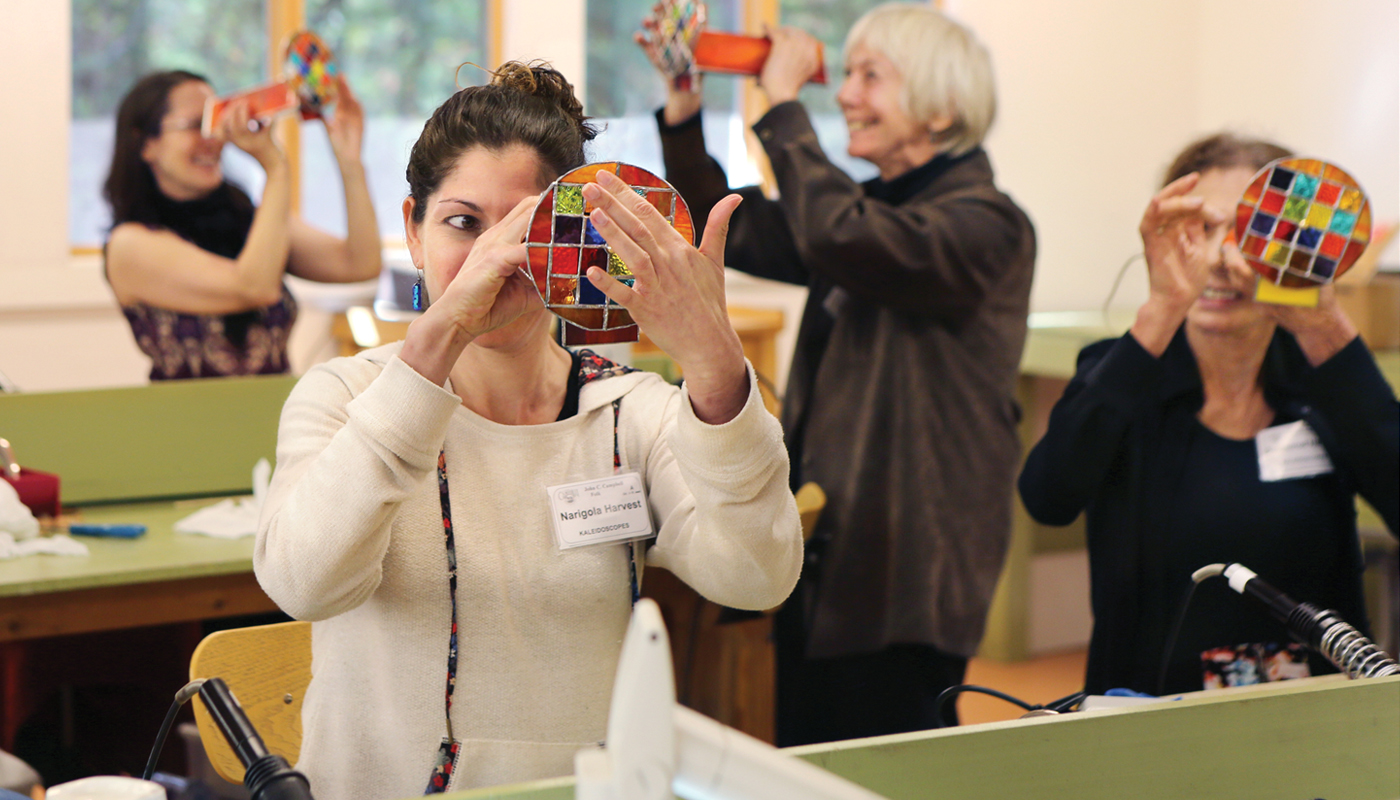
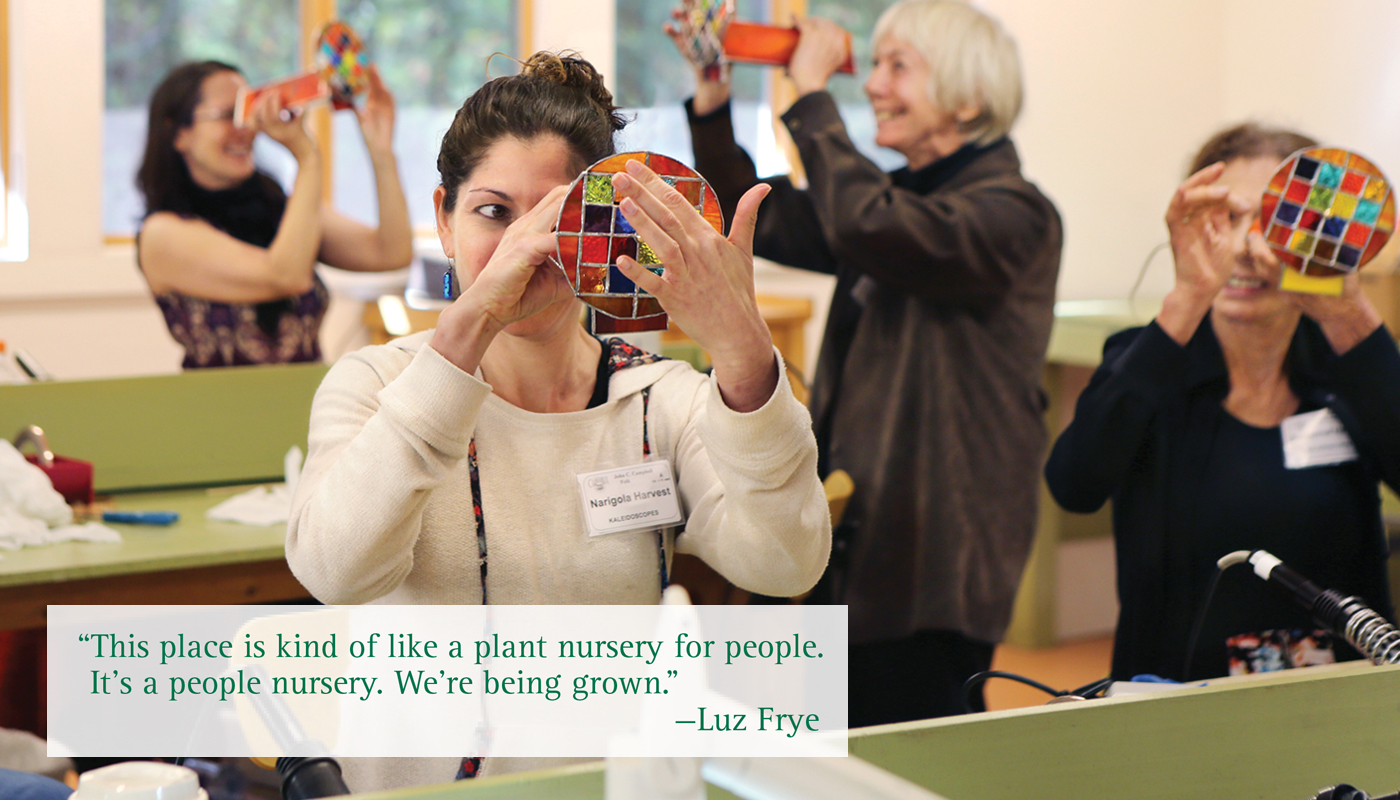
Using her own creative imagery, student and donor Luz Frye voiced the same sentiment when she and her husband, John, were here last month for our Fall Festival, followed by a week of classes. “This place is kind of like a plant nursery for people. It’s a people nursery. We’re being grown.”
John agreed, saying, “We see that people are engaged in improving themselves and bringing themselves joy. Then you combine that with meeting people from all over who you never would have had a chance to meet. It’s a pretty unbelievable place in terms of how people come together.”
After months of discussion with our Folk School family, we have a new mission statement: The Folk School transforms lives, bringing people together in a nurturing environment for experiences in learning and community life that spark self-discovery.
Using her own creative imagery, student and donor Luz Frye voiced the same sentiment when she and her husband, John, were here last month for our Fall Festival, followed by a week of classes. “This place is kind of like a plant nursery for people. It’s a people nursery. We’re being grown.”
John agreed, saying, “We see that people are engaged in improving themselves and bringing themselves joy. Then you combine that with meeting people from all over who you never would have had a chance to meet. It’s a pretty unbelievable place in terms of how people come together.”
Karen and Paul Rusello look forward to receiving their Folk School catalogs. “We dog-ear the pages, marking certain classes, looking for a week we’re both interested in,” said Karen. They’ve been coming to the school together for the past five years. Karen has long been a spinner and knitter and now that Paul is weaving, they’ve installed a loom at home. Paul also fondly remembers his first woodturning class: “It was February and just so great to spend an entire week in a woodshop. And then I looked outside and it was snowing. We cut logs in the snow. It was just really special.”
They reach for the full Folk School experience when here, including swinging ‘round at our contra dances and ingesting the magnificent scenery from our hiking trails. They enjoy sitting family-style in the Dining Hall. “You never know when you’re going to sit with a blacksmith who’s also a beekeeper,” said Karen. “I find that most people who enjoy making things have trouble doing just one thing.”
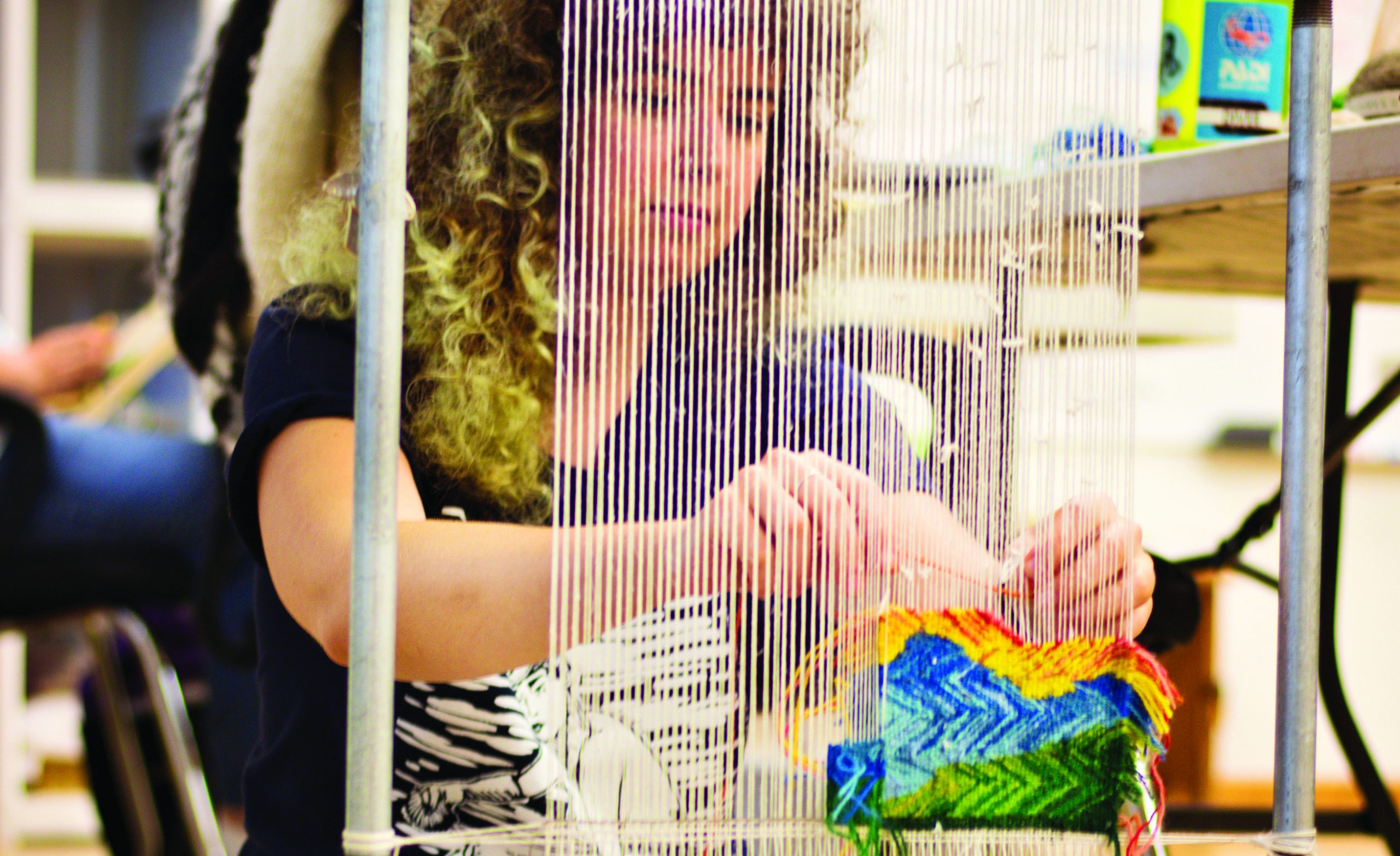
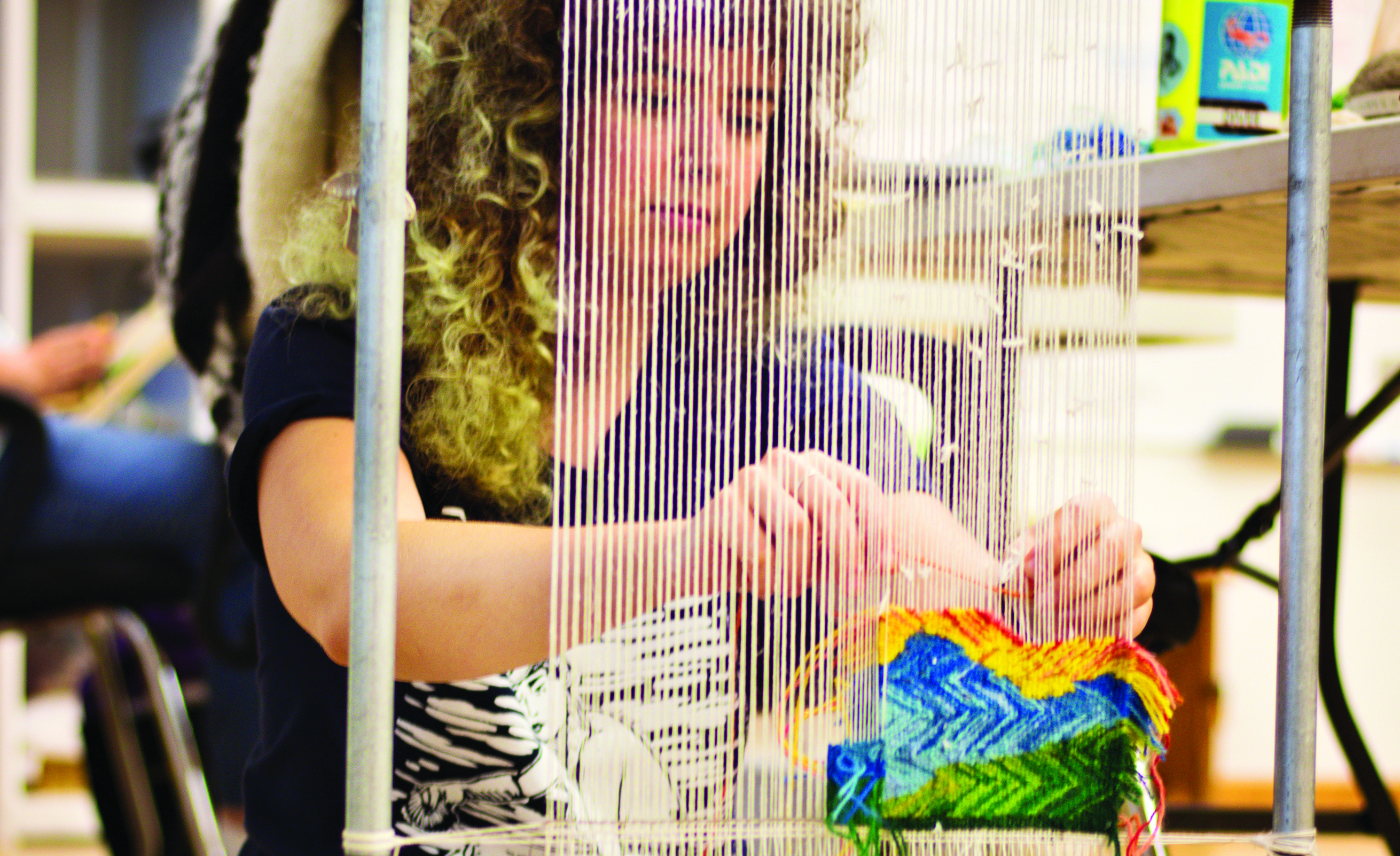
Having grown up just 12 miles down the road from Brasstown, many of Tommye Scanlin’s earliest 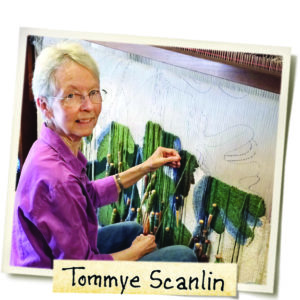 Folk School memories date back to her youth. In the mid-1960s, she and her boyfriend would often catch a glimpse of campus on their way to the drive-in movie theater in Peachtree. Since those drive-in, drive by days, Tommye’s Folk School story has come full circle.
Tommye was officially introduced to Folk School classes by Bob Owens, a potter who also happened to be the head of the Art Department at North Georgia College where Tommye taught art and textiles. “I was learning about weaving at the time,” Tommye says, “trying very hard to figure it out on my own. In the summer of 1974, I had the chance to take a weaving class.” During her week as a student, she learned to read weaving drafts and added to her growing love of the craft. “With my newly gained knowledge, I doubled down on my weaving and within a year or so began to show and sell my woven works.”
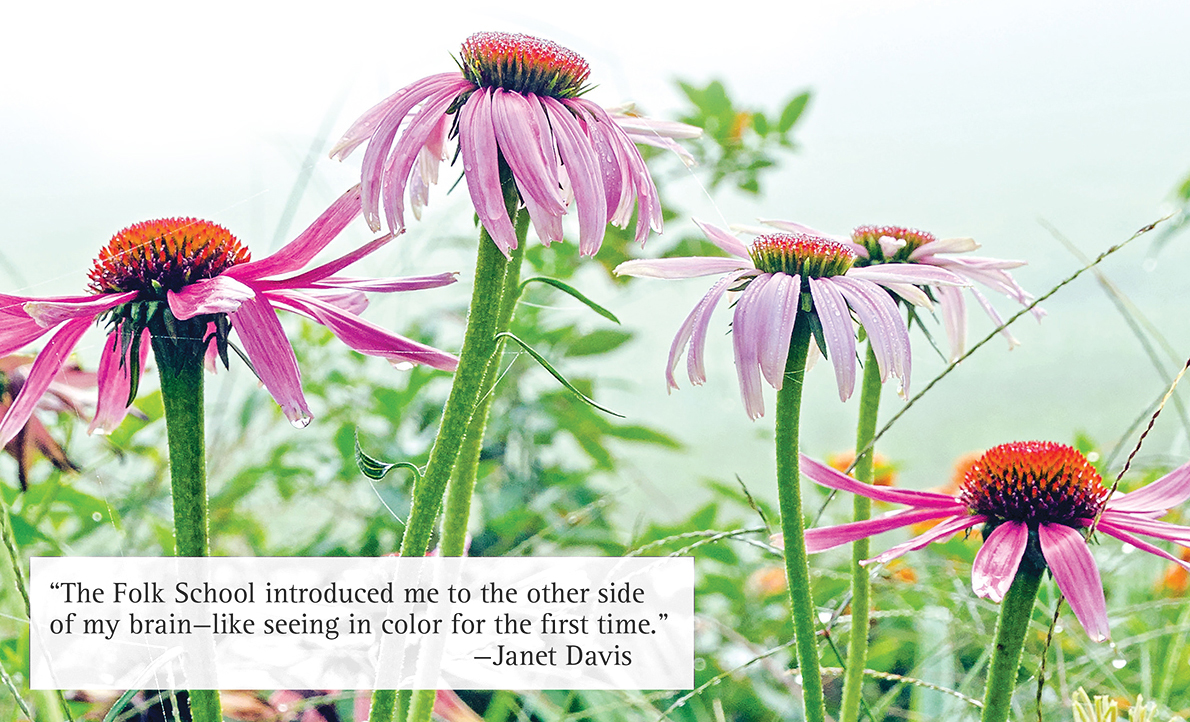
When Janet Davis recently volunteered...
Corie Pressley has lived in...
Did you get a chance...