

09 Dec Through the Dogtrot – Field School and the Making of the Log Cabin Museum
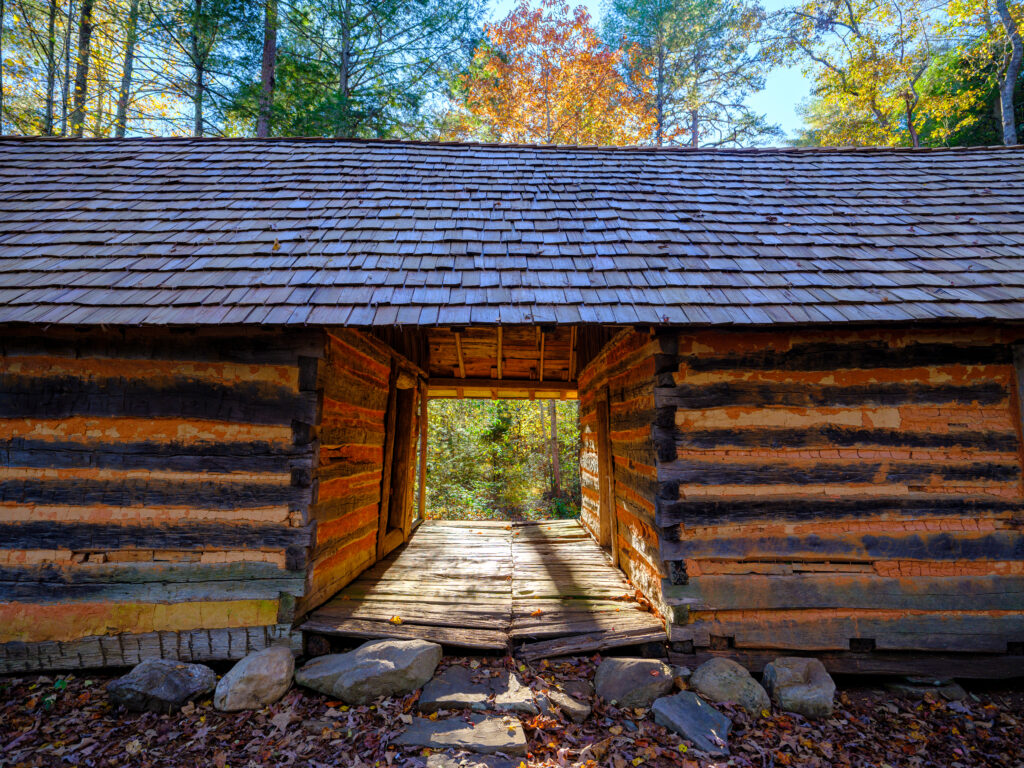
The Log Cabin Museum in 2024, prior to its restoration.
A wagon creaks under its own weight as two educators: Olive Dame Campbell and her husband, John C. Campbell, chart a course through the rolling Appalachian Mountains. It was 1908, and as their wheels rolled over rugged terrain, they encountered a plethora of rich artisan traditions passed through generations: customs they believed were worth preserving.
As their journey winded onward, a vision took root. Inspired by the Danish folkehøjskole, (“folk high school,”) model, the Campbells dreamed of establishing an educational sanctuary in the South. When John died in 1919, Olive carried that vision forward with fellow educator Marguerite Butler, establishing the Folk School in 1925.
In the early days of the Folk School, the first building to be erected on campus was the Log Cabin Museum. Built from two historic structures: the Cherokee County Caldwell cabin and the Clay County Brendle cabin. Moved to Brasstown and joined by a dogtrot, these structures were restored by community volunteers in 1926, and again, by a new generation in 2025.
A century later, the Log Cabin Museum is revived, not just through timber and tools, but through story. In summer 2025, curious individuals assembled for Community Field School: an immersive program to cultivate skills in curatorship and fieldwork.
Stacy Van Buskirk, a Murphy High School teacher and contributor to the Cherokee Scout, arrived with skills in both interviewing and photography. Yet, it was the opportunity to deepen her ancestral knowledge that intrigued her the most.
“One of my favorite moments was going to the archives and looking at all the different artifacts there,” Van Buskirk said. “I saw pictures of my great great grandmother I’ve never seen. I saw some Doris Ullman photos of other ancestors.”
Years ago, Van Buskirk danced at Contra Nights in Keith House. Now, she returns under the guidance of Dr. Kelley Totten of Memorial University of Newfoundland and Folk School Collections & Archives Manager, Susanna Pyatt.
“I think people would enjoy learning about this area, because while they’re at the Folk School, they can look around and see there’s more to Brasstown than just right here. Getting to see it in a new light, getting to know it deeper, I think that would enrich the experience for both locals and people coming in,” Van Buskirk said.
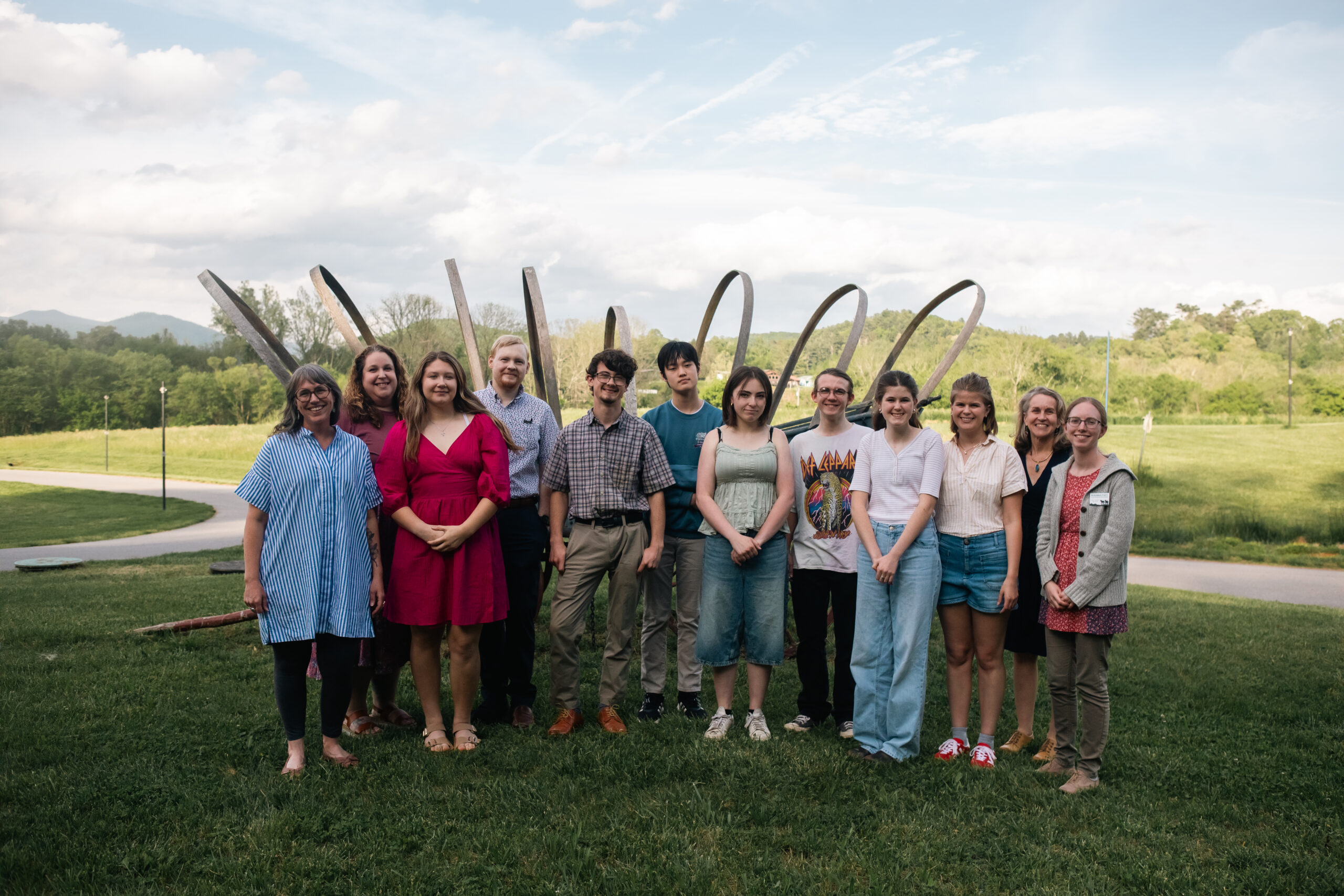
Field school participants and Folk School staff in spring 2025.
From left to right: Dr. Kelley Totten, Stacy Van Buskirk, Kadence Bailey, Silas Shields, Nathanial Bressler, Xincheng “Dodo” Zhang, Elsa Holland, Shawn Hardman, Maisie Burr, Laura Burr, Folk School Director Bethany Chaney and Collections and Archives Manager Susanna Pyatt.
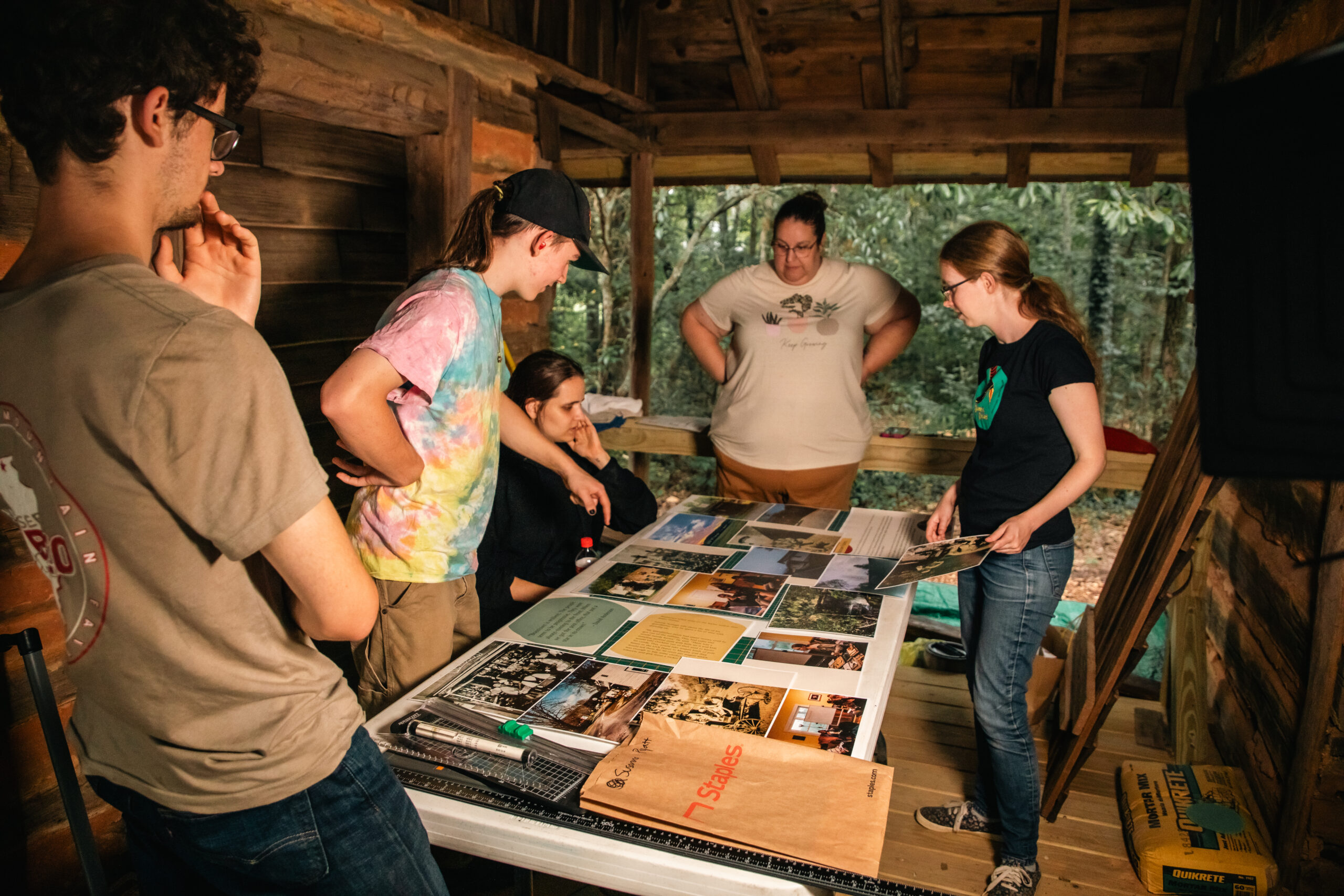
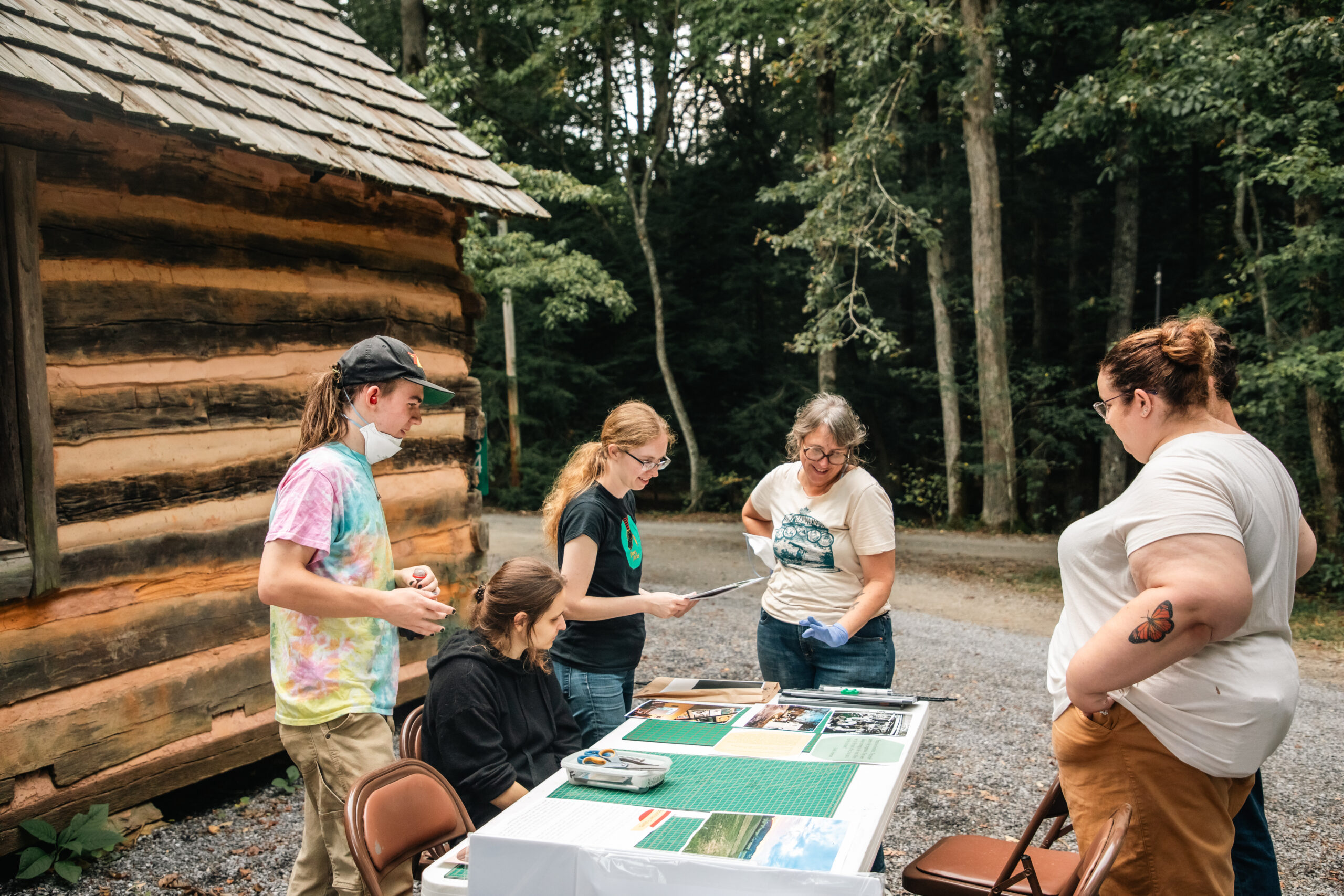
Field school participants collaborating with Susanna Pyatt and Dr. Kelley Totten of Memorial University of Newfoundland to curate the Log Cabin Museum display.
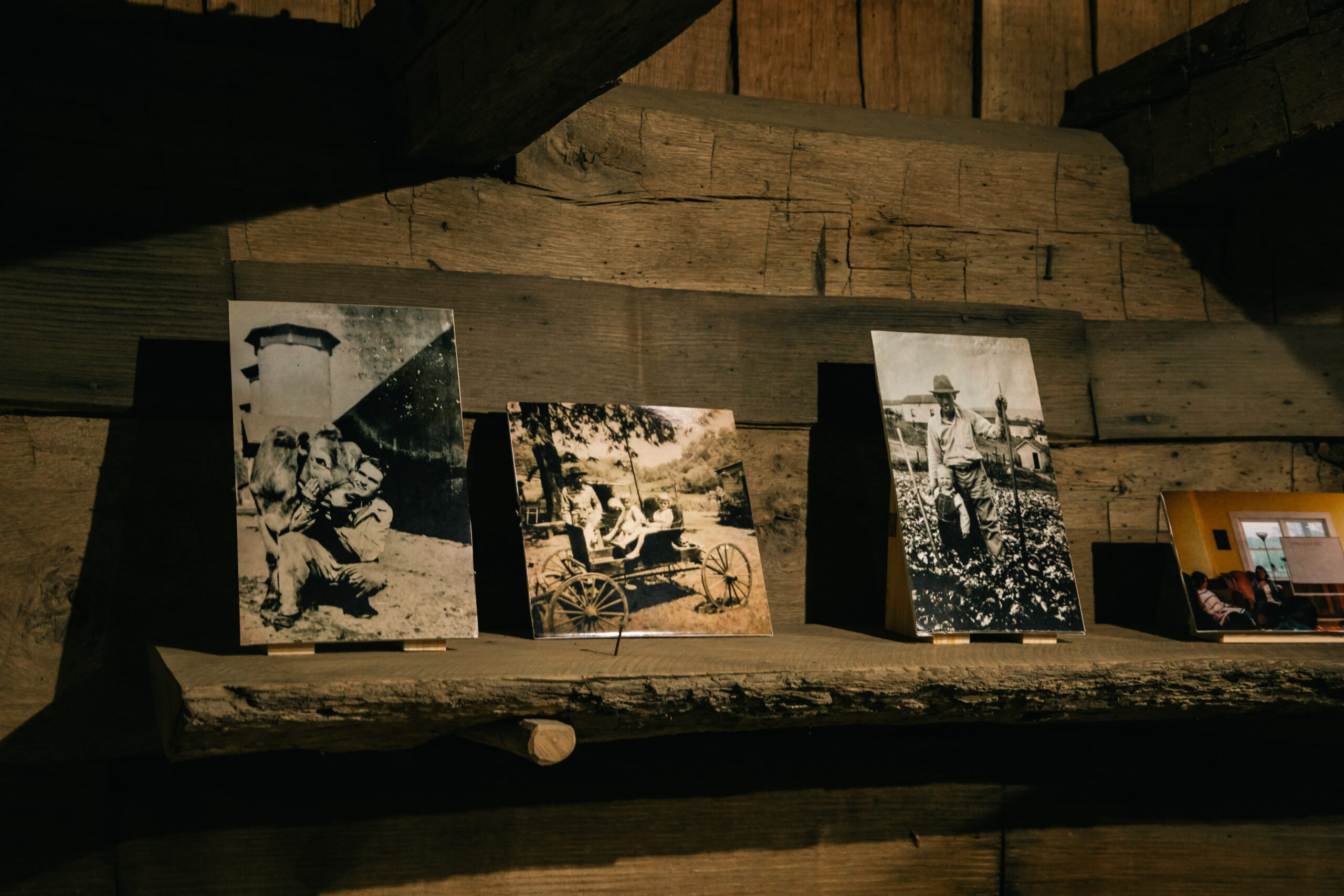
Historical Folk School photos on display in the Log Cabin Museum.
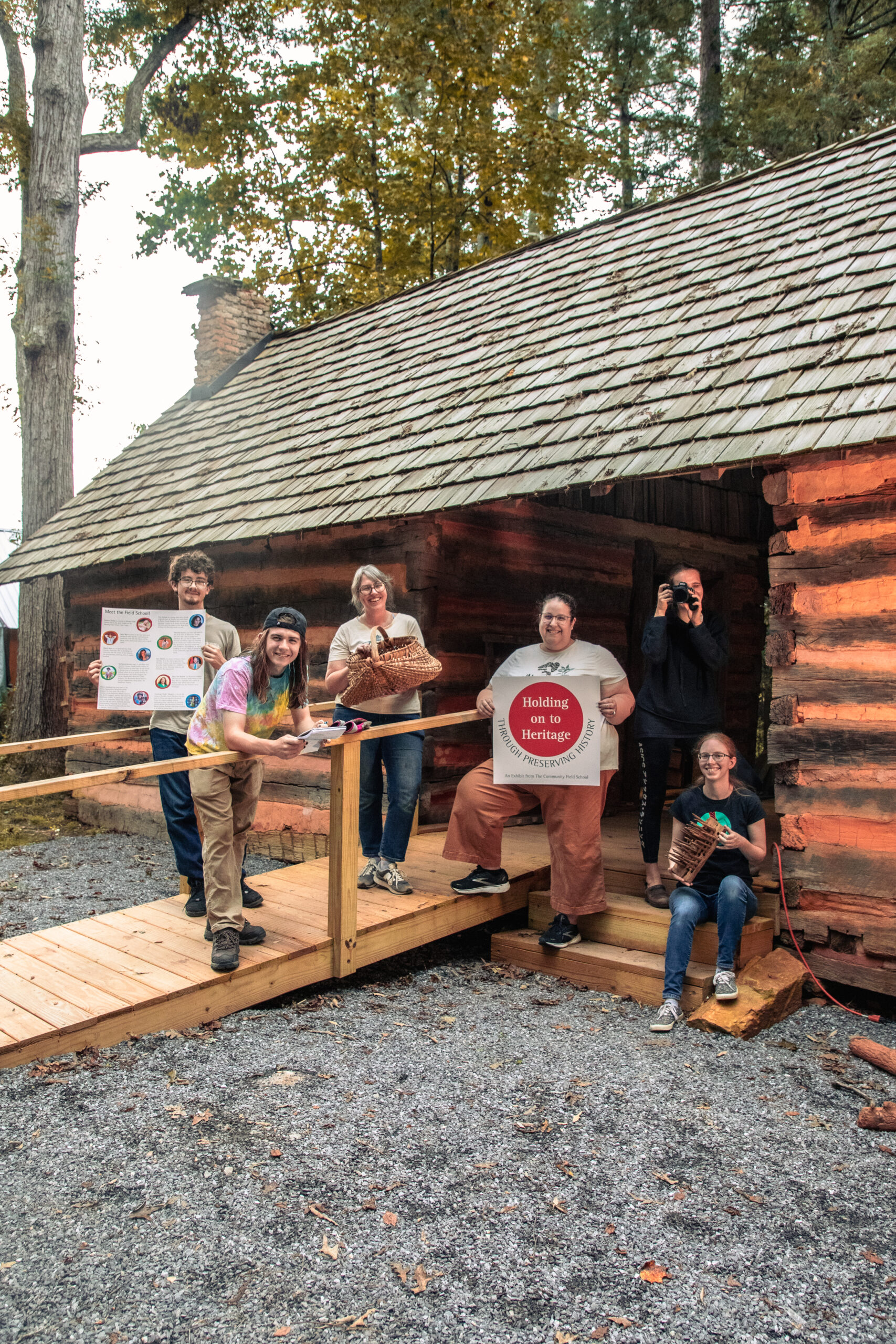
Participants of the Field School in Fall of 2025, proudly displaying their exhibit pieces as they prepare for a ribbon cutting ceremony.
From left to right: Nathanial Bressler, Shawn Hardman, Dr. Kelley Totten, Stacy Van Buskirk, Maisie Burr, and Susanna Pyatt.
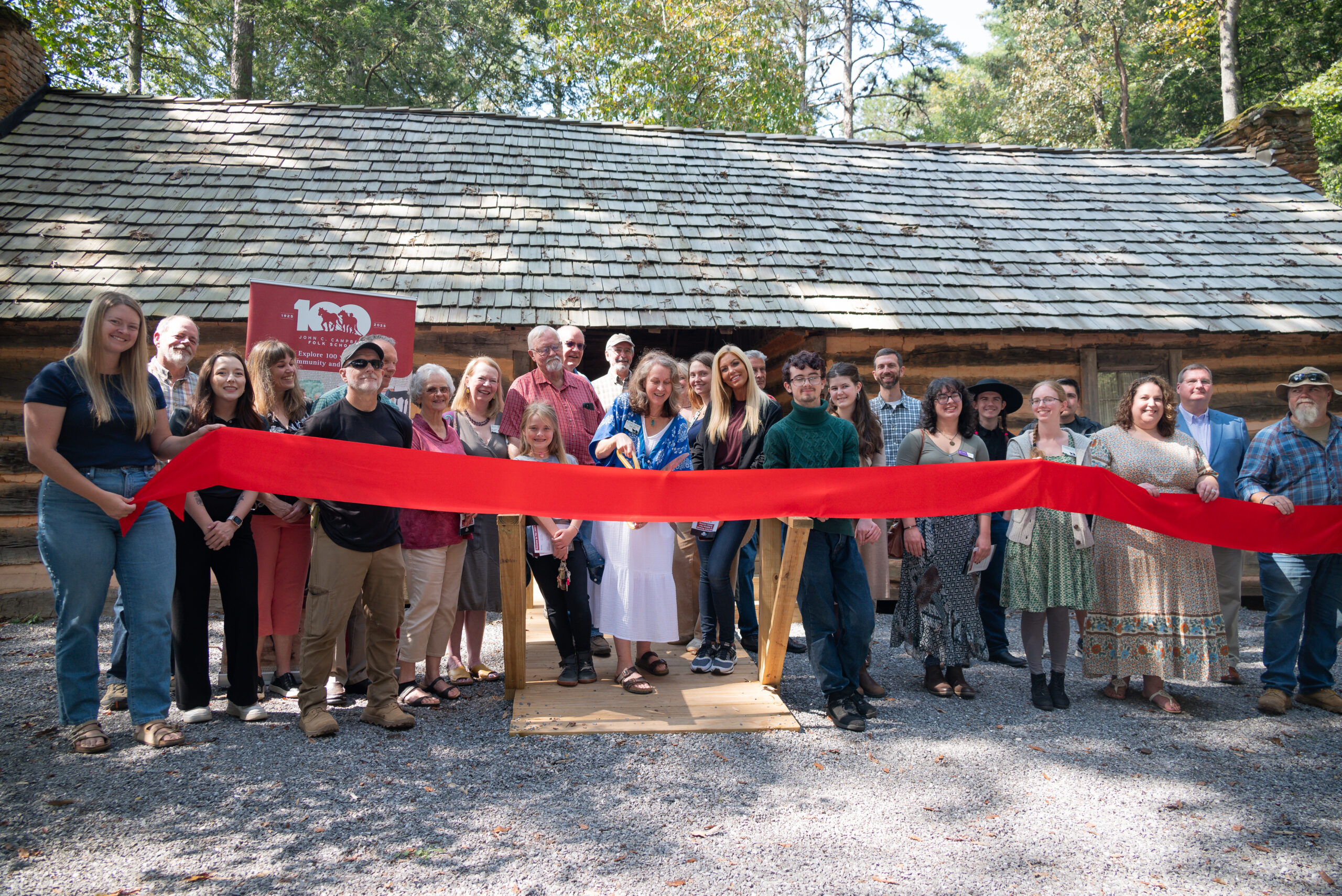
Attendees of the ribbon cutting for the Log Cabin Museum and Walking Tour at the Folk School.
Across the puncheon floors, stories whisper from creaky boards and hand-patted daubing. The Log Cabin Museum is a bridge between the past and the present, a testament to the Folk School’s dedication to preservation and enlivening the world around it. For Cherokee County native Silas Shields, the heart of the project was always storytelling.
“Everyone’s story is important and should be recorded, in some means or fashion, even if it’s just writing down something your grandparents told you. I think my takeaway is the interviewing skills we have learned here, because I’ve definitely learned what to ask, how to ask and how to record it,” Shields said.
Throughout the program, students interviewed locals, learned to capture photos with professional photographers, and explored archival management. As ancestors were recognized and exhibits were designed, students embedded themselves in the history of the Folk School as they learned about its past.
Photography enthusiast Maisie Burr is a field school participant from Turtle Town, Tennessee. She deepened her appreciation for archival collections throughout the program, while recognizing preservation not just as a practice, but a responsibility.
“Maintaining culture is really important,” Burr said. “It’s important to remember where we came from, and honor that.”
As restoration efforts wrapped up, the Field School joined the ribbon cutting ceremony, celebrating both the exhibit’s unveiling and the dedication of those who brought it to life. As the ribbon stretched across the dogtrot entryway was snipped, the old timbers of the museum renewed into new beginnings.
“I think from hanging out with Susanna a little bit, like there is a deep care for archival research and keeping history alive, like they’re actually putting everything they have into it.” Burr said.
The Log Cabin Museum reflects not only just the region’s past, but the dedication of those shaping its future. The Log Cabin Museum serves not just as a preservation of place, but as a lens to view home, heritage, and identity.
Walking Tour
The Log Cabin Museum is one of many stops on the Folk School’s new self-guided campus walking tour highlighting the school’s history, Appalachian traditions, and the influence of Cherokee culture. The tour is free and open year-round. Scan QR code to learn more.
The John C. Campbell Folk School Walking Tour is supported in part by North Carolina Humanities, the state affiliated of the National Endowment for the Humanities.
No Comments