

15 Jul Ancient Futuristic Technologies with Monya Nikahd
Monya Nikahd is an award-winning weaving and teacher hailing from Belleville, IL. Her work incorporates innovative materials and techniques into the ancient technology of the weaving loom, tying it to the past while while looking to the future. Monya is a recipient of a Windgate-Lamar Fellowship, has attended residencies at Praxis Fiber Residency and Penland School of Craft, and has been teaching weaving for several years.
She will be teaching her first workshop, titled “The Open Loom–Reimagining Material Practice” at the Folk School this August 9-15. Read on to learn more about Monya, this class, and her exciting approaches to weaving below. Interested in signing up? Register today to secure your spot.
JCCFS: Tell us a bit about your your weaving journey.
MN: I learned to weave at the Appalachian Center for Craft (Tennessee Technological University) where I earned my BFA in Fibers. At first, weaving didn’t click with me, and I often wandered into other studios. It felt very structured and like there was no room for experimentation. I was a stubborn student, who would take my beginner lessons to the glass shop to sandblast the surface, just to see what would happen to it.
Eventually, I came to my senses. I realized if I wanted to create something of high craftsmanship that would out-survive me, I needed to learn the foundational rules before I broke them. Learning to weave takes patience and discipline. Around the same time, I learned woodworking, which strengthened those skills. My work began to evolve as I discovered the women of the Bauhaus and teachings at Black Mountain College. I see connections to my childhood growing up in an Iranian family, where my love of textiles feels ancestral. (Side note and totally unintentional: my father actually attended the same college where I learned weaving, its main campus at Tennessee Technological University, in 1977 after fleeing the Iranian Regime.)
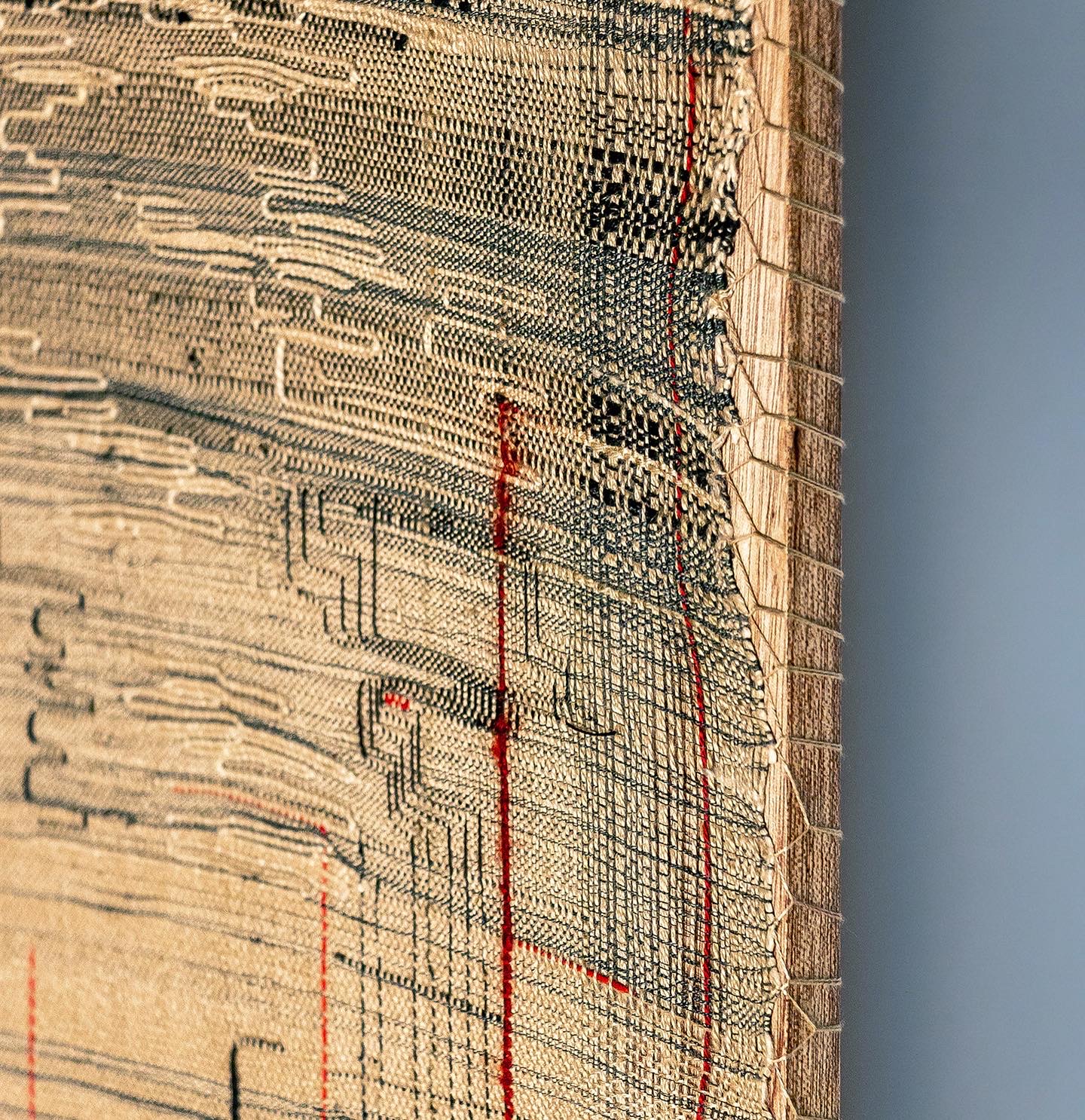
I became fascinated by patterns, both in the cloth itself and in the role weaving holds in history. Weaving is indispensable to humanity’s earliest technologies through to the Industrial Revolution and even holds a place as the ancient ancestor of modern computers. I wanted to weave and pay homage to the women brushed “under the rug” who contributed to the most important innovations in our society.
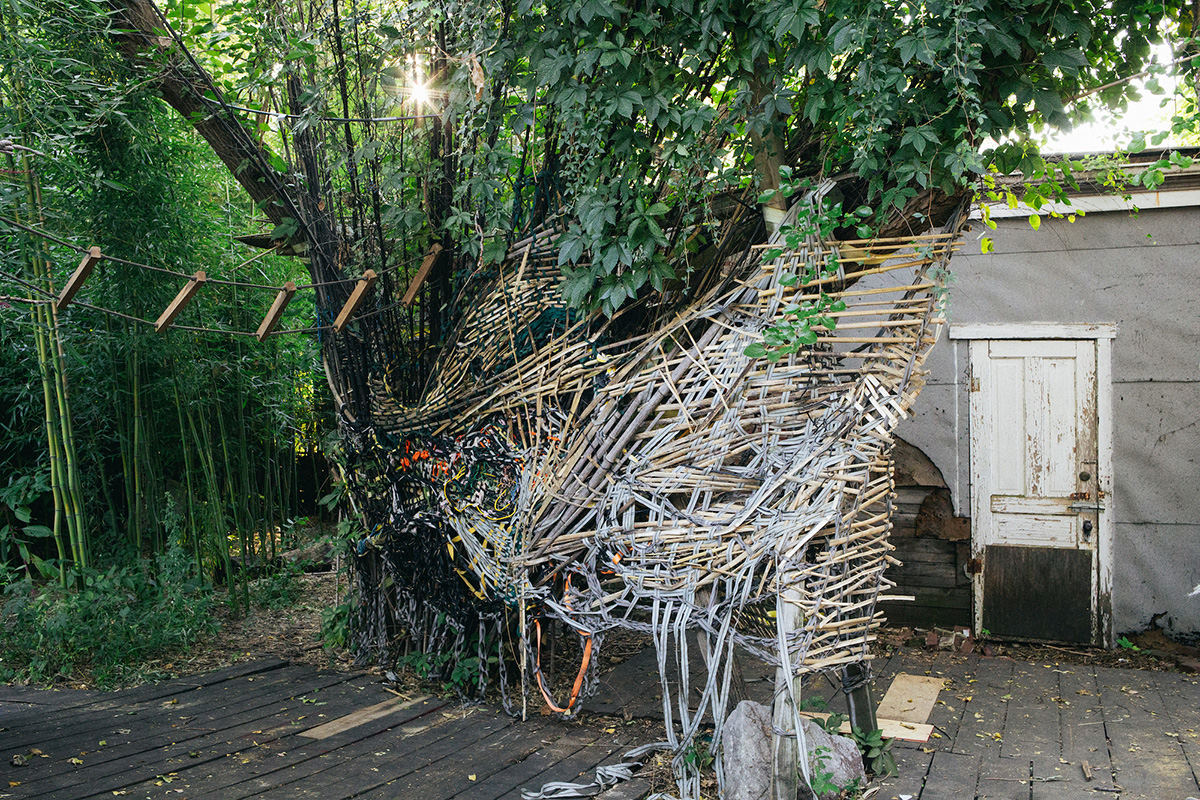
I created work that blended unique and innovative materials, shapes, and contexts on a traditional floor loom. I created pieces with new and playful shapes, media, and stories. In my quest for fiber innovation, I’ve incorporated digital animation, dance, performance art, theater work, and more. I’ve also created techniques for 3-D weaving with acrylic rods, and warping with non-traditional materials like fishing line. I used my loom as a percussive instrument showed my work and demonstrated at Tennessee State Museum and the Frist Art Museum, given live performances, and taken part in group exhibitions.
While I love being a fine artist, I feel the biggest rush after a collaborative project or teaching a class. To me, the beauty of putting several minds together will always surpass the feeling of working alone in a room. This is especially true in cohorts like the upcoming workshop, which I’ve led at Arrowmont School of Craft in 2024. I believe my hard-headed personality as a student set me up to create an environment that could keep the attention of students, no matter their interests. In this class, I will encourage students to break boundaries, share my original weaving techniques, and workshop approaches to student’s individual experimentation. I invite students to dream big, and put their questions to the group for answers.
JCCFS: Can you tell us a bit more about the class you’ll be teaching this summer, “The Open Loom: Reimagining Material Practice”?
MN: We begin by learning the history and evolution of the loom and its importance in human existence. From there, we walk through the loom’s mechanisms, are introduced to the basic loom frame, and discuss how it compares to other types of looms. Its simple mechanism provides us with a foundation that allows for greater focus on material exploration.
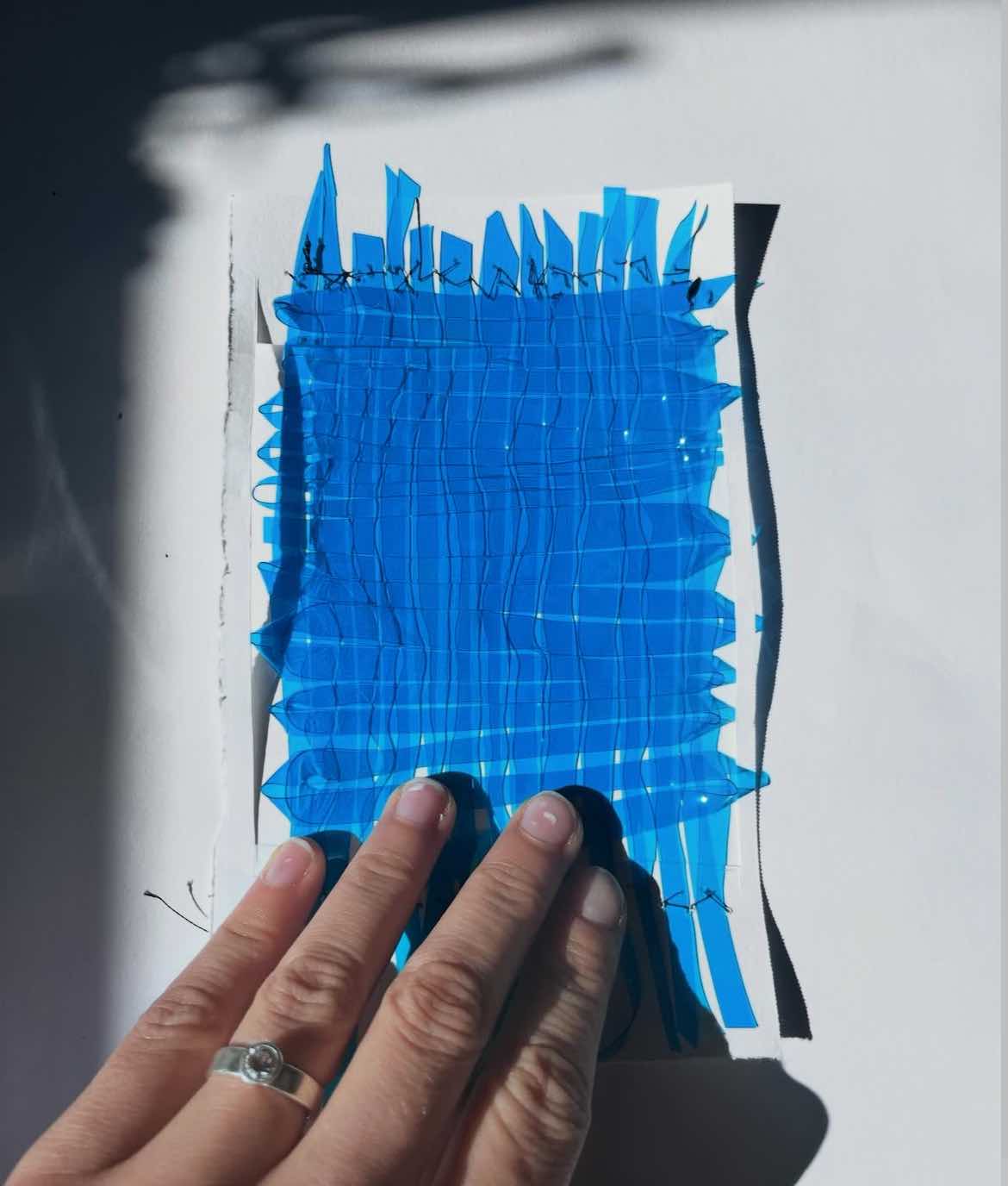
Students are first given two different kinds of plastic material to explore their elasticity. We learn how to transform them into weft for weaving. By using basic frame looms, students experience firsthand how different warp structures interact with the same materials and how each warp better suits certain techniques.
From there, students weave with materials they have brought themselves, as well as materials I provide. They leave with several woven samples, notes, and plans for future projects. Throughout the class, there are several group discussions that encourage reflection, material exchange, and shared learning.
This class can fulfill many different purposes for each student. Whether you are here for a mindfulness practice or are looking for guidance in incorporating a new material into your own body of work, the class is designed to support your goals. I am always mindful of the physical demands weaving places on the body, as well as the level of concentration it requires, and I incorporate several activities that encourage mental stimulation and moments of rest throughout the workshop.
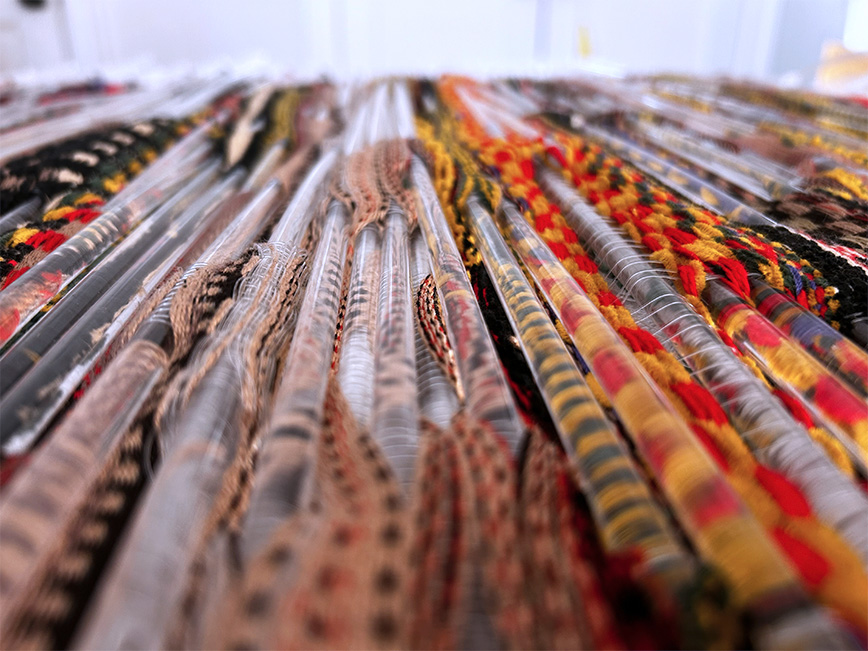
The Fiber Arts Building where the Weaving classes take place
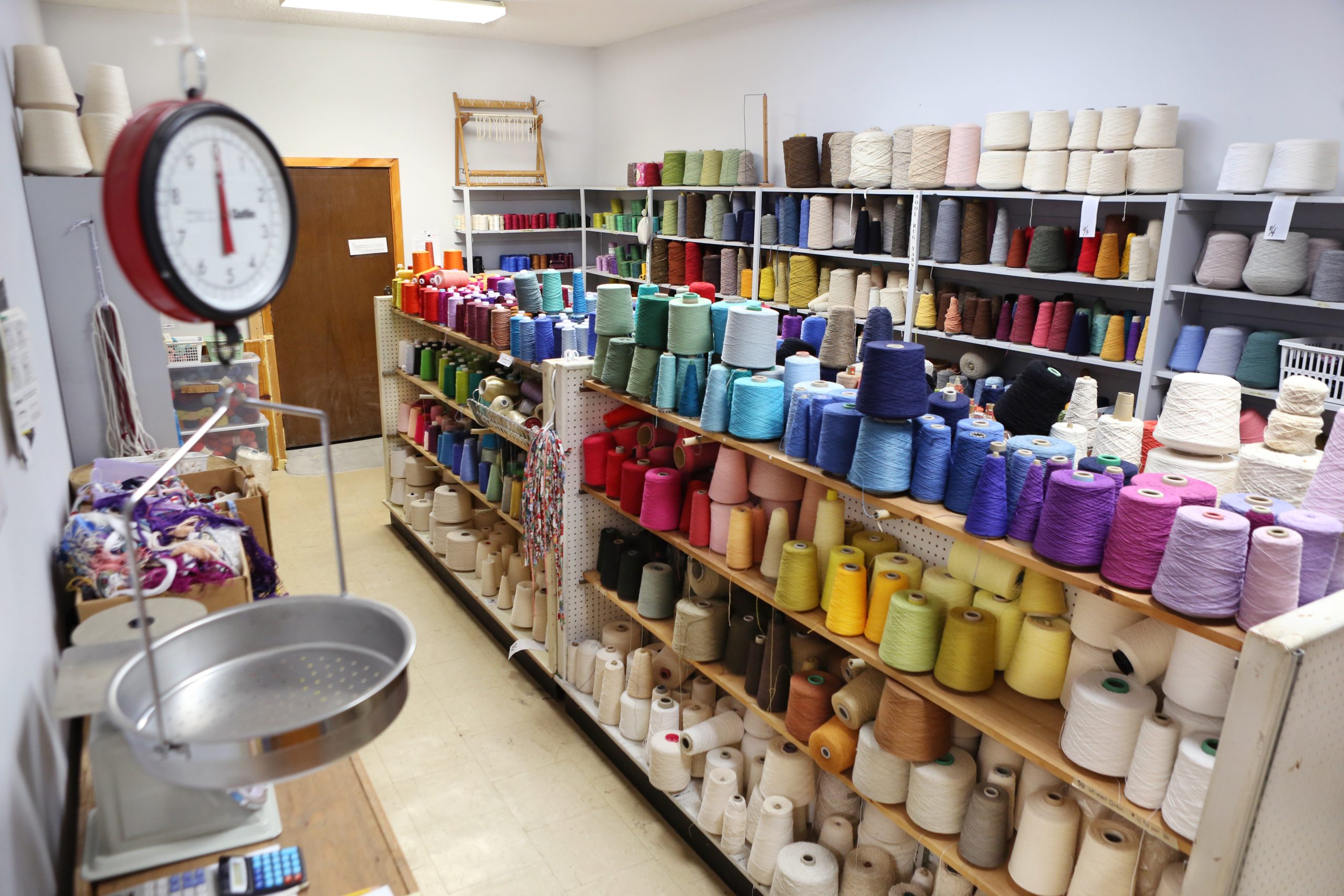
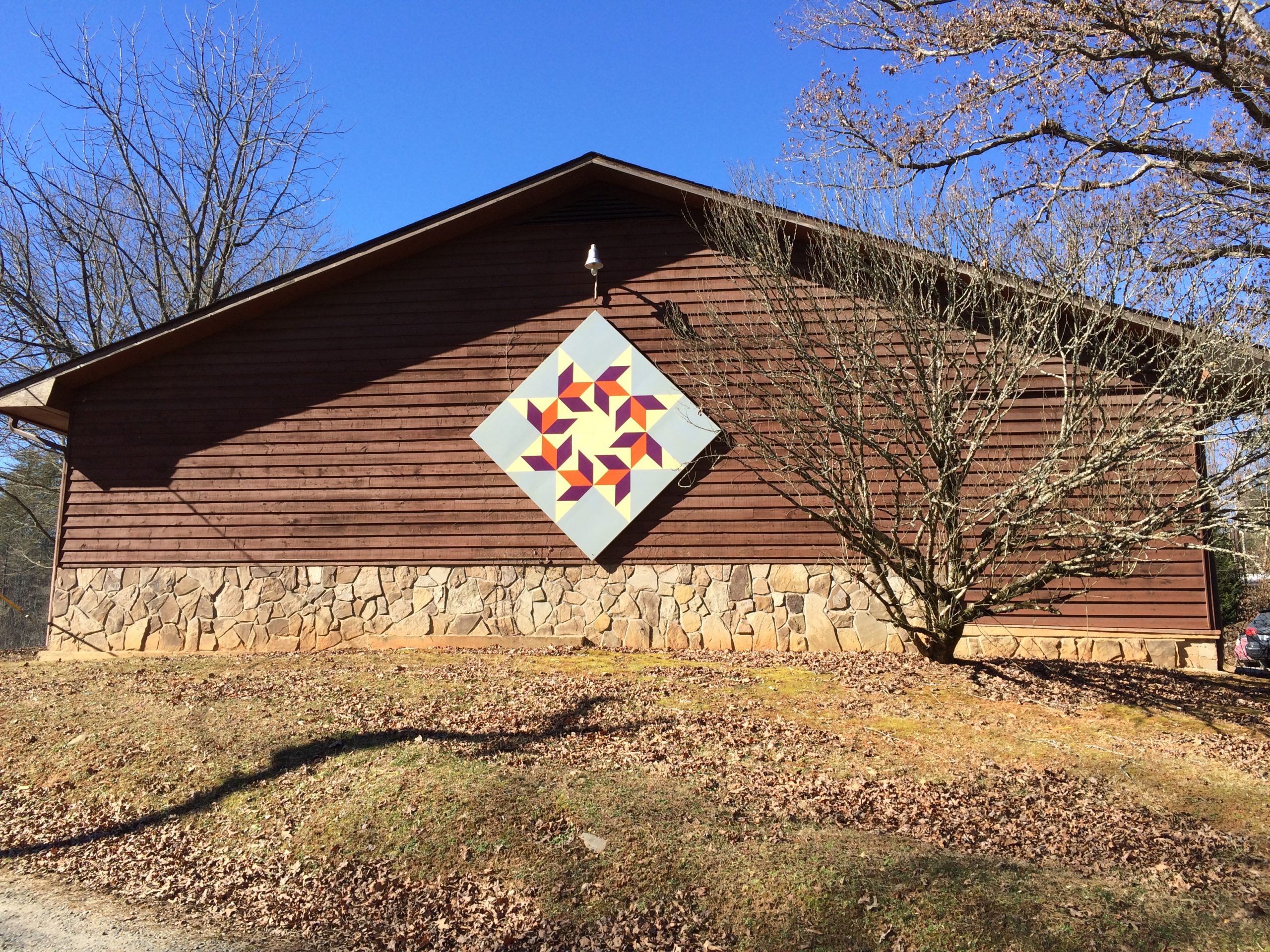
A colorful selection of yarn
JCCFS: What can students expect to leave your class with?
MN: Students will leave this class with greater confidence in approaching materials they might not normally consider for weaving. They will take home a collection of woven samples, along with notes documenting what worked (e.g. how different warp materials, thread counts, and tensions interacted with various weft materials) creating a valuable reference for future projects.
Throughout the workshop, students are encouraged to think beyond conventional weaving practices. I share techniques for incorporating three-dimensional materials, such as rocks and sticks, computer parts, and some surprises into woven structures, and introduce unconventional and found tools that can inform, elevate, and transform individual creative approaches. Together, we also explore weaving away from the loom to better understand what weaving is at its most fundamental level and why it has remained such
an indispensable part of human life.
More than finished samples, I hope students leave feeling lighter, inspired, and curious. If you walk away with more questions than you arrived with, then we’ve done something right. Viva la revolution!
JCCFS: What do you love most about teaching?
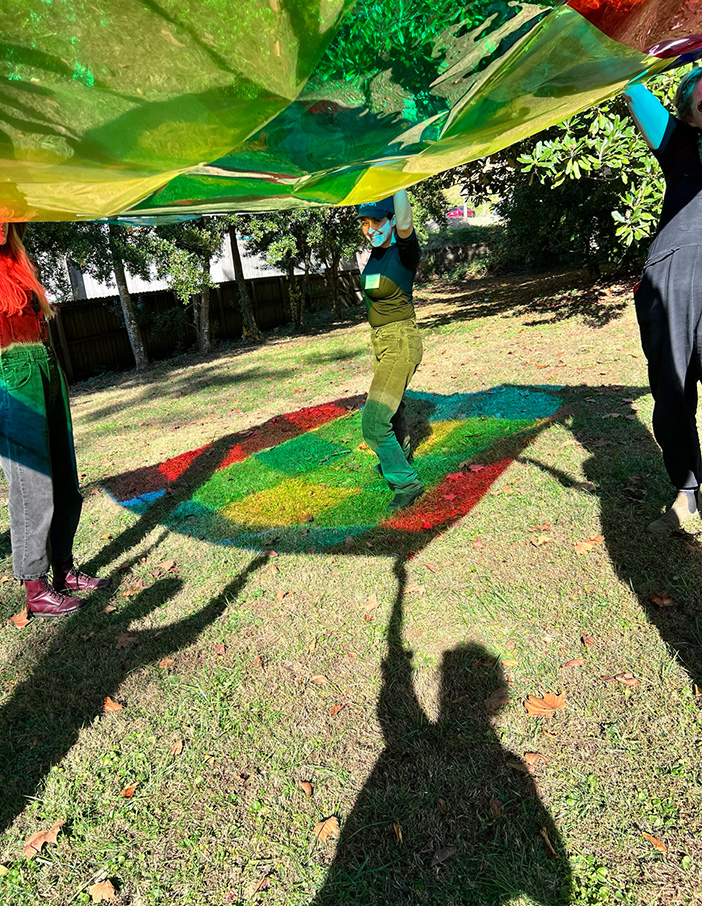
MN: I love learning while I teach, and experiencing the delight and surprise of working with other artists. One of my favorite teaching memories is a group weaving project I led as part of my first teaching residency. We created a “human loom” to put ourselves inside of the tool, and get a deep mechanical understanding of what we were working with.
Not only did we learn the terminology, we experimented with rhythms, heights, and different slack. The piece turned out so differently than I imagined, with a different hang and structure than I intended in my lesson plan. A student in the workshop, a professor herself, pointed out that I was working with an outcome in mind–a cardinal sin in my own pedagogy. What delight to be a student in my own classroom, and to leave room to be surprised time and time again.
JCCFS: This will be your first time teaching at the Folk School. What attracted you to this place?
MN: I am so proud to be teaching at John C. Campbell Folk School, especially because it is the oldest and largest folk school in our country. I love connecting with traditional craft lovers, and learning more about where they see our shared medium going, and what draws them into the material. I also love the incredible diversity in curriculum, and look forward to seeing all of the different styles of creation at work.
JCCFS: Where do you draw inspiration from for your weaving work?
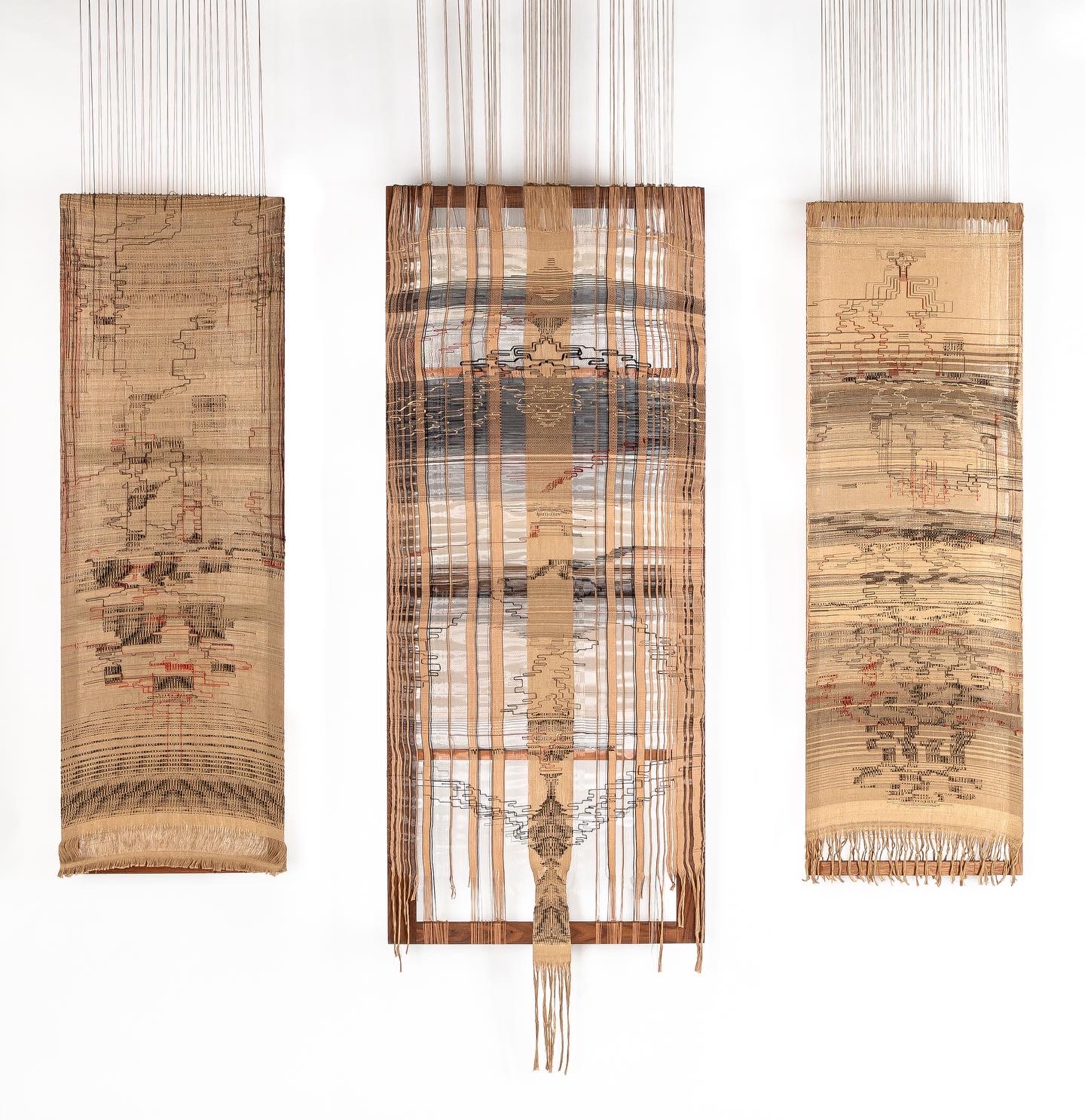
MN: As someone who grew up in the Appalachian region, in an Iranian-American family and community, I draw so much inspiration from the immersion of natural and artificial materials, curiosity, and the power of time and attention. Weaving and pattern recognition is something so natural, that has moved us forward and differentiated us as a species. My work exists between the modern, technological world and the ancient, natural world, with exploration of different paths the evolution of the loom could have taken us.
JCCFS: What are you working on right now?
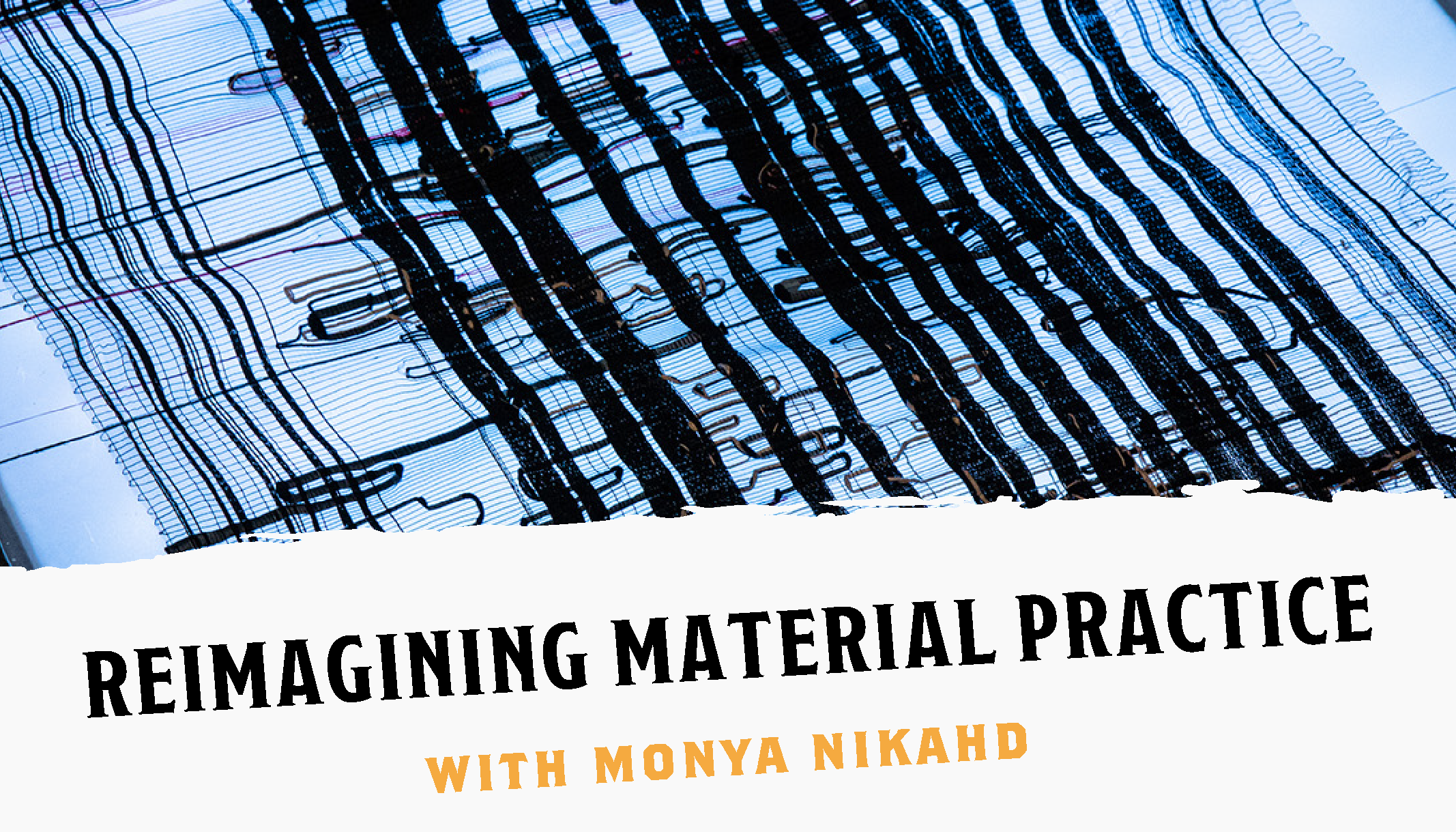
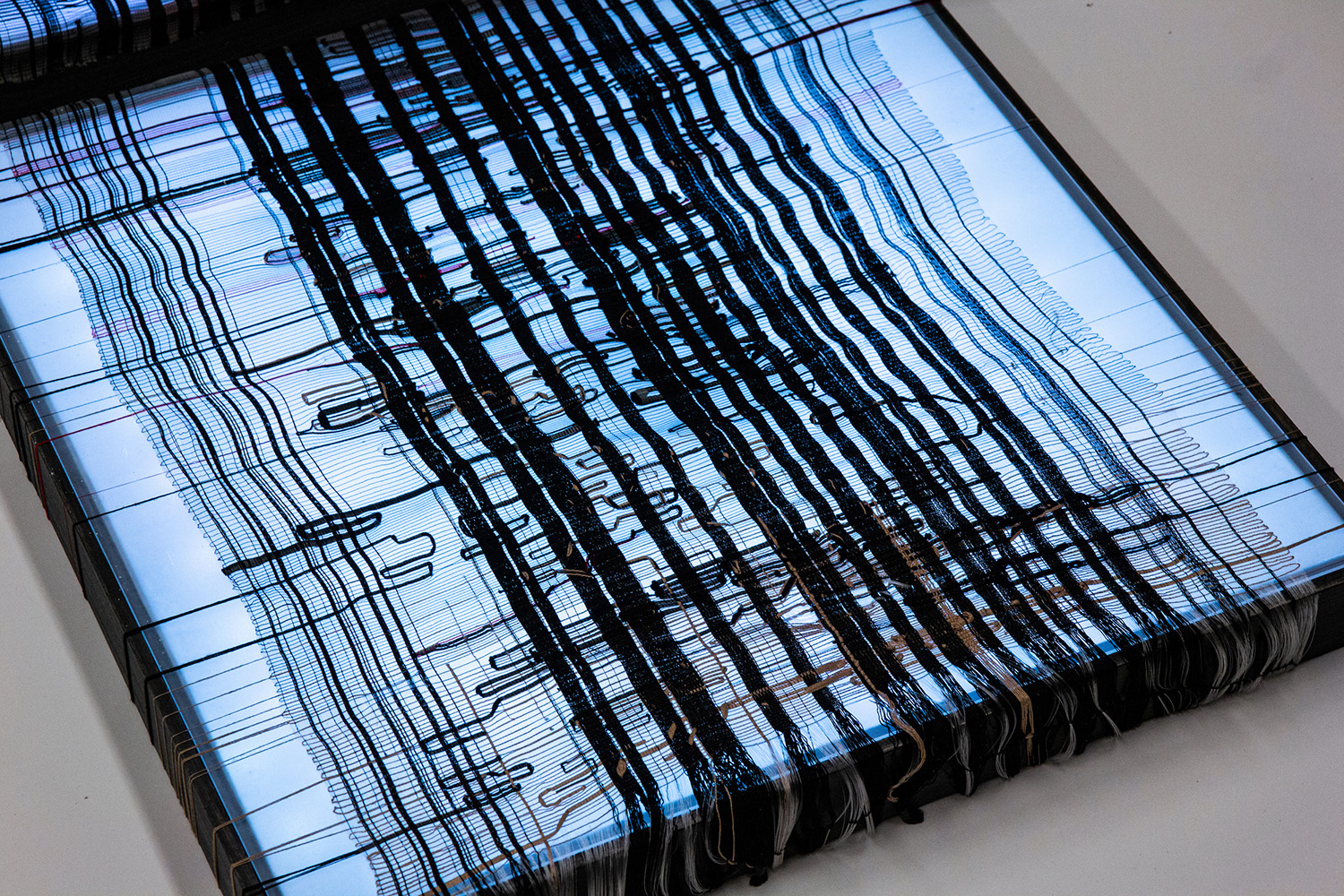
MN: I am currently experimenting with weaving transparent acrylic rods and cotton. My exploration is inspired by handwoven rugs blended with the invention of animated images on a stationary object. Because of the convex shape of these rods, the viewer is delivered to the inside of the woven piece, allowing the threads and woven patterns to distort based on the viewer’s sightline. It has taken me countless hours to weave such a heavy structure, and I am currently in the process of inventing its hanging mechanism.
JCCFS: Do you have any advice to give to aspiring craftspeople?
MN: Something I wish I had known as a student is that you don’t need to make something extraordinary for a class to be successful. Stay present and focus on learning the techniques. A collection of samples, experiments, and new knowledge is often far more valuable than a finished piece that was rushed to completion. My biggest tip: get out of your comfort zone. The most meaningful discoveries often happen when you’re willing to experiment, make mistakes, and let the materials surprise you.
JCCFS: Anything else we should know about your class?
MN: Any level is welcome in my classes. From hobbyist to professional, my class has room for everyone and my lesson plans are easily translatable to all.
JCCFS: Where can folks find you if they want to stay up to date on your work?
MN:Find me on social media at @monernism, online at monyanikahd.com, or at my studio in Belleville, IL.
Upcoming Class with Monya
The Open Loom–Reimagining Material Practice
August 9-15, 2026
Often underestimated, the loom shares a deep and almost mysterious link to the evolution of modern computing. Despite its simplicity, this age-old device has demonstrated remarkable creative and technological potential. Explore the possibilities of using unconventional and unusual materials on a basic frame loom. Delve into the loom’s mechanics, its historical significance, and how various materials interact with warp, tension, pressure, and texture. All levels welcome.
About Monya Nikahd
Monya Nikahd is an award winning craftsman, inventor, teacher, and do-er based in Belleville, IL. She has spent the past 10 years mastering craft technique, installation, and non-linear storytelling through art-making and creative collaboration. Nikahd is nationally recognized for her inventive approach to weaving, where she uses non-traditional materials and hanging techniques to tell the story of human evolution, ingenuity, and an ongoing connection to prehistoric art. High-level attention to detail, pattern and image distortion, inventiveness, and respect to the process of creative discovery are signatures of her style.

No Comments