

19 May A Blast from the Past: Reprints of June Coolidge Cary’s Woodblocks Now Available
This post draws significantly from the 2025 Community Room display about June Coolidge Cary, which was researched and written by work-study student Frankie Lo.
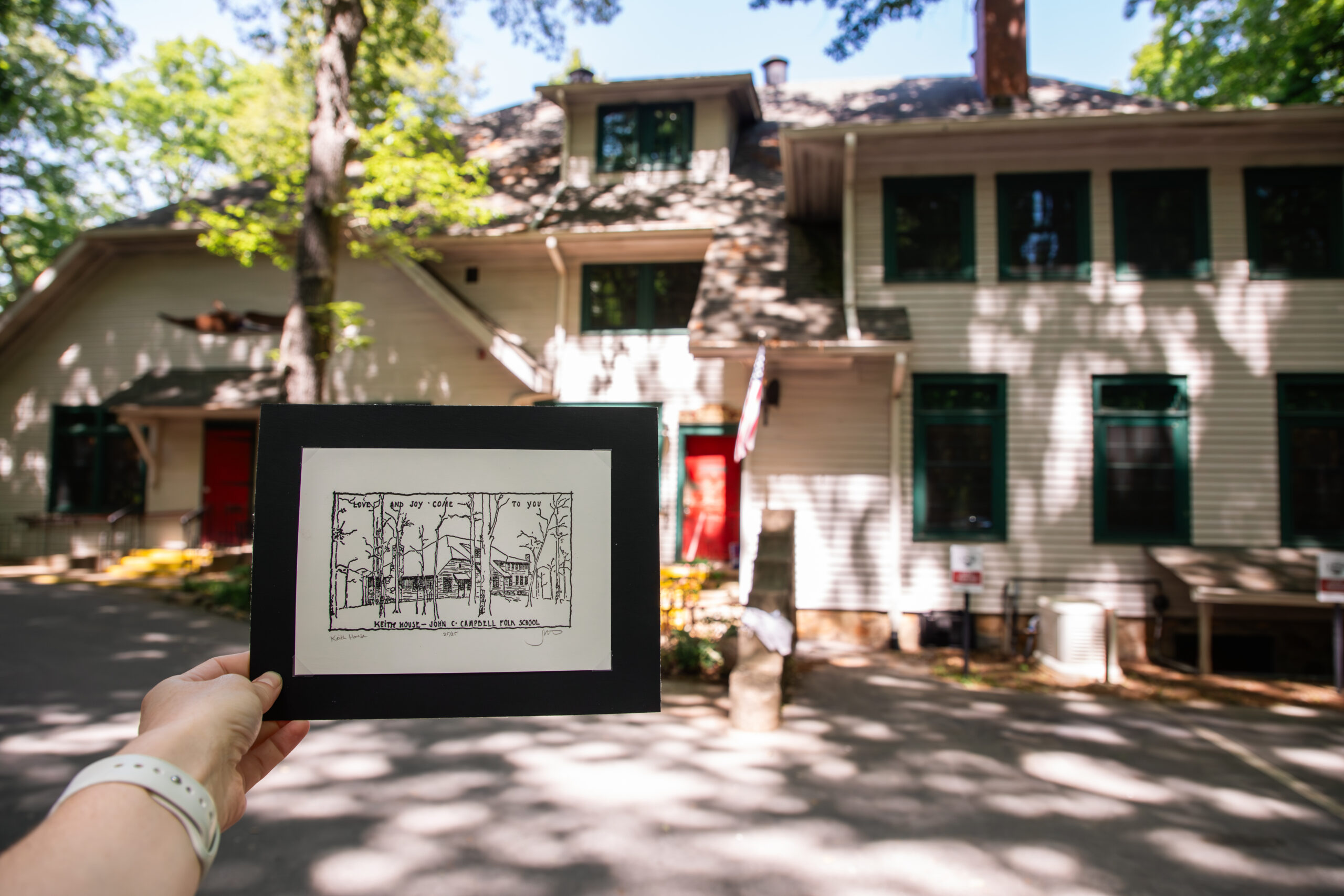
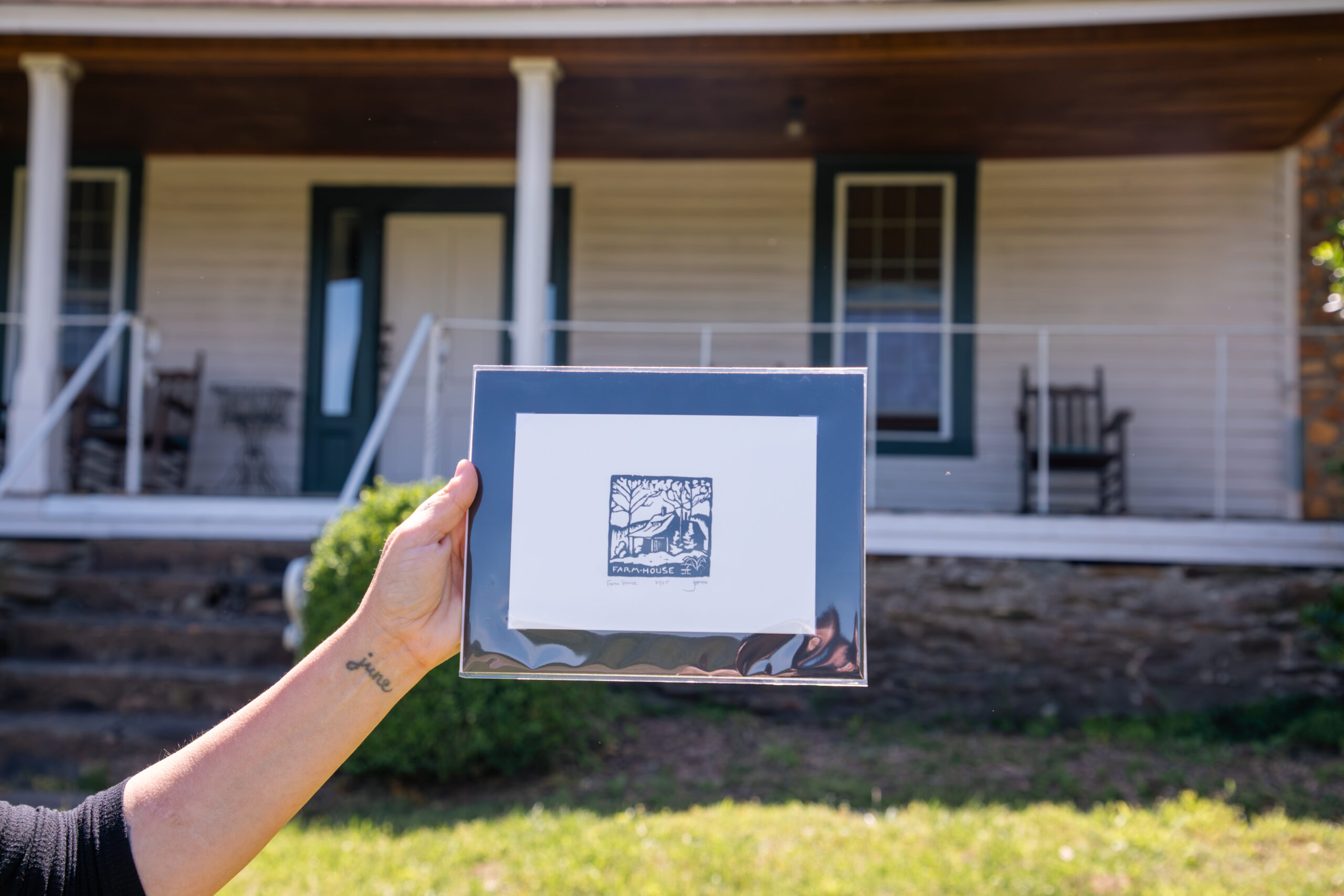
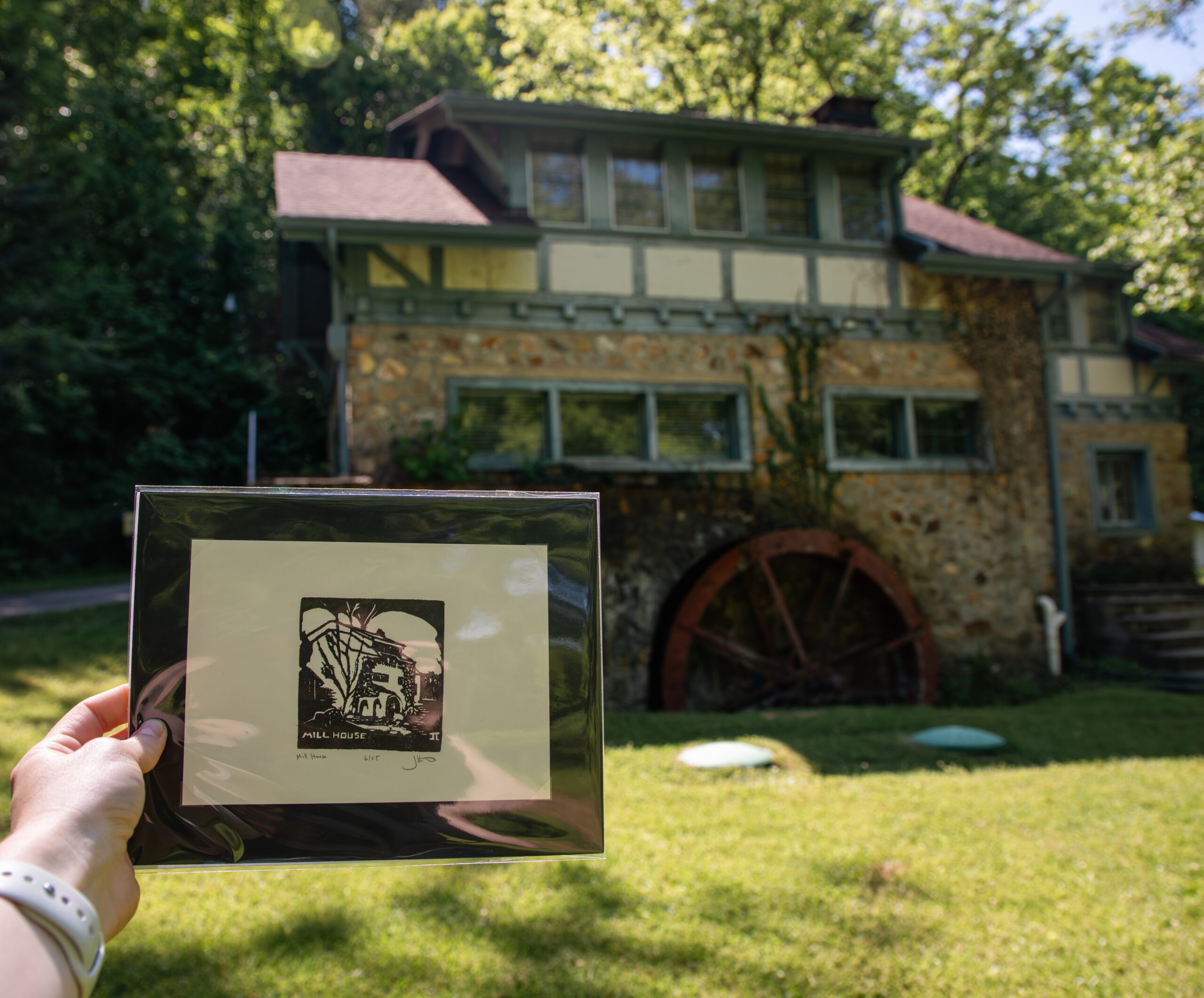
The Craft Shop and Olive’s Porch are excited to have a new offering celebrating the 100th anniversary of the Folk School! These prints of Folk School buildings were made by book artist and printmaker Jessica C. White using the original blocks created by June Coolidge Cary (1912-1996). Cary’s work featured prominently in the Folk School’s early marketing materials, from newsletters to craft catalogs to Christmas cards to the logos printed on official correspondence.
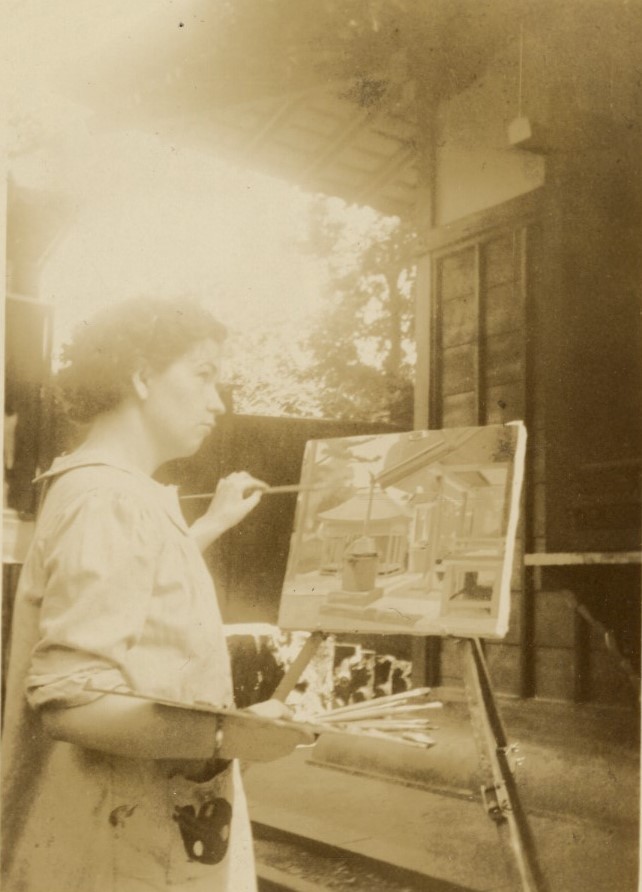
Ruth Alden Coolidge Cary, who went by the name “June,” grew up in Medford, Massachusetts. She studied art at multiple institutions and received a Fine Arts degree at Tufts University in 1935. A niece of Olive Dame Campbell, she also spent time at the Folk School. She spent the summer of 1928 in Brasstown, making sketches of people from the community. June married in 1936 and spent two years in Japan with her husband, Harry M. Cary. The couple moved to Brasstown in the late 1930s and remained here until World War Two. June worked as a designer for the Folk School and also taught craft courses. Harry worked as a publicity and extension agent for the school. They welcomed their first son into the family during their time in Brasstown and had their second son in 1942.
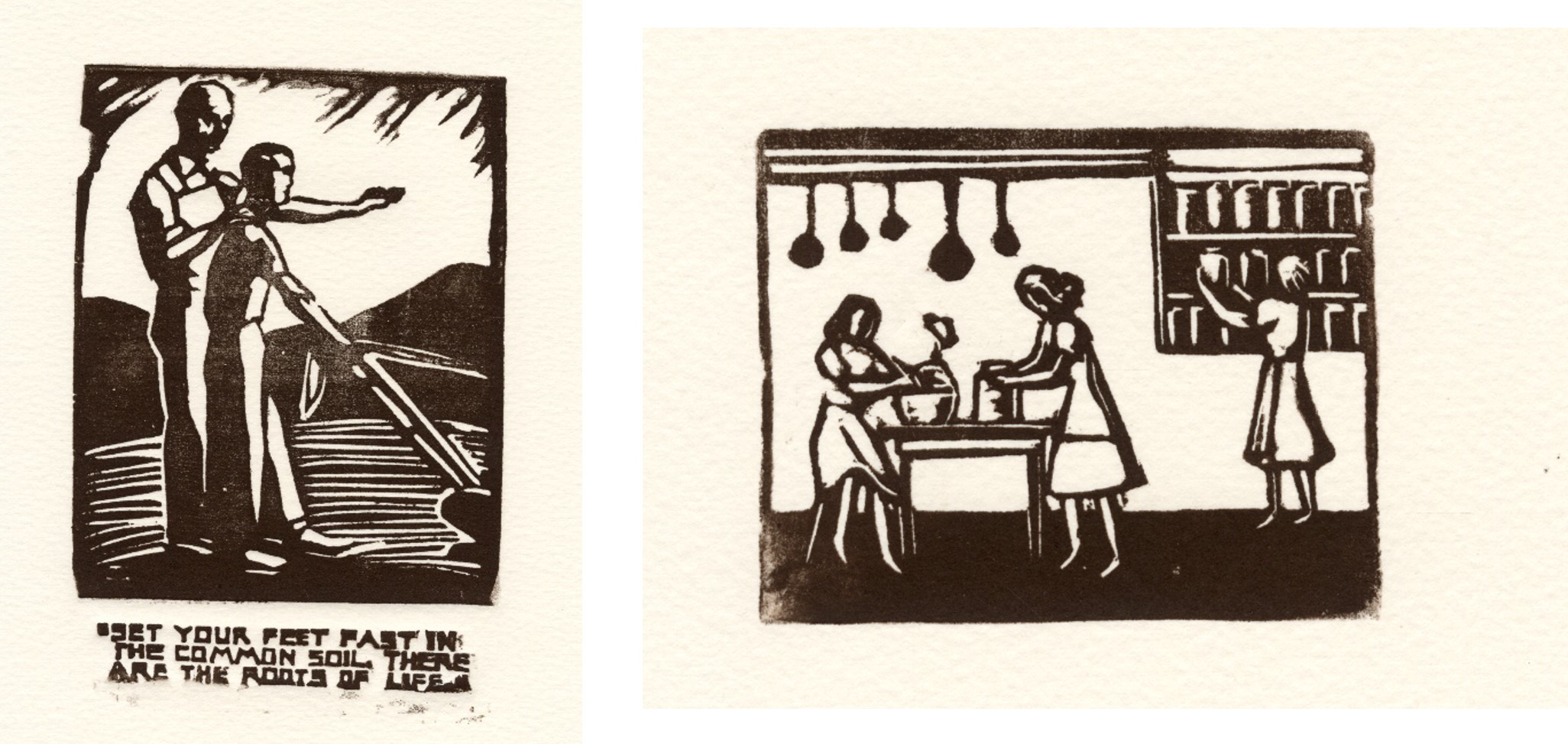
June’s prints are important for their representations of the early Folk School. She created printing blocks depicting many of the first buildings on campus, such as Farm House, Keith House, the Log Cabin Museum, and Mill House. Her prints were used in the school’s newsletters to illustrate daily activities here, like agricultural and domestic labor as well as singing and dancing. Other, holiday-themed prints were used on Christmas cards made by the school.
Additionally, June designed items for craft production. Her sketches of furniture, ironwork, and woodcarvings can be matched with actual objects in the collections of her family and of the Folk School’s Fain Archives. Other sketches may have been used to illustrate items in Craft Shop catalogs. June’s detailed drawings brought her designs to life in ways that could be reproduced by craftspeople and inspire others to buy their work.
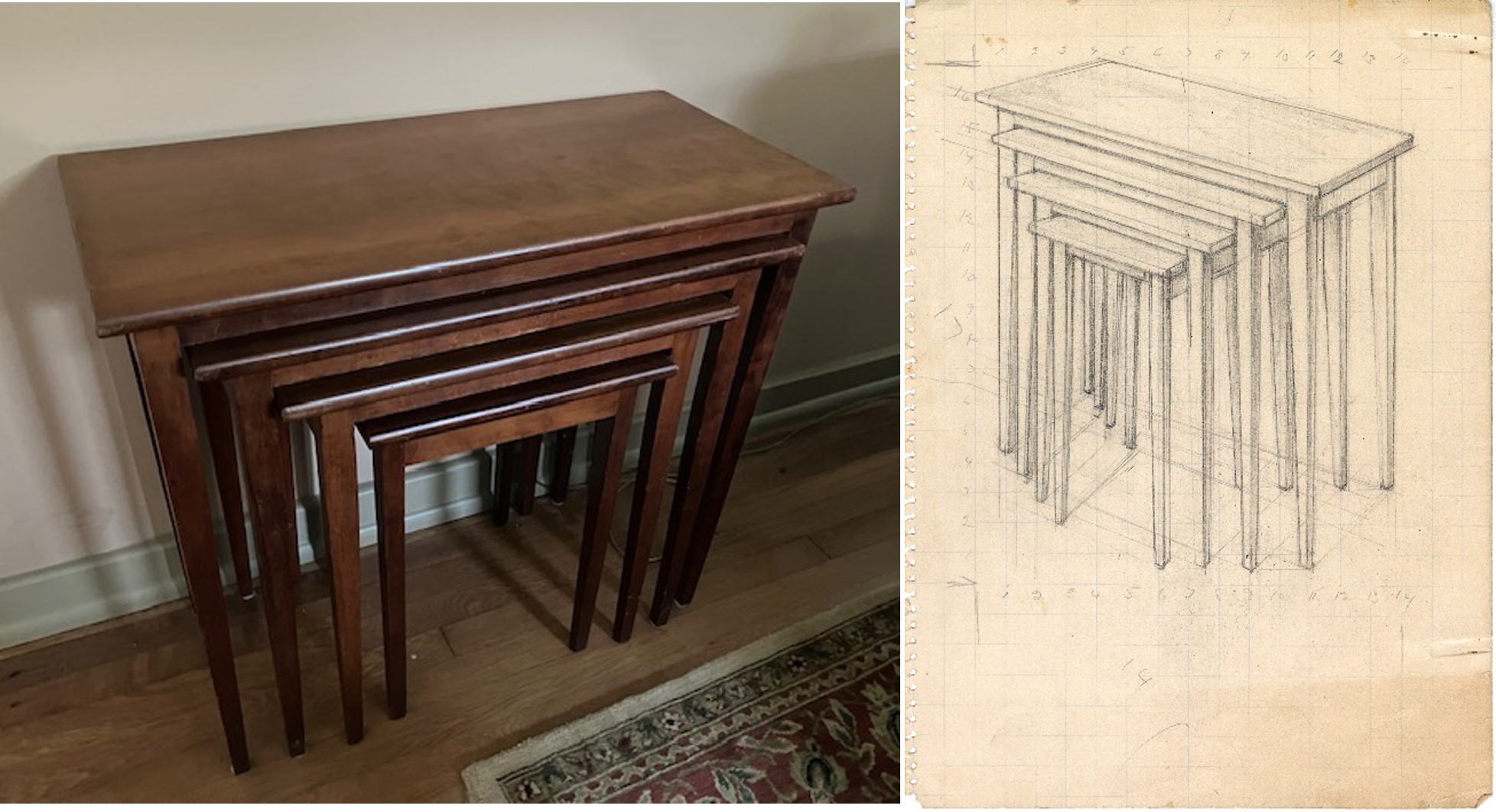
Nesting tables designed by June Coolidge Cary. The set on the left is owned by her descendants.
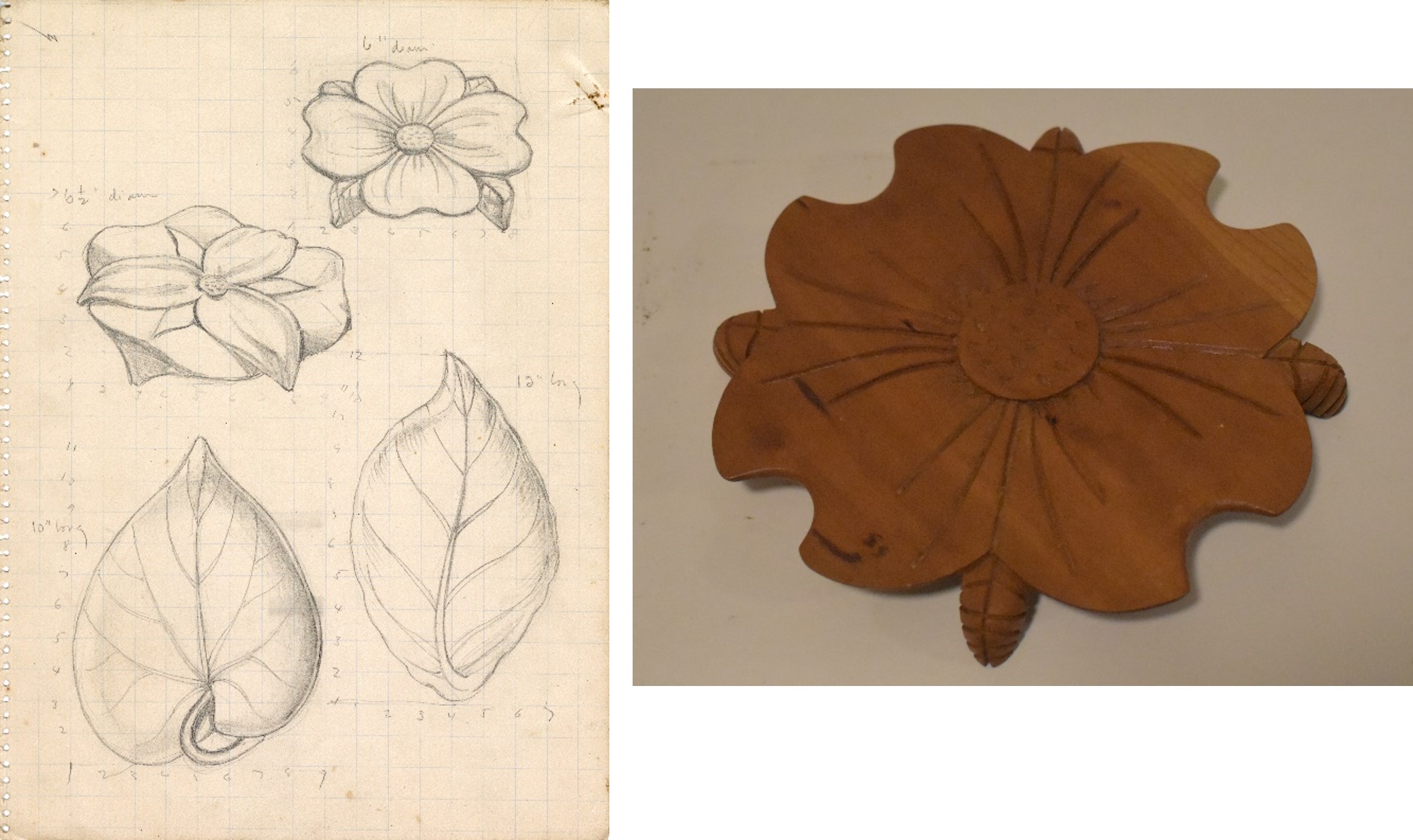
(left) June Coolidge Cary’s sketches of carved wood trivets.
(right) Dogwood trivet carved by Hobart Anderson.
The legacy of June’s work at the Folk School lives on. Her 1928 sketches and later printing blocks are in the Folk School’s Fain Archives, along with some of her drawings of craft designs. Other materials by June can be found at the Massachusetts Historical Society, and additional sketches attributed to her are in a folder labeled “Purse Patterns” in the John C. Campbell Folk School Records at UNC-Chapel Hill. We are excited to present three of June’s designs for sale in honor of the Folk School’s centennial!
The Craft Shop is now offering three prints: Mill House, Farm House, and Keith House.
Reprinted by Jessica White of Over Yonder Press from the original blocks by June Coolidge Cary. Call 828-837-2775 to order.

No Comments