

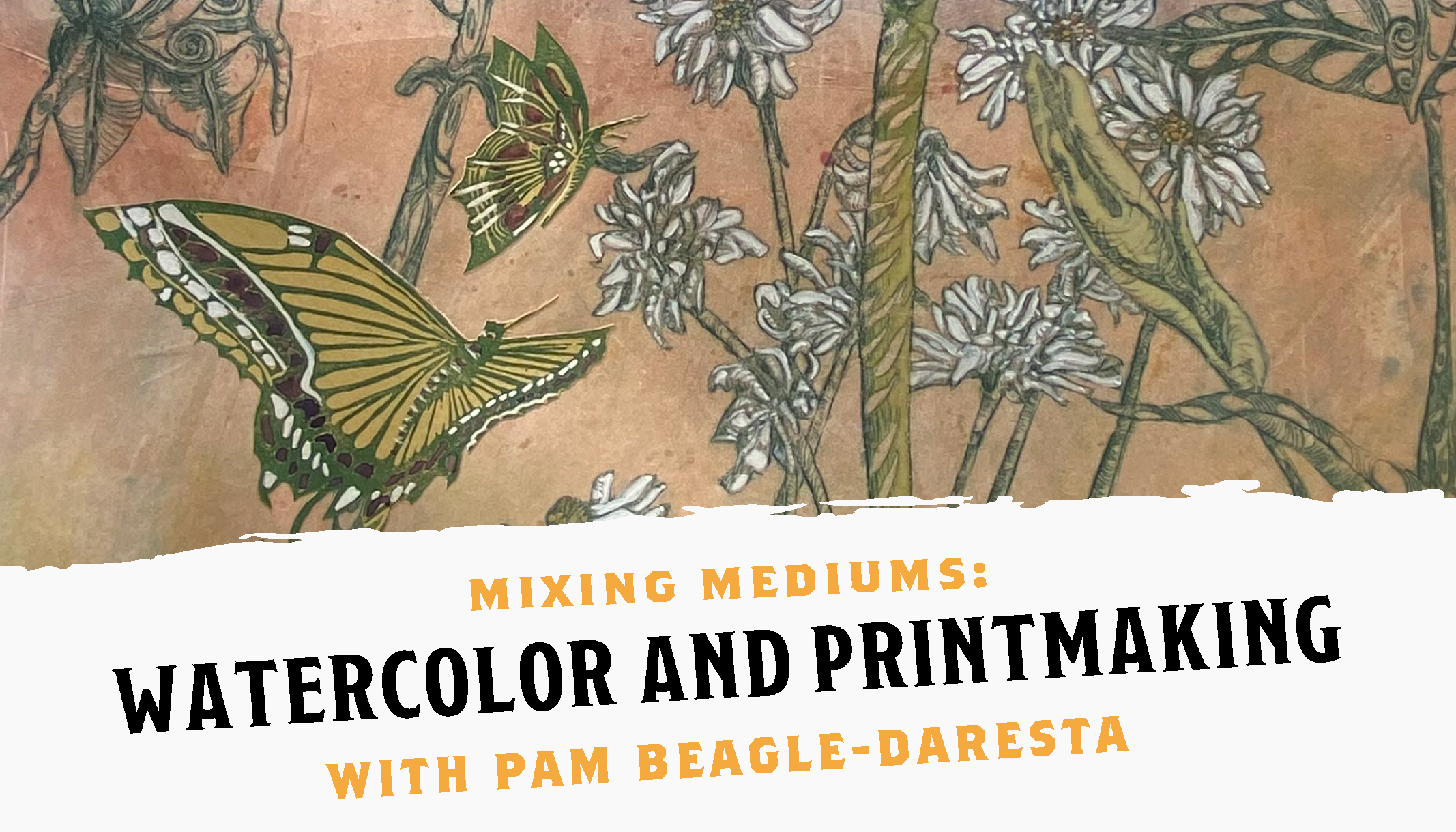
04 Mar Mixing Mediums: Watercolor and Printmaking with Pam Beagle Daresta
JCCFS: Tell us a little bit about yourself and your background. How did you get started?
Pam: I started art school at 17 and received formal training in drawing, painting, printmaking, and papermaking at Ringling College of Art and Design. That strong foundation shaped both my studio practice and my approach to teaching. I now live in Marietta, Georgia, and work as a teaching artist-in-residence with schools, art centers, and museums across Georgia and South Carolina, including the Carlos Museum. I’ve created dozens of community murals and develop museum programming, always connecting historical artists and ideas to students today.
JCCFS: What mediums do you use and where do you derive inspiration from?
Pam: I work across drawing, painting, and printmaking, and I think of drawing especially as a form of visual literacy–it shapes how we see and understand the world. As a printmaker, I love combining processes, including techniques like chine-collé within intaglio printmaking. For me, it’s all about play, experimentation, and staying open to new approaches.
Inspiration can come from anywhere in nature, especially during my time at the Folk School, everyday observation, and the historical connections I encounter through my work with museums. I’m constantly inspired by the layers of meaning and story that surround us.
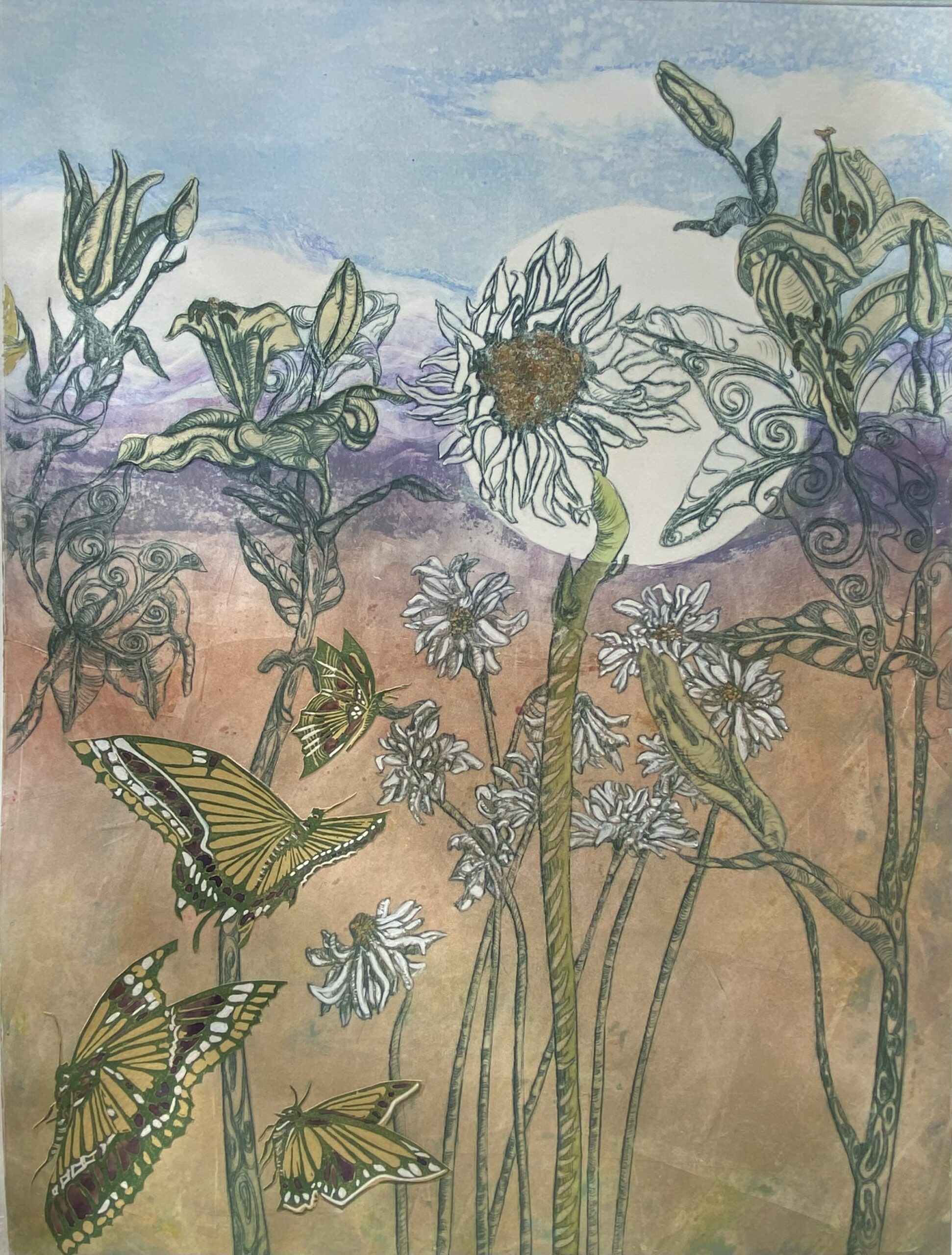
Some of Pam’s prints
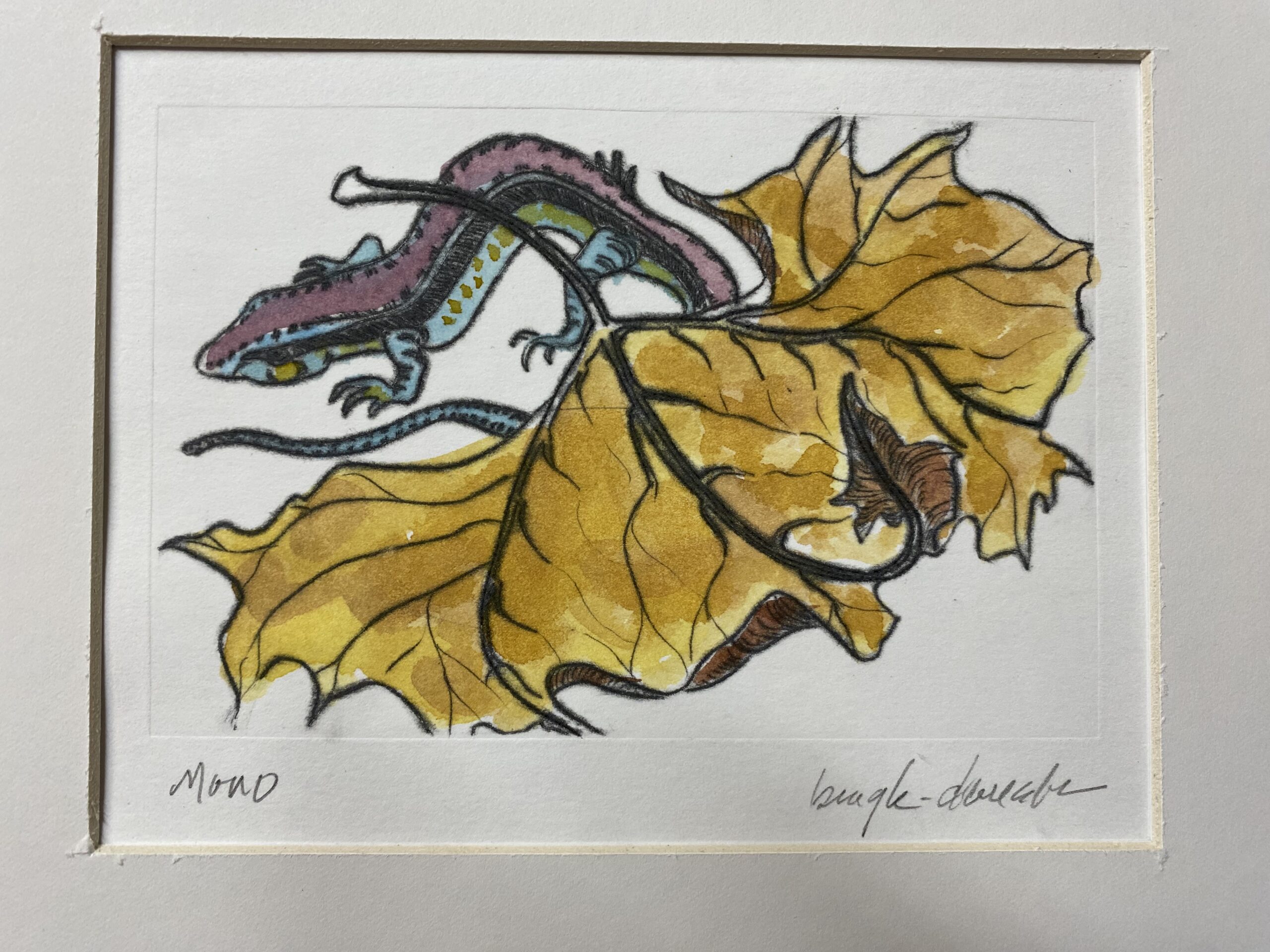
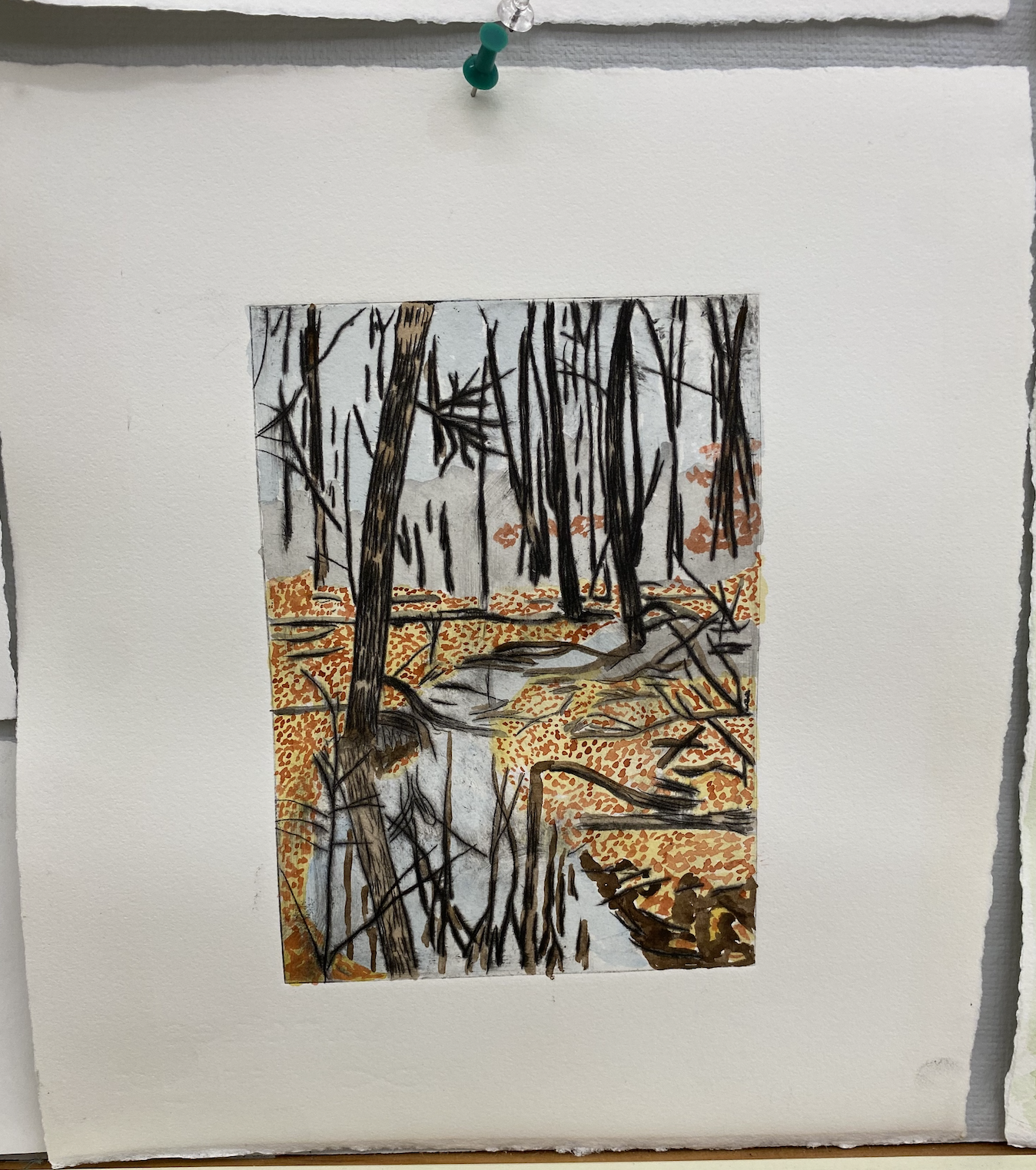
A student’s work
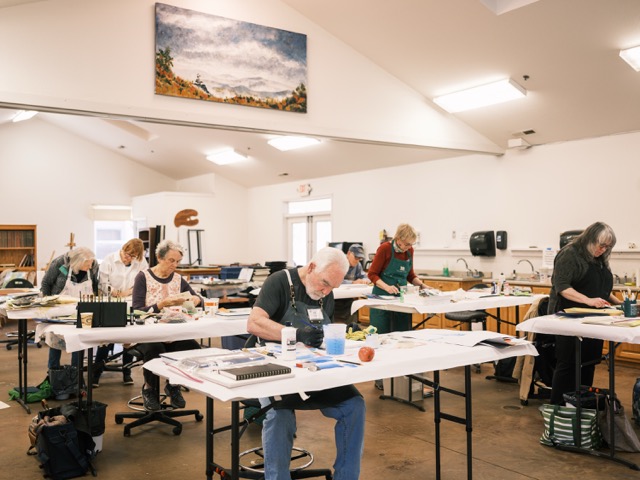
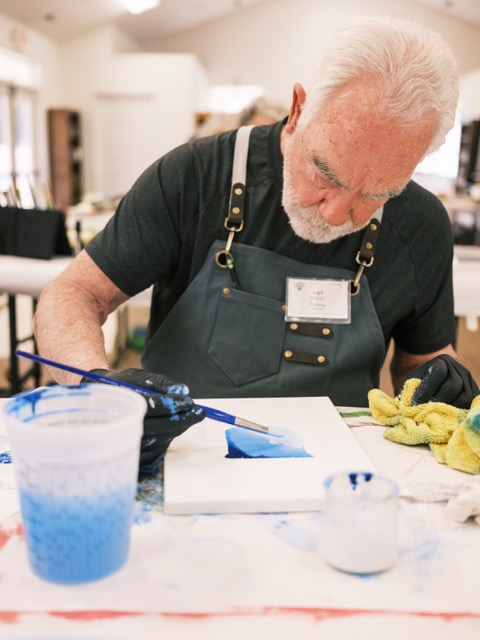
Students working in the Painting Studio
JCCFS: Tell us about your class and what a day in the studio looks like?
Pam: Each day begins with demonstrations of techniques and tools, walking students through drypoint and intaglio processes and how to combine printmaking with watercolor in thoughtful, layered ways. I work one-on-one with students to help them develop strategies for bringing the two mediums together in their own work.
The class is very process-focused and about exploration. We play with possibilities, experiment with newer printmaking methods, and add watercolor elements to expand what a print can be. It’s a mixed media experience that especially welcomes printmakers ready to try something new, though it’s open to everyone.
There’s also a strong sense of community. We share discoveries, support each other’s growth, and learn from seeing how everyone approaches the process. It’s always exciting and fun to watch the work evolve throughout the week.
JCCFS: Where do you spend the most time while you’re at the Folk School, and do you join any afternoon activities?
Pam: I’m really there to teach, so I spend most of my time in the studio with my students. Even in the evenings, you’ll often find me back in the studio, continuing to work or reflect on the day.
I do try to sneak away occasionally for yoga or a massage when I can. I also value quiet time in my room at the Farm House to decompress, think about new possibilities, and reflect on what we explored in class.
One of my favorite traditions is going to The Crown on Tuesday or Wednesday with students. It’s such a great bonding time outside the studio. I also like stopping by the Craft Shop to visit Caroline.
JCCFS: How did you hear about the Folk School? What made you interested in coming to campus?
Pam: I’ve known about the Folk School for over 20 years through my teaching circles. A friend of mine was teaching there, and I first came to campus as her assistant. Not long after, Billy, who was the RA at the time, invited me to teach my first class.
I was also drawn to the fact that other instructors who attended the same art school I did were teaching there. It felt like a natural fit and a community I was excited to be part of.
JCCFS: What tips would you give a student or aspiring craftsperson? Anything you wish you had known earlier in your career?
Pam: Trust yourself and embrace the challenges that come with making art. Remember, it’s called artwork because it works. Commit to your process, dive in, and enjoy it. There are no mistakes—only new possibilities waiting to be discovered.
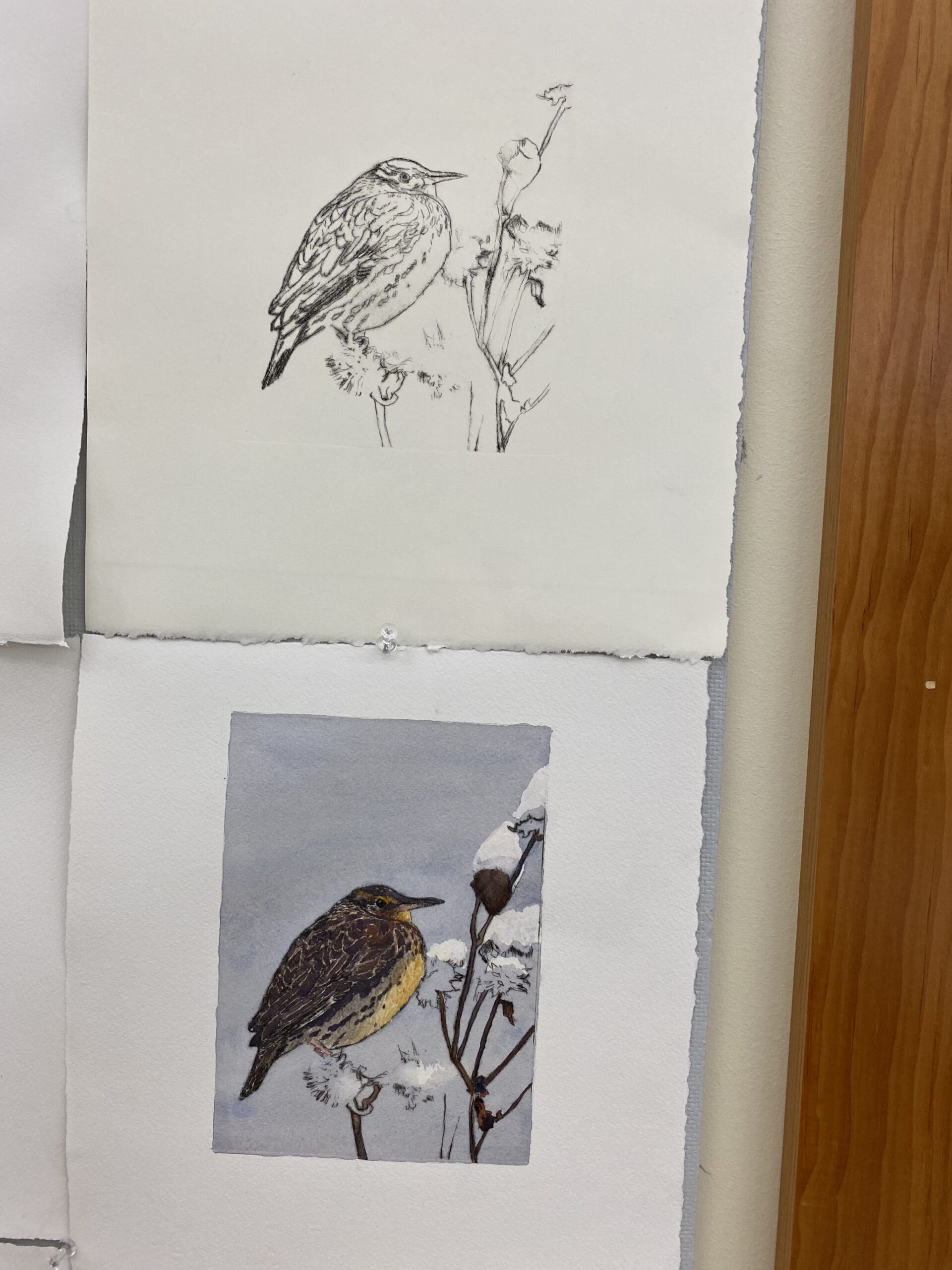
Student work
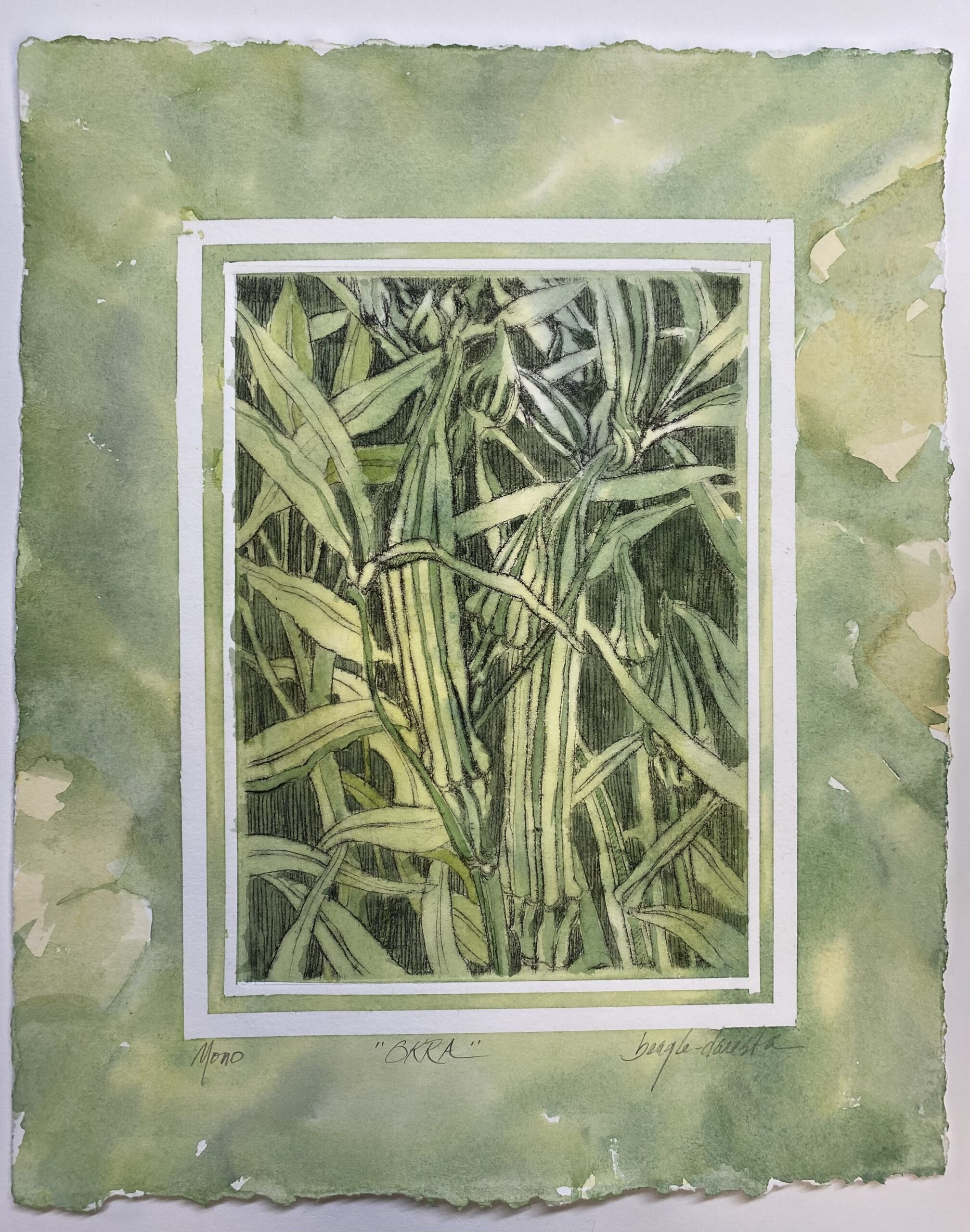
JCCFS: Where can folks find you if they want to stay up to date with your work?
Pam: They can find me on my Facebook
Place and Moments in Prints and Watercolor
Discover the process of creating intaglio drypoint print images with an added pop of color. Choose your image, then use the process of drypoint printmaking and watercolor techniques to make images using nontoxic media. The Folk School’s campus, heritage, and community are brimming with inspiration for creating unique monoprints and embarking on a personal artistic journey.
About Pam Beagle-Daresta
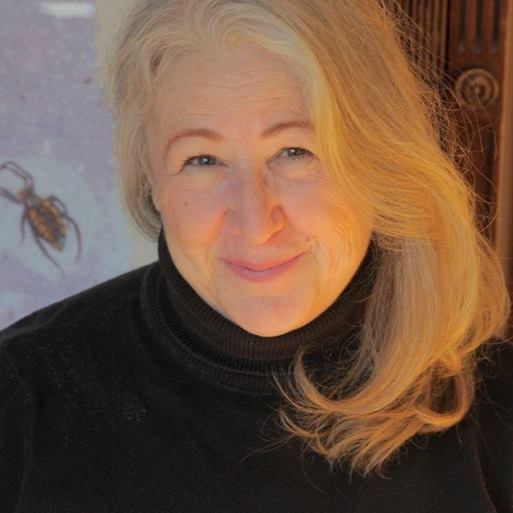
Pam Beagle-Daresta completed formal training in drawing, painting, printmaking, and papermaking at Ringling College of Art and Design in Sarasota, FL. She now resides in Marietta, GA, and is a teaching artist-in-residence with schools, art centers, and museums in Georgia and South Carolina. Pam delights in the processes of and approaches to visual arts and enjoys sharing the creative journey with others.
No Comments