

14 Aug Stories from the Archives: Tales of Early Students
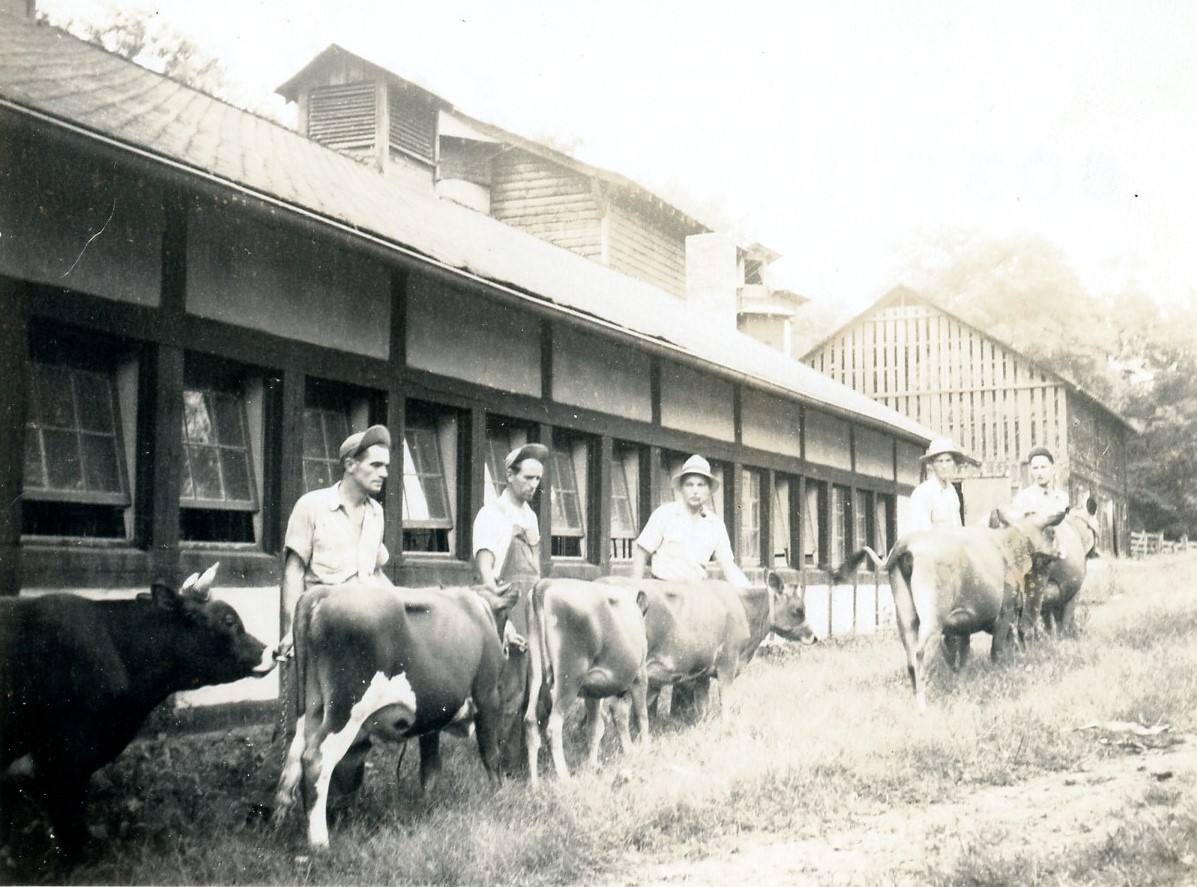
Image: JCCFS farm staff Bert Smith, Bent Teems, Georg Bidstrup, Cecil Tipton, and Verlin Caldwell(?) with cows ready for a 1947 fair. Bert and Cecil had previously been students at the school.
Post written by 2026 Archives work-study student Grace Netanya.
The John C. Campbell Folk School has undergone many changes in its 100 years. It has shifted from a focus on agriculture and rural life towards craft education, and the structure of its student body has evolved in pace. The school’s current work-study program is a continuation of the original folk school structure, in which young people from both the local community and afar would exchange labor for discounted attendance rates during an extended session. Today, the majority of the student body is composed of attendees who come for a single week-long class, with the work-studies being a separate program.
However, one enduring element of the Folk School is that people come back. In fact, some people come back and stay. This was very much part of Olive Dame Campbell and Marguerite Butler Bidstrup’s vision for the school, as they emphasized equipping young people with the practical skills to contribute to a rural community. They viewed the Folk School as a family and each student as an investment that would continue far beyond their presence at the school. It wasn’t uncommon for students to take their newfound skills into the workforce and eventually return to the Folk School to contribute in new ways as staff. Many noteworthy early students left enduring marks on the school and on the surrounding community. Below are just a few of their stories.
Bert Smith was a student at the Folk School from 1934 to 1936. He then went on to Opeaksit Farms, likely in Ohio. In a 1937 letter to his friends at the school, he expressed that he found his current experience to be unideal and wished he was still at the Folk School. Unfortunately, it would be quite a while before Bert was able to return for good – he joined the United States military and served in World War Two. He married fellow Brasstownian Nancy Sue Waldroup in 1945.
Bert maintained correspondence with Olive Dame Campbell, and his friends at the Folk School remembered him when he returned from service. By 1947, he was working in the school’s dairy. In 1952, when the school was in search of a new manager for the dairy, Georg Bidstrup wrote to Olive to recommend Bert for the job. Not much later, in a Folk School newsletter dated October 1953, Georg wrote, “the school’s registered Jerseys were among the twelve top Dairy Herd Improvement Association’s herds in the state in butter fat production. This is especially gratifying as our herdsman, Bert Smith, is one of our former students.”
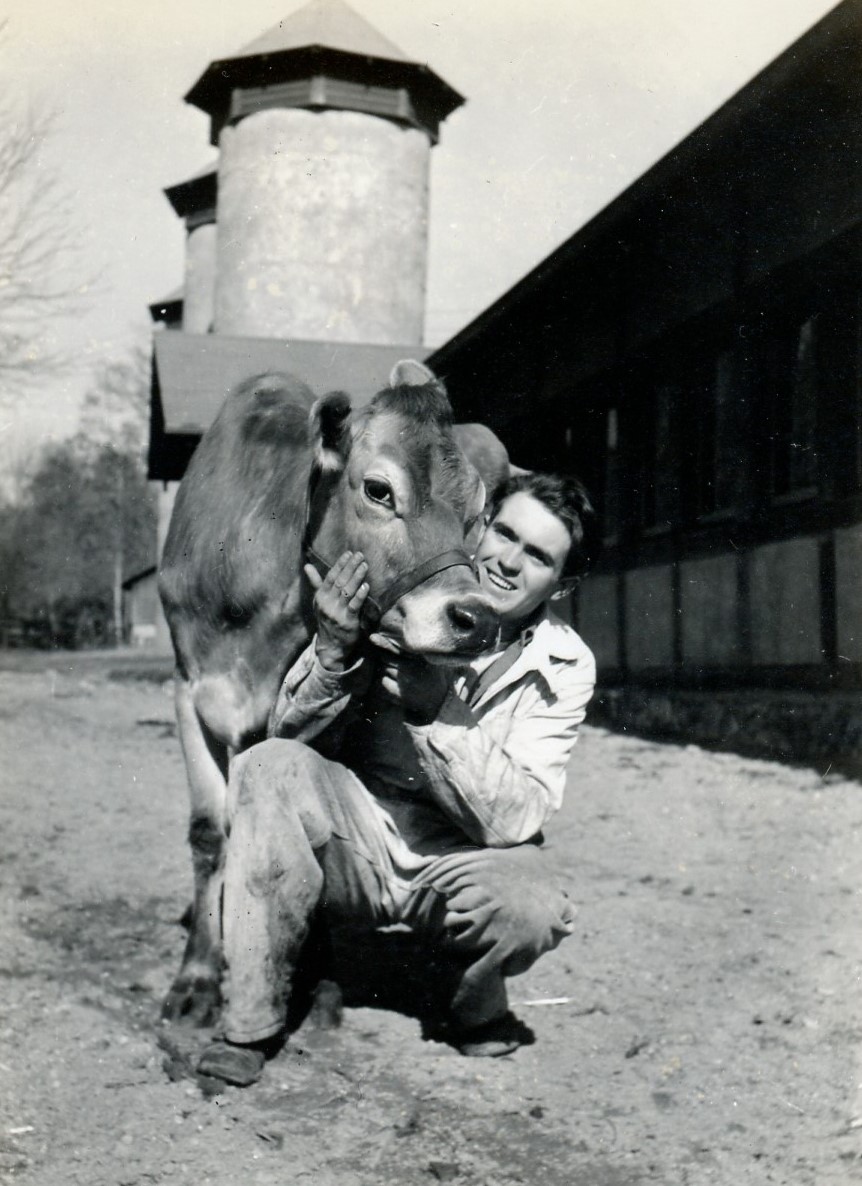
Bert Smith with a cow by the Folk School dairy barn.
Bert continued to be a crucial member of the Folk School staff for decades, eventually becoming the Farm Manager. In 1974, Lois Bacon, Secretary of the Folk School Board, wrote a letter to Bert thanking him for “helping to bring the School through its dark troubles and up into the present better times” as the school faced financial issues and a change to shorter, craft-focused programs in the early 1970s.
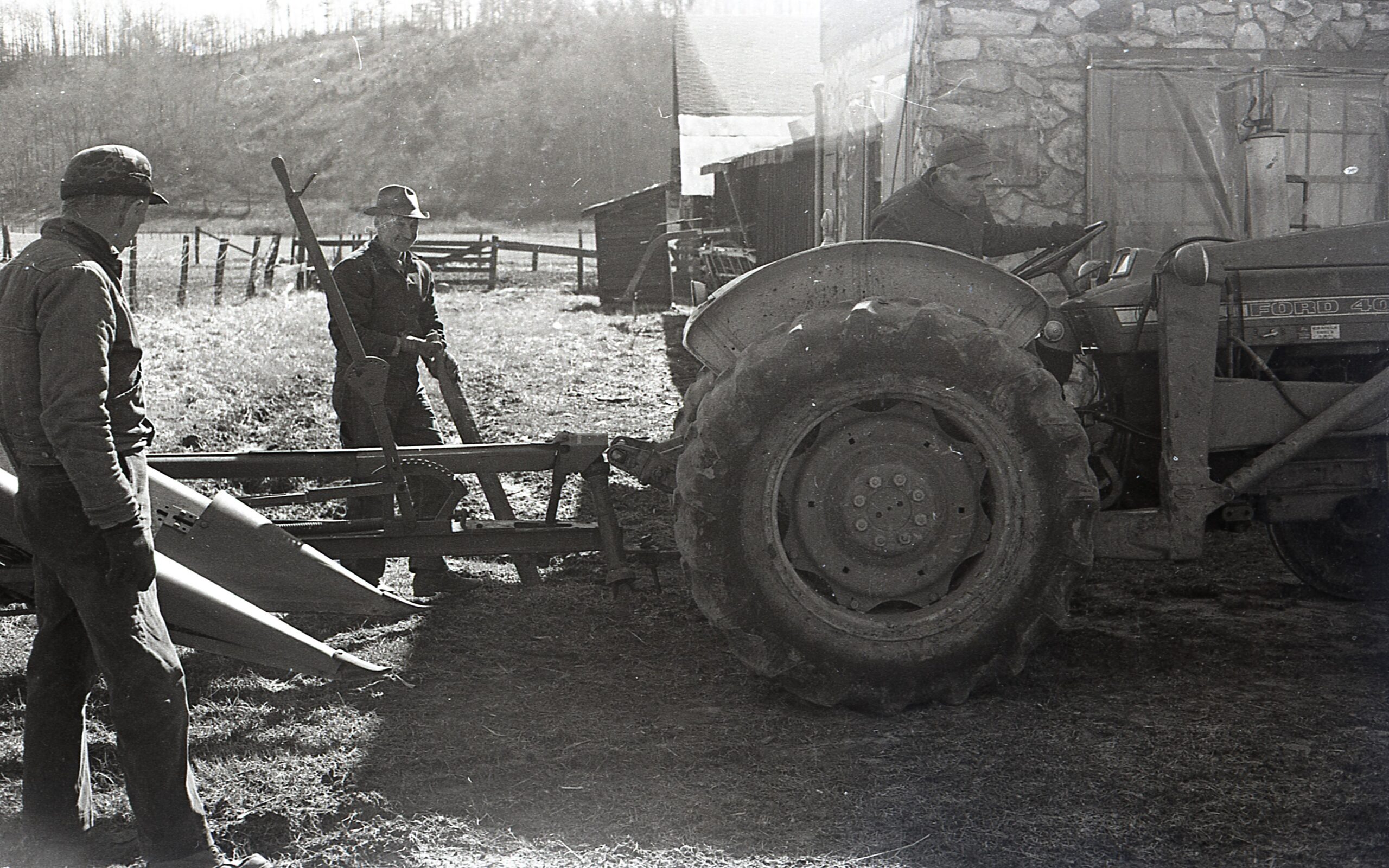
(left to right) Bent Teems, Eb Anderson, and Bert Smith working with a tractor, c. 1973. Photograph by Terry Thorp Fortner.
Verlin Reese (1909-1966) was a student at the Folk School for the 1935-1936 session, learning woodworking and furniture making. Some of his work, including a bookshelf that was his first furniture piece, is now in the collections of the Folk School’s Fain Archives. Verlin stayed at the Folk School after his student session ended, working in the dairy through 1937 and the first half of 1938. In late 1937, Verlin married Sue Carol Williams, a fellow student he had met while at the Folk School. Later in 1938, he took his dairy experience to Georgia, working for the Rabun Gap School farm. Verlin didn’t stay away for long, however. By the end of the 1930s, he made his return to Brasstown and worked for the Mountain Valley Creamery, a co-op founded by Brasstown locals and Folk School staff. Verlin and Sue purchased their own farm in Brasstown in 1942 through the financial support of the Folk School’s Student Loan Fund. Verlin’s path represents the ideal vision of the early Folk School – that the experience would empower students with new work and life skills which could be re-invested into Brasstown’s rural community.
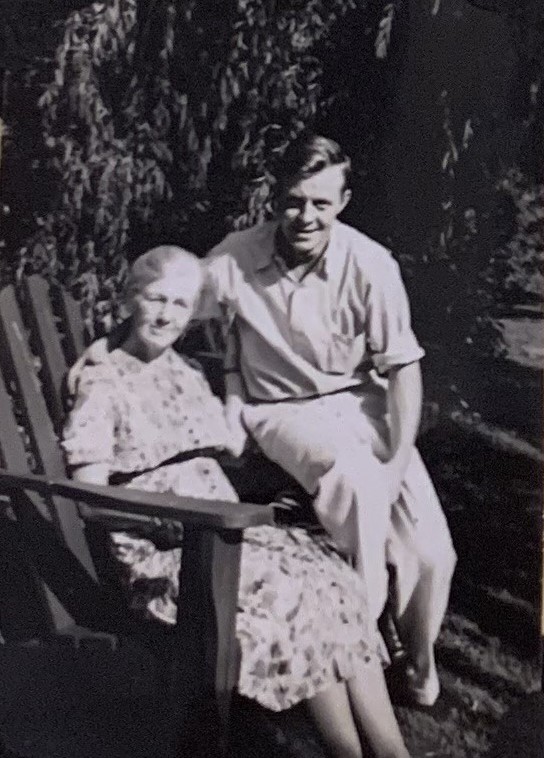
Verlin Reese with Olive Dame Campbell, 1938. Image from the John C. Campbell & Olive D. Campbell Papers, Southern Historical Collection, Wilson Library, The University of North Carolina at Chapel Hill.
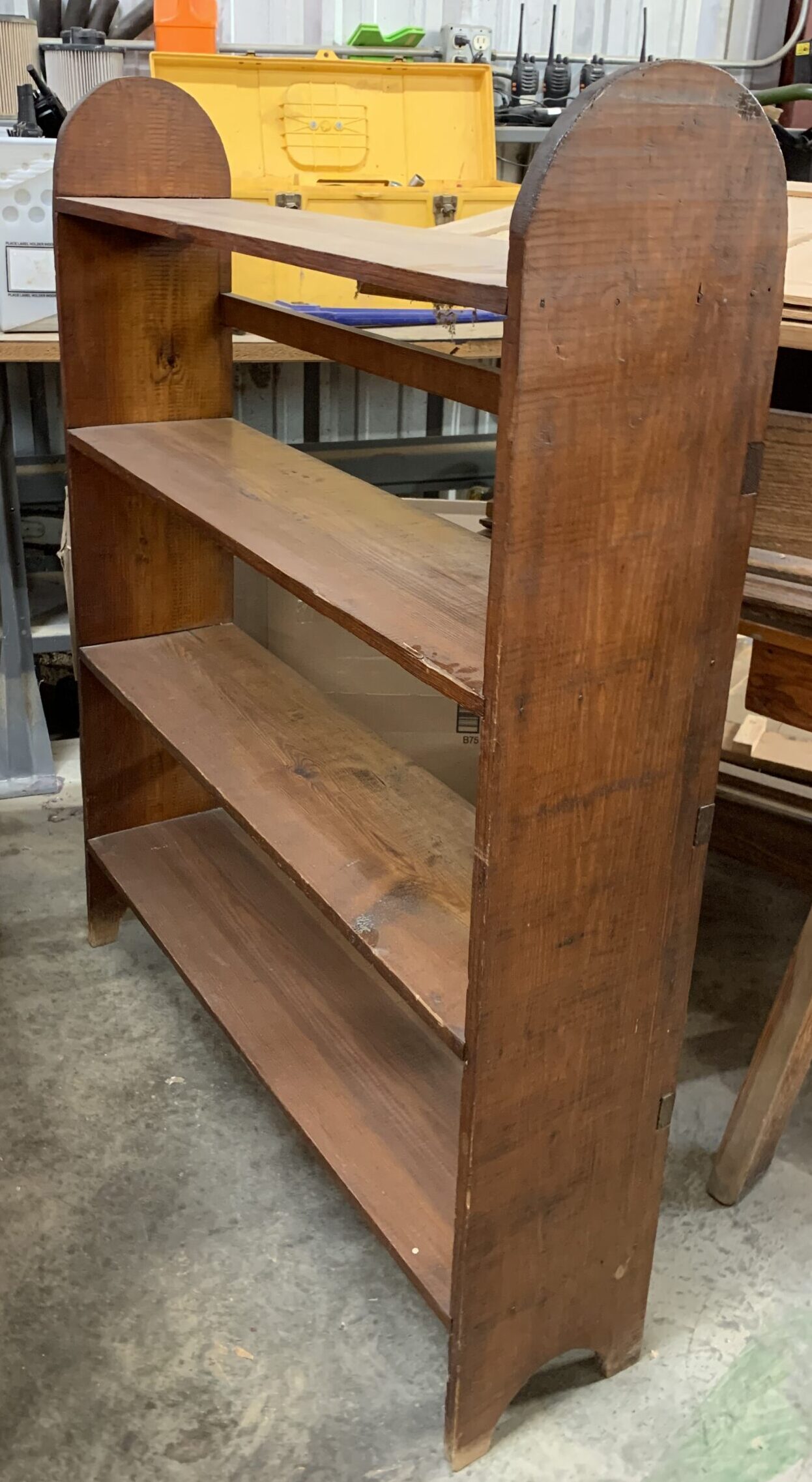
Four-shelf wood bookcase built by Verlin Reese during his time as a student at the Folk School.
Many early students maintained personal relationships with staff members, especially Olive Dame Campbell and Marguerite Butler Bidstrup, whose extensive letter correspondence with students is documented in the Fain Archives. Jeannie James, originally of Simpsonville, South Carolina, attended the Folk School for either the 1938-1939 or the 1939-1940 session. Jeannie gave two generous handmade gifts to Marguerite that are now in the Fain Archives. As a birthday present in 1940, she made a watercolor painting of a familiar mountainous landscape. Likely around the same time, she also gave Marguerite a blue woven dress. The dress is an example of a medium that Jeannie seemed particularly accomplished at, as a group photo of Jeannie and her classmates is accompanied by a note reading, “Jeannie weaves – the others worked in house and kitchen.” She continued to live in Western North Carolina afterwards, as her correspondence to Olive and the school in the early 1940s is postmarked from Asheville College. Not much else is know about Jeannie’s time after the Folk School, or if she kept up with her passion for weaving, but a student index card in the Fain Archives notes that she later went on to attend Berea College and to earn both a Master’s degree and a PhD from Illinois State Normal University, a school designed to train teachers.
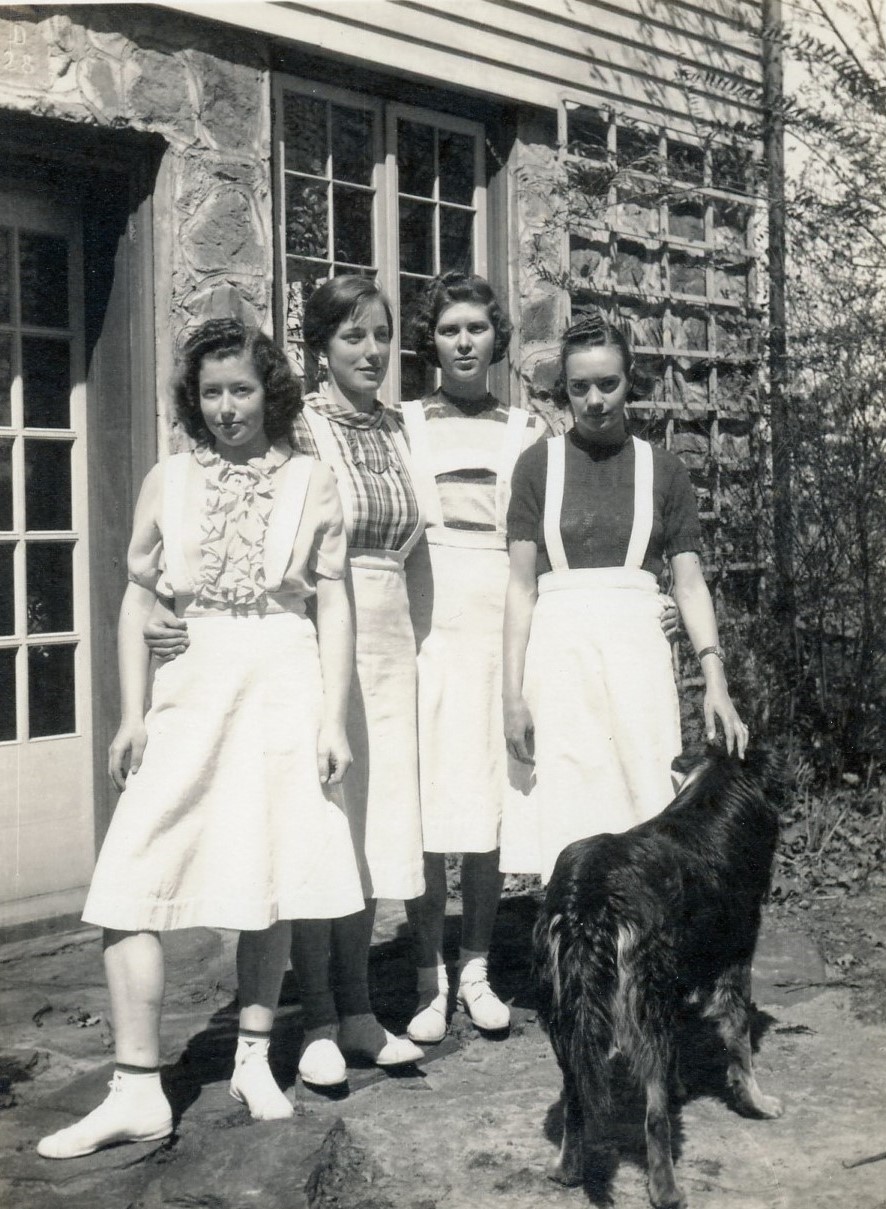
Jeannie James (on left?) with a group of her Folk School classmates, wearing feed-sack fabric skirts that they made.
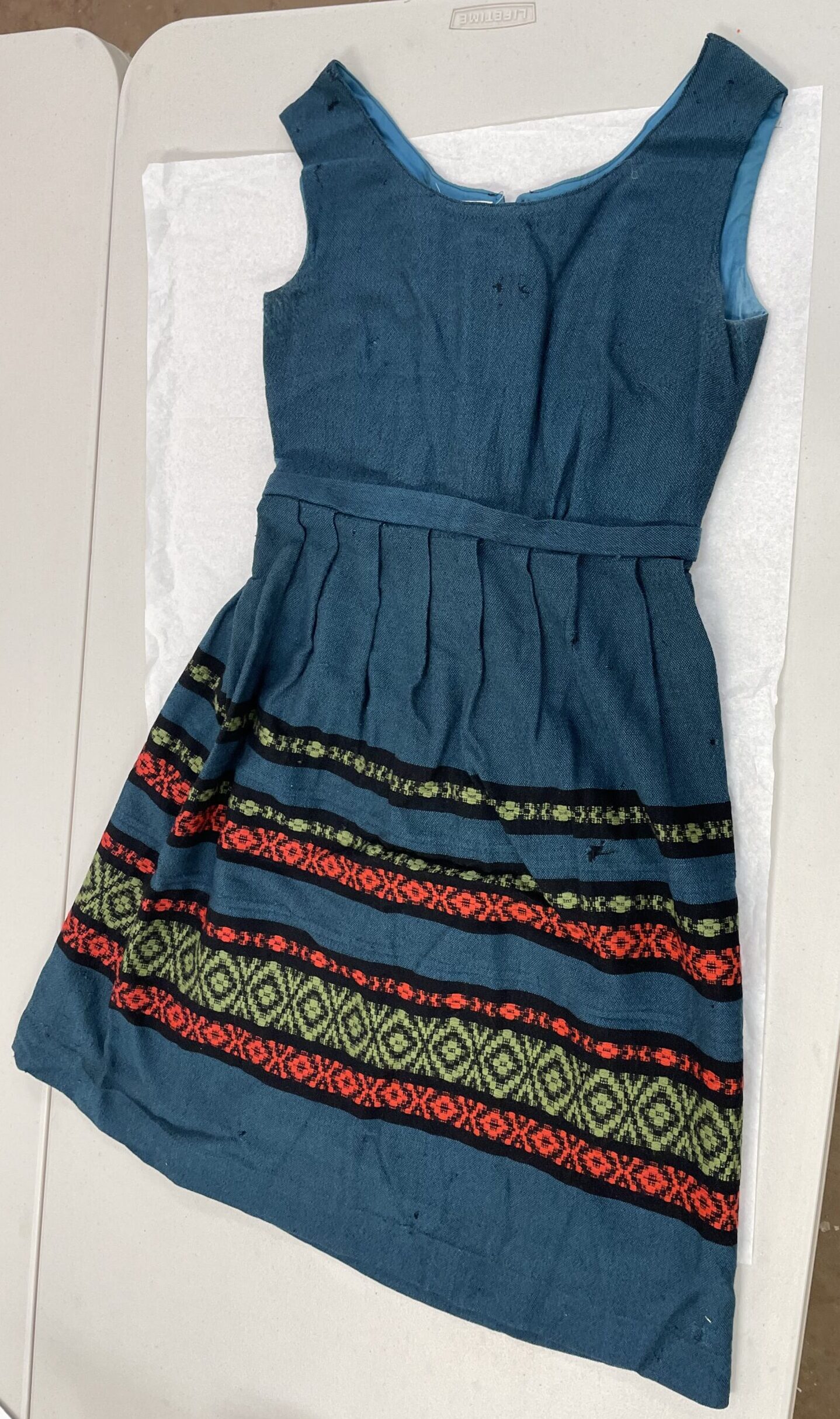
Dress woven by Jeannie James as a gift to Marguerite Butler Bidstrup, c. 1940.
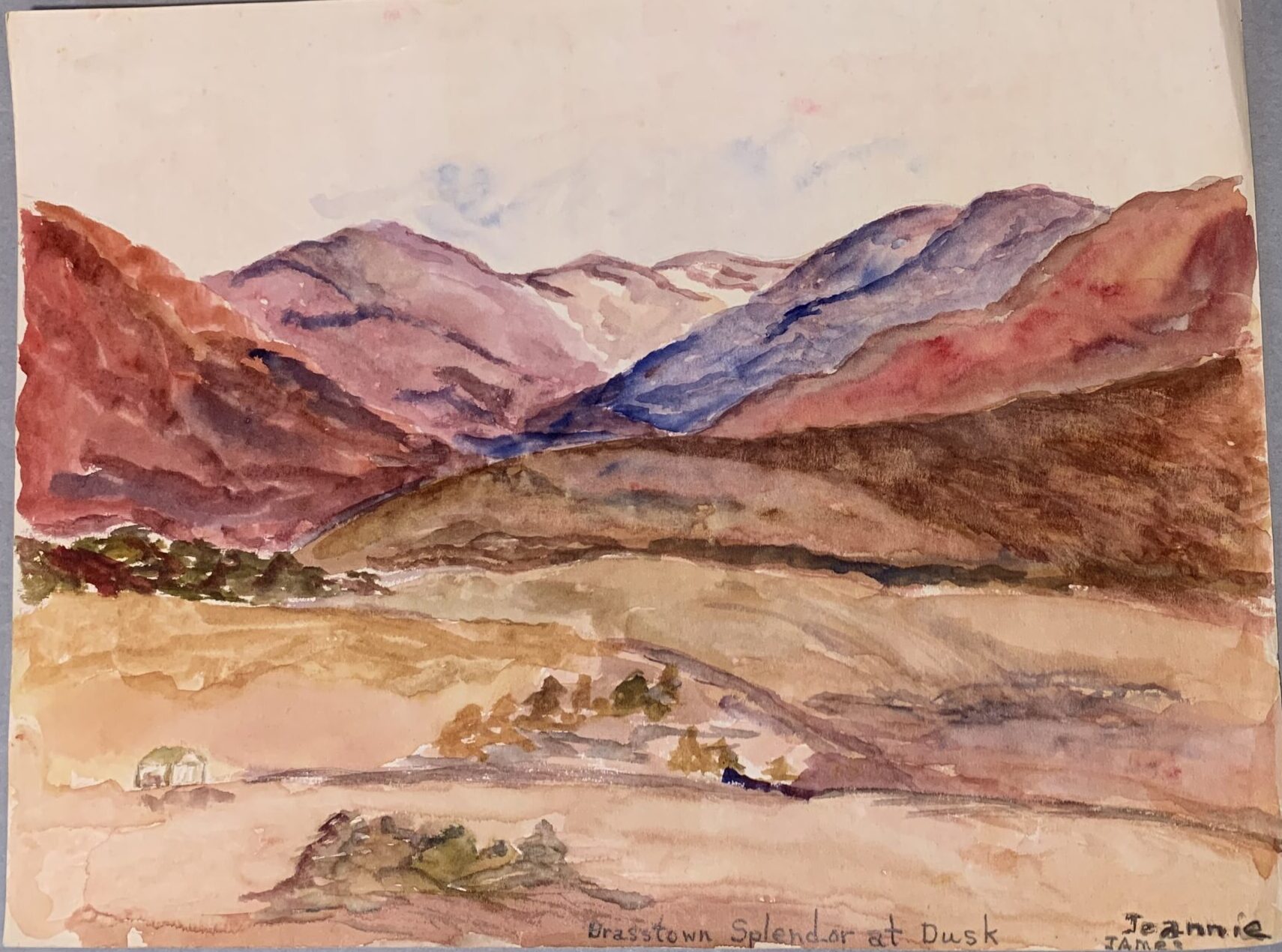
“Brasstown Splendor at Dusk,” watercolor painting made by Jeannie James as a birthday gift to Marguerite Butler Bidstrup, 1940.
To this day, many Folk School students and work-studies either return to the school’s community with increased experience or stay in the area after their original experience ends. The Folk School’s legacy as a place that has a lasting impact on individuals’ lives is apparent both in the community today and in the Fain Archives, where evidence of lifelong relationships abound.
No Comments