

10 Aug Art Yarn Tells the Tale, Interview with Spinning Instructor Riley Kleve
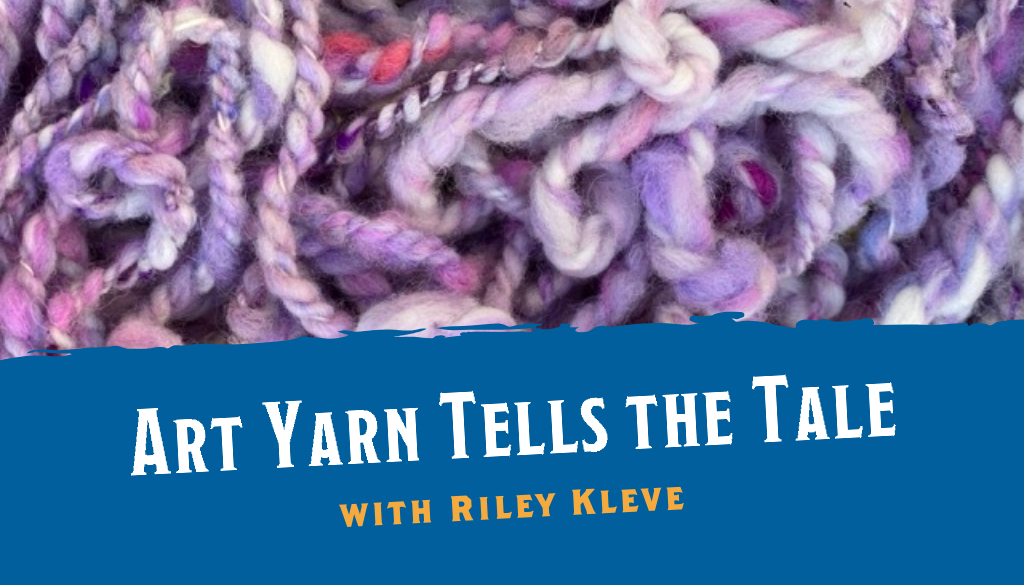
In Riley Kleve’s class “Art Yarn Tells the Tale,” students will immerse themselves in spinning yarn. Familiarize yourself with the acid dyes and experiment with wool locks, silk, and recycled fibers in the studio as you learn with fellow handspinners. This class runs from October 25 to 31.
Learn more about this creative spinning experience in our interview below!
JCCFS: Tell us a little about yourself. What’s your background in your medium? How did you get started?
RK: Handspinning first caught my eye in the basement of a yarn shop when I was in high school– I was looking through the shop’s bargain bin of textured yarns that had fallen out of style, and spotted the most beautiful braids of wool ready to be transformed into yarn. I bought a drop spindle the first chance I got, and my love for spinning took off from there. In the nearly fifteen years since, I have spun miles and miles of yarn in all shapes and textures. Handspun yarn has so much more character than the yarn that you can buy in a store. When I’m spinning, I’m able to make precise design choices about color, texture, and structure that go far beyond what any machine can create. During my spinning journey, my yarn has won ribbons at the Minnesota State Fair and my writing has been published in Spin-Off and Ply Magazines.
JCCFS: Tell us more about your class’s specific technique or process
RK: This class explores yarn as a storytelling medium. Just like any good story, a skein of yarn has a beginning, middle, and end. From fiber prep to finished object, my hands move through my yarn four or more times, just like telling a tale over and over again. By incorporating different motifs, like color changes and pops of texture, you can create yarn that evokes a narrative for the maker and viewer. We’ll explore stories of all sorts in class: Can yarn describe a perfect sunset? Can it be a journal of your scraps from a year? Can it be a poem? A song? A tool for mindfulness? (The answer to all of the above is YES!)
JCCFS: What can students expect to leave your class with?
RK: We’ll cover a lot of ground in class: working with colorful acid dyes, exploring ply structures beyond your conventional 2-ply yarn, and adding texture with materials like wool locks, silk, and recycled fibers. Even if you’re not a huge fan of art yarn, you’ll learn plenty of techniques that are useful for spinning more conventional yarn, including watercolor dyeing, chain plying, color theory, and carding a smooth gradient batt. I’ll also cover recordkeeping for spinners and other fiber artists. You’ll leave class with a collection of samples of many techniques (which are themselves a story of your journey in class!), along with longer skeins of your own design, guided by thought-provoking exercises.
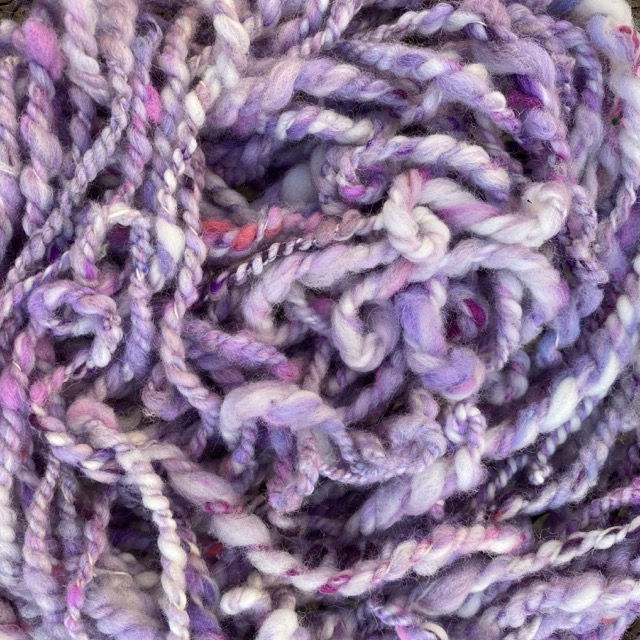
Yarn by Riley Kleve.
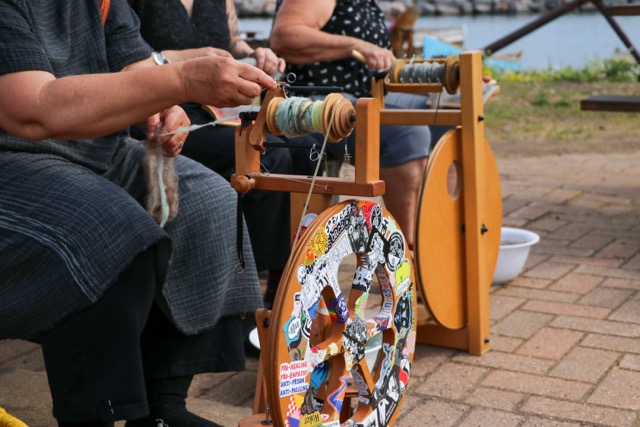
Spinning yarn.
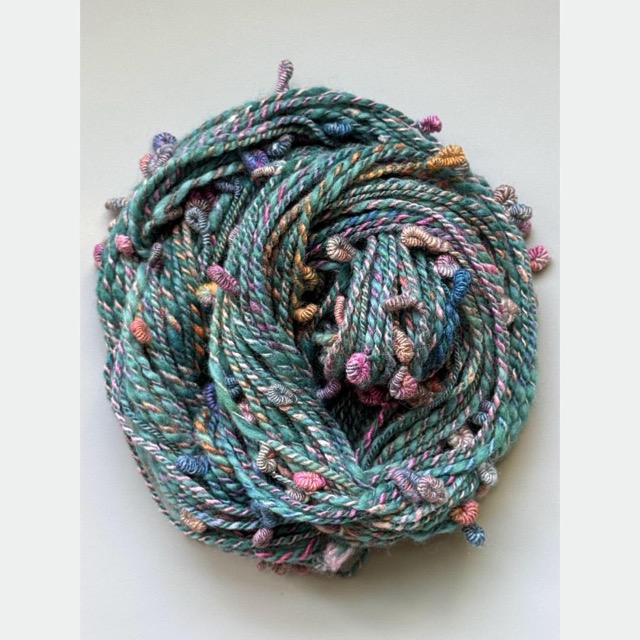
More yarn by Riley Kleve.
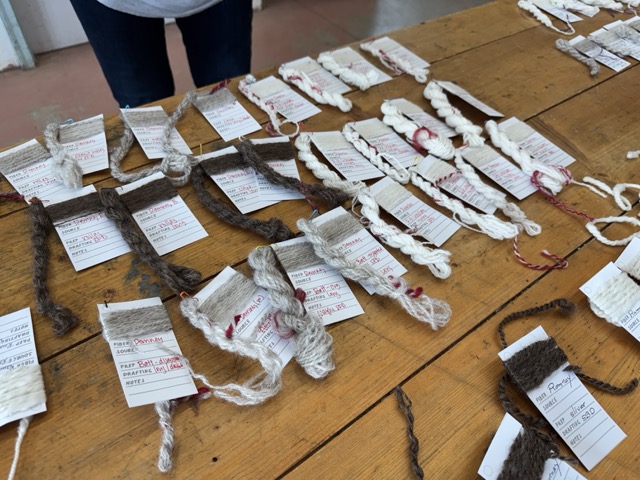
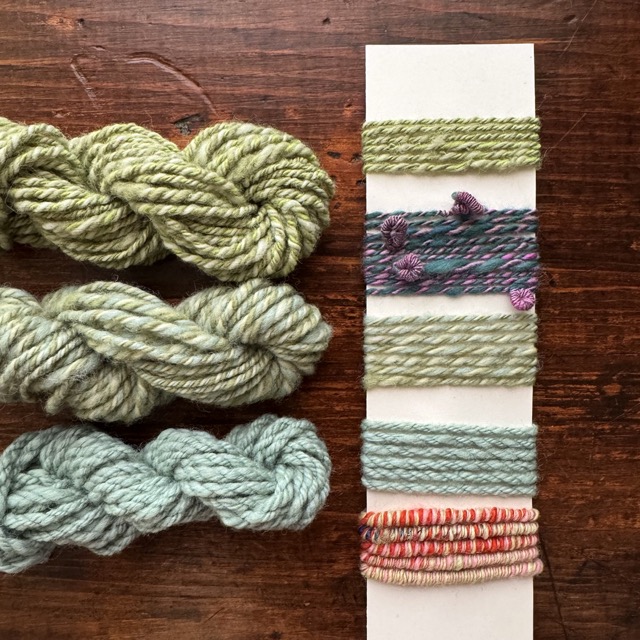
Yarn tests.
JCCFS: What is your favorite aspect or part of the Folk School? What do you most look forward to when coming back to teach on our campus?
RK: I see the classroom as a place for curiosity, so I really love all of the questions that students bring with them to class. It’s even better when a student asks me a question I’ve never considered! My classes in handspinning are driven by learning new processes, versus completing a project in class, so we always have a lot of room to explore little rabbit holes together or independently. Every now and again, I’ll get a student who really wants to know if they’re making yarn the correct way, which is the only question I don’t have an answer to. Instead, I’ll ask them if it looks how they want it to look, and if it will make the fabric they want it to make. If the answer to both is “yes” , then it’s great yarn! If not, I have a whole toolbox of tweaks they can make to their fiber, prep, drafting, spinning, and finishing in order to make the yarn of their dreams. A lot of “art yarn” techniques are simply exaggerations of these tweaks, and by practicing making yarn with bold texture, I find a lot of spinners get drastically better at spinning conventional yarn they love as well.
JCCFS: What tips would you give a student or aspiring craftsperson? Anything you wish you had known earlier in your career?
RK:
The best craftspeople I know have amazing archives of past projects and samples. They’re beautiful to look at, but they also serve as a record of what they made and how they made it, so that if they revisit that project in the future, they’re not starting over from square one. I’ve spent a weekend creating dozens of swatches exploring variations in texture resulting from small tweaks in my spinning, other times I’m just stapling a bit of yarn from a project into a journal with some notes on the choices I made while spinning it. Regardless of how in-depth you get with your recordkeeping, it’s so helpful in your journey as a maker!
JCCFS: Where can folks find you if they want to stay up to date on your work?
RK:
My website is rileykleve.com, and I have a newsletter where I share insights from my studio and teaching practice. In a typical year, I might share cool textile finds from museums and antique shops, highlight my upcoming classes (virtual and in-person classes that are worth the travel), and give a behind-the-scenes look at life as a full-time artist and teacher. I’m also working on some monthly snail mail clubs where I send out a new project or a textile puzzle to work on each month. Stay tuned!
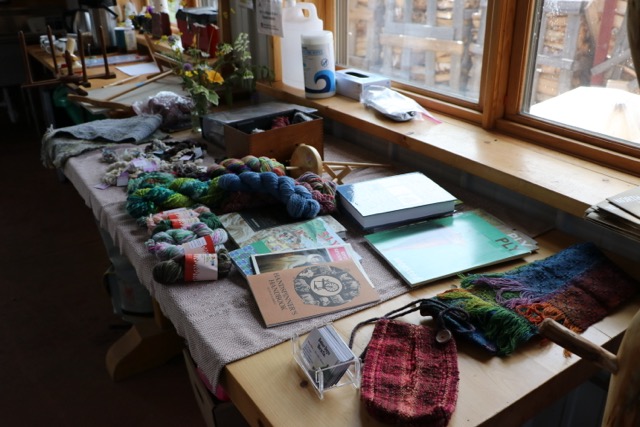
Spinning yarn examples.
Upcoming Class with Riley Kleve
Art Yarn Tells the Tale
October 25 – 31
Riley Kleve is a textile artist and educator creating interactive and collaborative work in community settings. Their work in weaving, hand spinning, and knitting draws from history to create a queerer vision for the future of textiles. Riley is a contributor to Spin Off Magazine, most recently publishing an article about gathering community through willowing, an antiquated style of processing wool. They are a resident artisan at North House Folk School in Minnesota, and also teach hand spinning at the Weavers Guild of Minnesota, Textile Center (Minneapolis), and at the American Swedish Institute. Riley is a 2025 recipient of a Creative Individuals project grant from the Minnesota State Arts Board.

No Comments