

05 Aug Practical Magic: Bringing Broommaking Home with C. Murphy
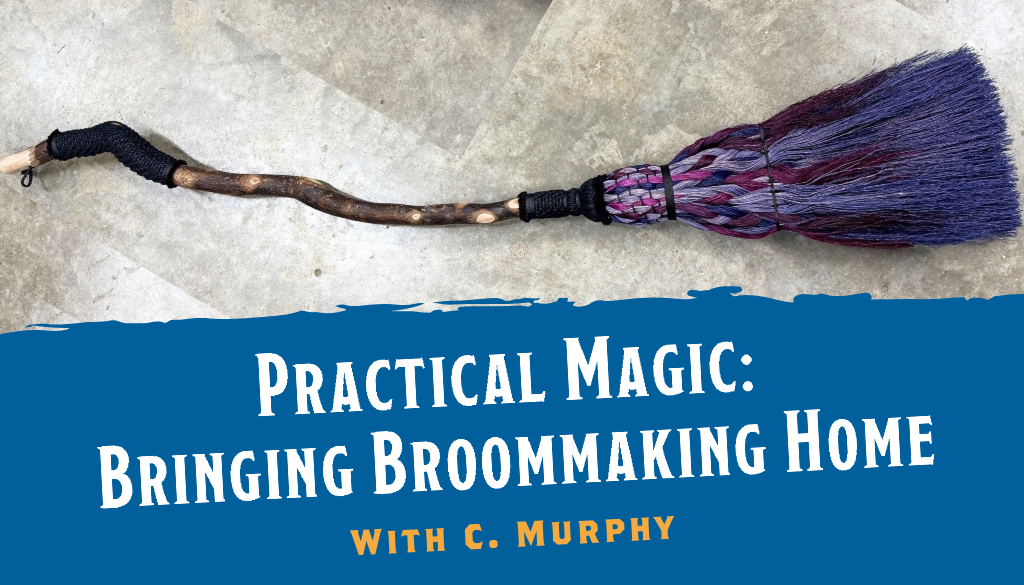
In C. Murphy’s class “Practical Magic: Bringing Broommaking Home,” students will dive into the world of hand-building artisanal brooms. Familiarize yourself with the tools and skills you need to leave with the knowledge to continue broom making in the comfort of your own home. This class runs from September 20 to 26.
Learn more about this broom making experience in our interview below!
JCCFS: Tell us a little about yourself. What’s your background in your medium? How did you get started?
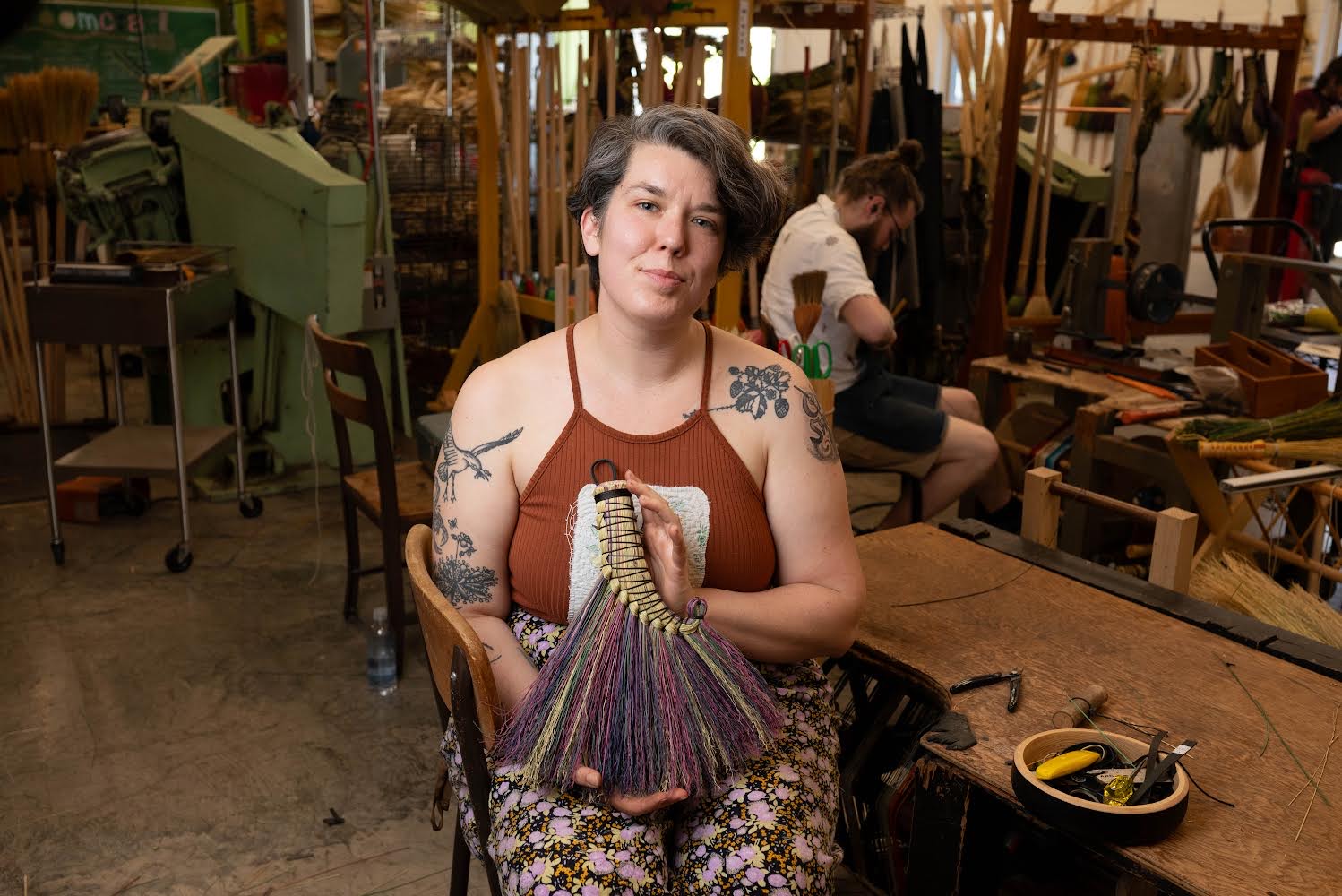
CM: I first learned to make brooms at the Folk School as a work study in 2023. I made my very first brooms with the help of friends in the pavilion behind the Rock Room. A few weeks later, I was able to take a weekend class with Chris Robbins, former Head of Berea’s Broomcraft Program: I made 16 brooms in two days, and never really stopped. When I was a student host in 2024, I was able to take a weeklong broomcraft workshop with Max Hendry and Jada Patterson, further deepening my knowledge of the craft and showing me just how fun a broom workshop could be! In the spring of this year, I was fortunate enough to be chosen as the 25/26 Berea Broomcraft Fellow. The fellowship is a rigorous, full-time production role alongside professional and inspiring students, with Amanda Lee Lazorchak, Hunter Elliott, and the amazing Student Craft Staff at the helm. While I consider myself an interdisciplinary craftsperson who works in a variety of mediums including woodworking, blacksmithing, jewelry, alternative process photography, basketry, drawing & painting, fiber arts, and more – broommaking is at the core of my practice, business, and teaching. Since learning to make brooms, they have helped support me and my journey as a craftsperson – and through them, I have been able to help support other craft artisans with handbrooms and brushes specific to their practice. Aside from the Folk School, I have taught independently, at A Workshop of Our Own in Baltimore, MD, and have upcoming classes at the Folk School and Snow Farm New England School of Craft in 2027.
JCCFS: Tell us more about your class’s specific technique or process
CM: In Practical Magic, we’ll get into the nitty gritty of what you need to know to effectively produce brooms at home – we’ll talk about what tools you need at various levels and how to make some of them, how to process and store materials, responsibly harvesting materials from private and public property (with permission!), how to dye and dry material, we’ll explore plaiting and other decorative techniques, growing your own broomcorn and other botanicals, more – and of course, we’ll make lots of brooms. This class is perfect for people who have already made brooms or taken some classes and want to bring broom making home. Whether you’re trying to go all the way and make broom making a profession (and don’t know where to start), or you’re simply hoping to enjoy this fulfilling craft in a home setting to experiment and make brooms for yourself, friends, and community, this class should provide the guidance you need to succeed making brooms independently.
JCCFS: What can students expect to leave your class with?
CM: Students will leave class with a bunch of brooms and the knowledge to keep making more, as well as a variety of tools to use at home that we’ll make ourselves: a stick for measuring stalk-on broomcorn, a travel broom brake, a jerk string puller, and more.
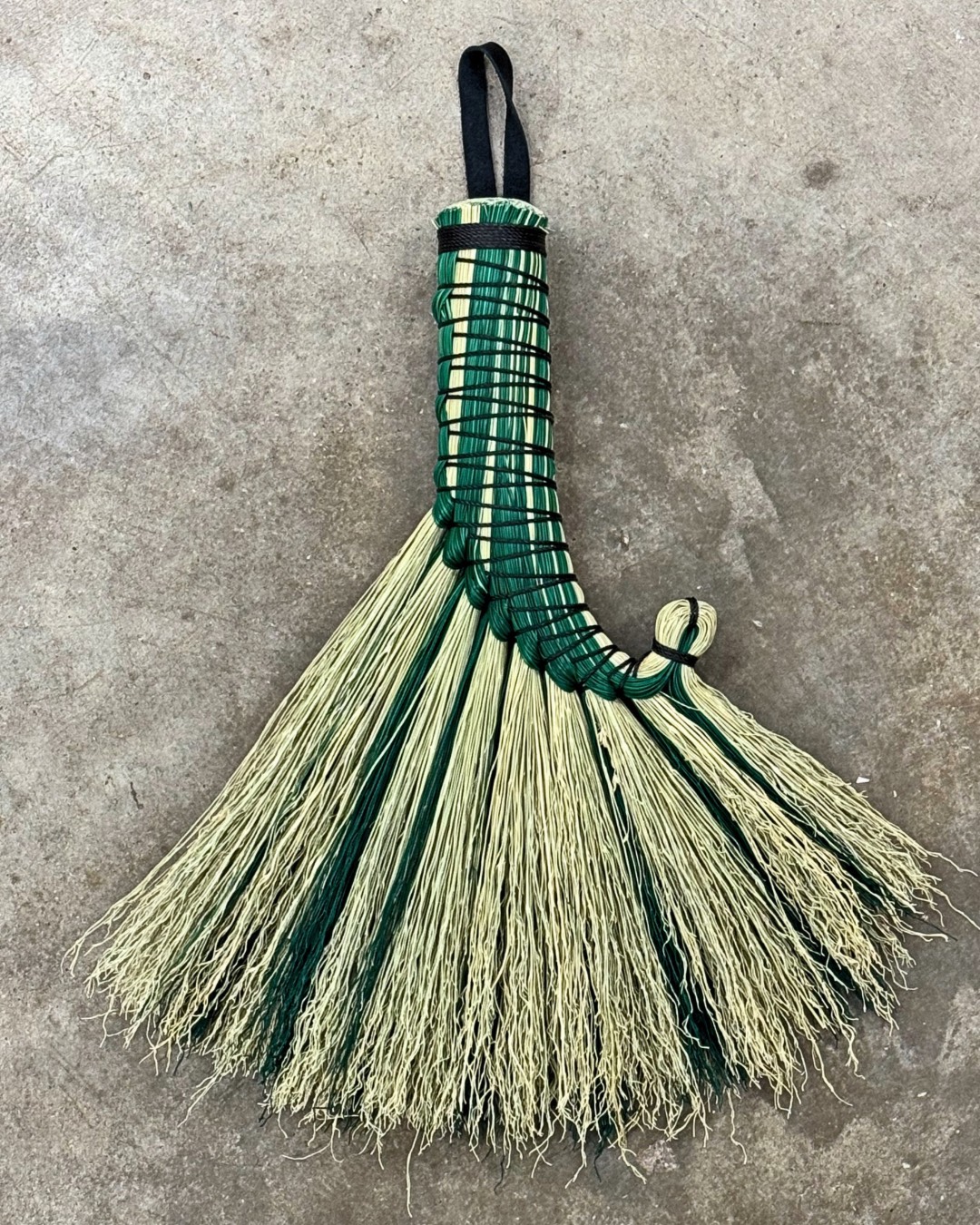
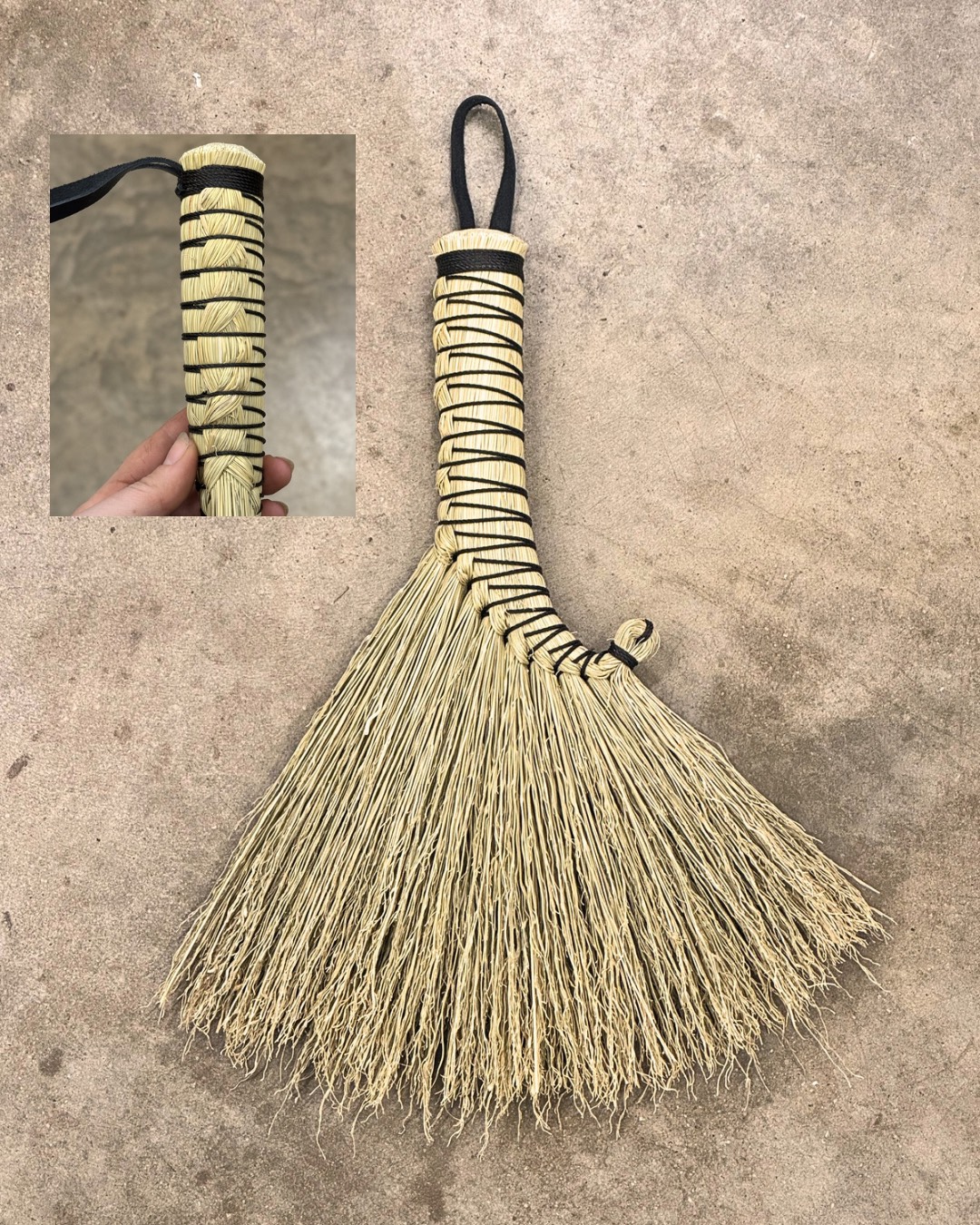
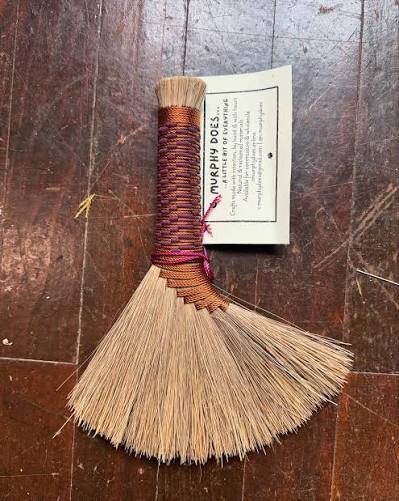
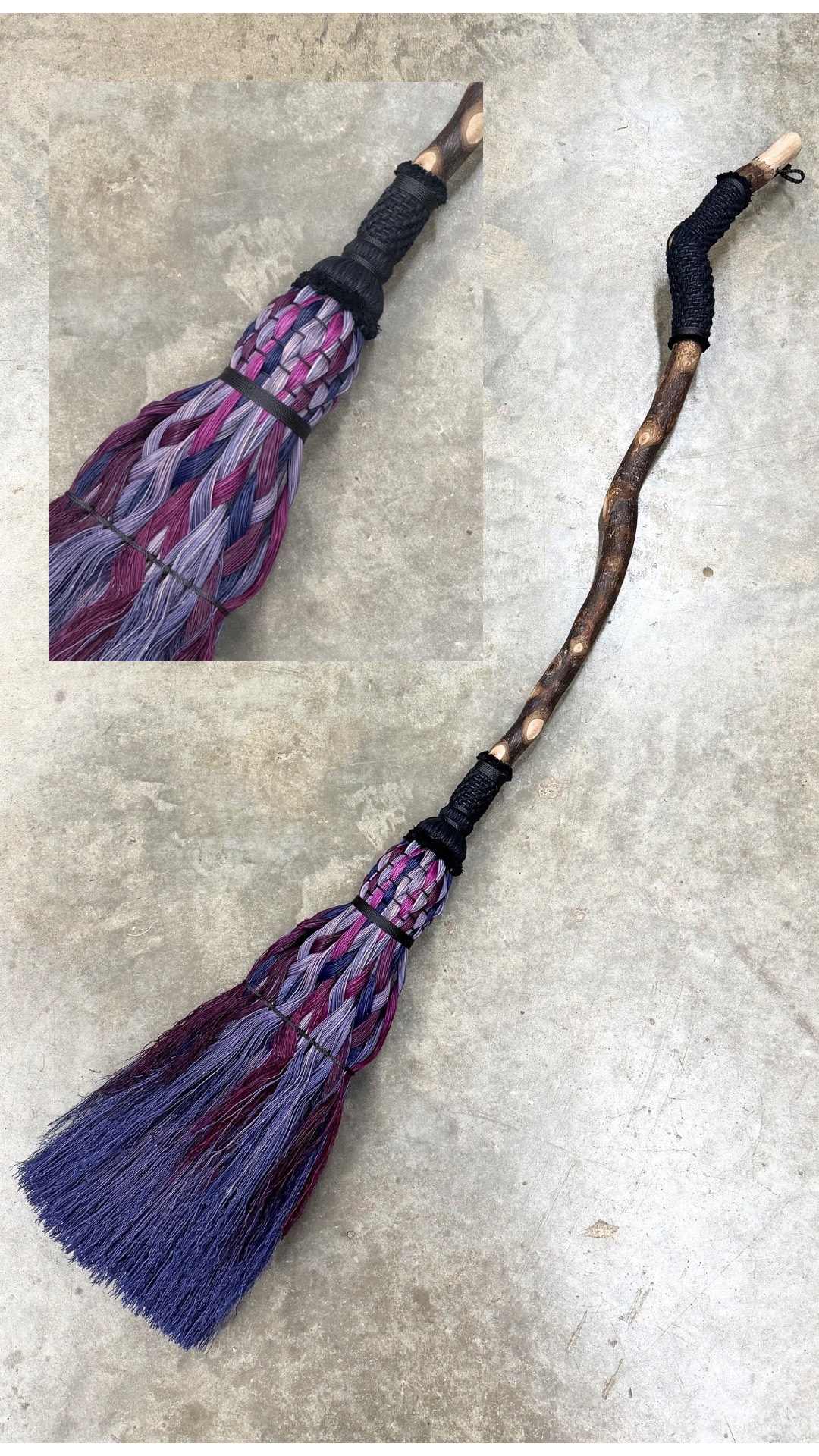
A few examples of what could be made in class.
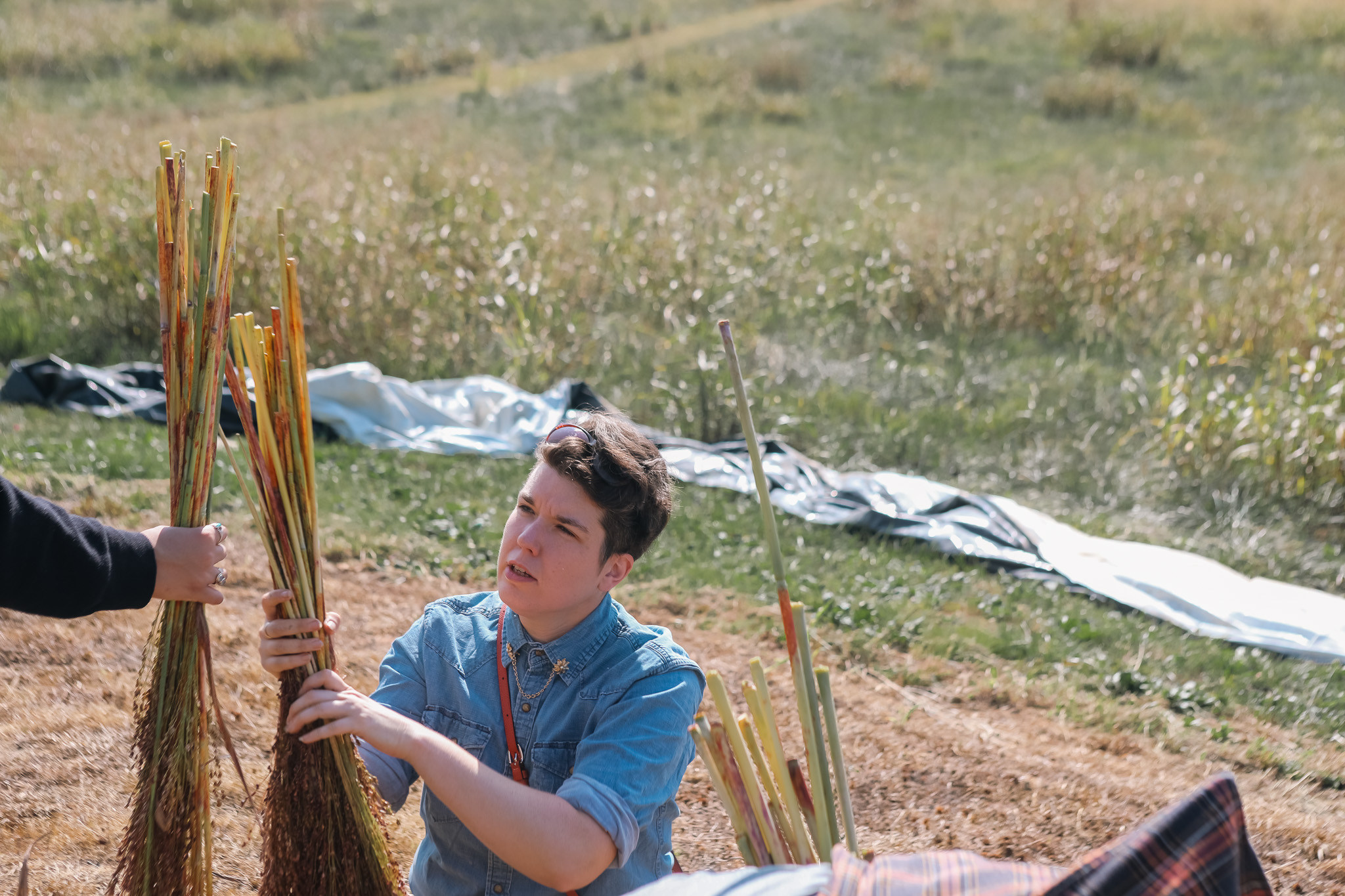
C. Murphy in one of their classes during their time as a work-study here on campus.
JCCFS: What is your favorite aspect or part of the Folk School? What do you most look forward to when coming back to teach on our campus?
CM: The Folk School is where I participated in my very first craft workstudy program in 2023 and holds a very special place in my heart. I’ve returned as often as possible for fall festivals (I’ll be vending again this year!), to assist classes, and as a student host in 2024. It’s where I learned how to make brooms, lit my first coal fire, made my first lace, and had so many magical experiences in the studios and grounds. After having taken over a dozen classes at the folk school as a student and assisted three, I am honored and so incredibly excited to return as an instructor and give back to this beautiful community in a new way.
JCCFS: Where do you draw inspiration from for your work?
CM: I refer to my work as “place based.” I am inspired by my natural surroundings and the histories of their relationships with humans. Materials respectfully foraged and cultivated often direct the medium and content of my work, and a fascination with anthropology has directed my often meandering explorations of craft.
JCCFS: What’s one piece or craft object you’ve made recently that you are proud of, and why?
CM: I am very proud of my Berea Broomcraft Fellowship Capstone Project, titled the Witches’ Broom; it’s a large broomcorn sweeper made from stalk-on broomcorn, woven into a traditional cap and stitched flat. The broom and handle feature mistletoe “growths”- brass wire for the branches, cut and embossed reclaimed drink cans for the leaves. It was inspired by the numerous mistletoes I saw once I arrived to Kentucky in deep winter, and everything I learned about the plant when I looked deeper into it’s biology, relationships with other plants and animals, and superstitions around the plant. A particularly large grouping of mistletoe is referred to as a witches’ broom in some regions of North America.
JCCFS: What tips would you give a student or aspiring craftsperson? Anything you wish you had known earlier in your career?
CM: There are ways to gain access to learning opportunities and studio facilities that don’t require money – and it’s never too late to try. I was in my 30’s when I started doing craft work studies after being unable to afford workshops and not knowing how to access that kind of knowledge on my own. Apply for things even if you don’t know if you can make it work, or assume you’ll be rejected – you’d be surprised. Ask questions that seem audacious, like, “Is there anything I can trade you for regular access to your forge/workshop/tool?”–”No” isn’t a death sentence, and the more comfortable you are hearing and saying it, the more opportunities will come your way.
JCCFS: Where can folks find you if they want to stay up to date on your work?
CM: I’m most active on instagram: @c.murphydoes, where you can find a lot of information about upcoming classes. You can also check out my portfolio, in-depth CV, and more info at my website: cmurphydoes.art
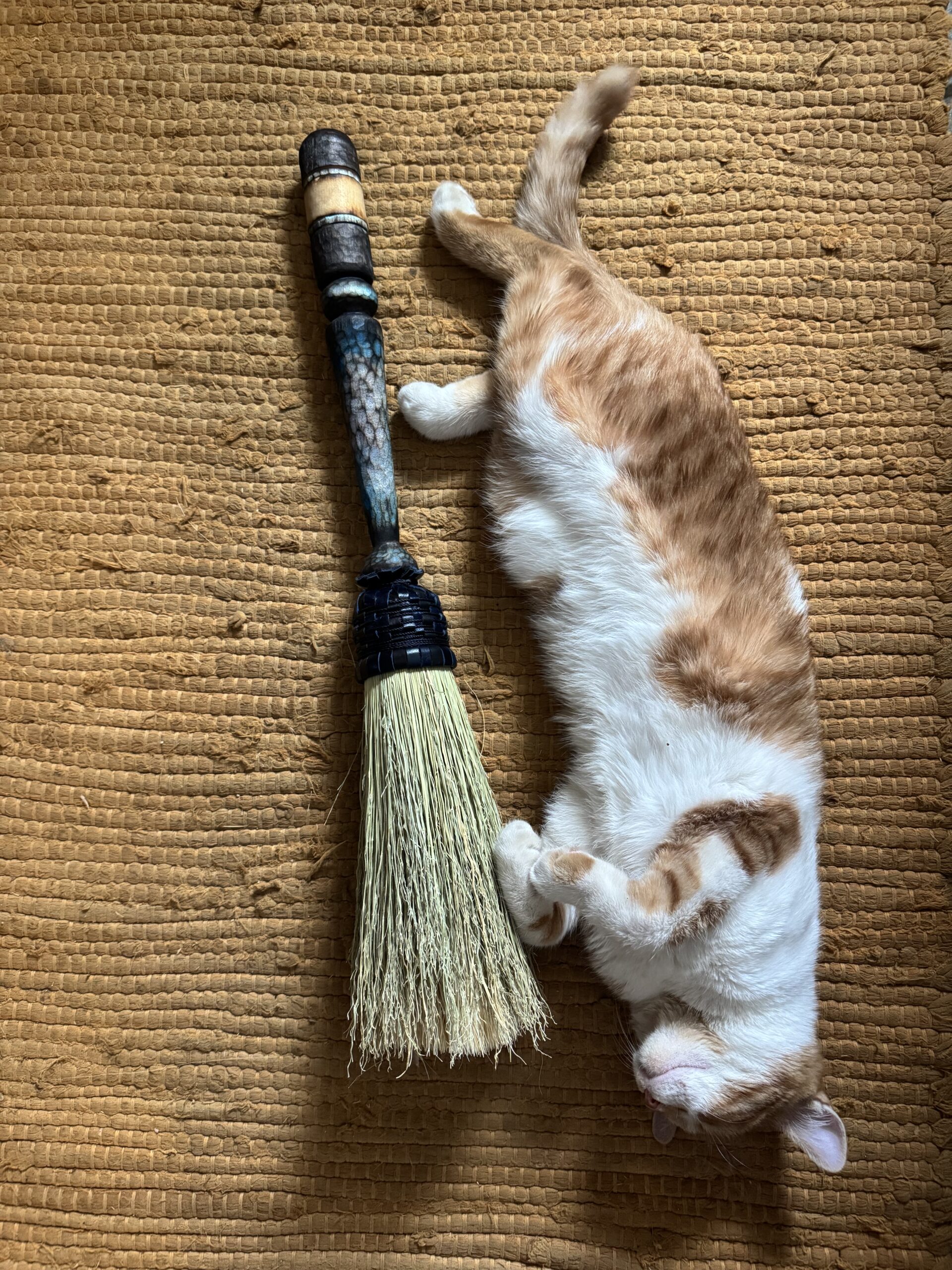
Upcoming Class with C. Murphy
Practical Magic–Bringing Broom Making Home
No Comments