

17 Jul A Beginner’s Guide To Fiber Arts: Weaving, Spinning, And Beyond
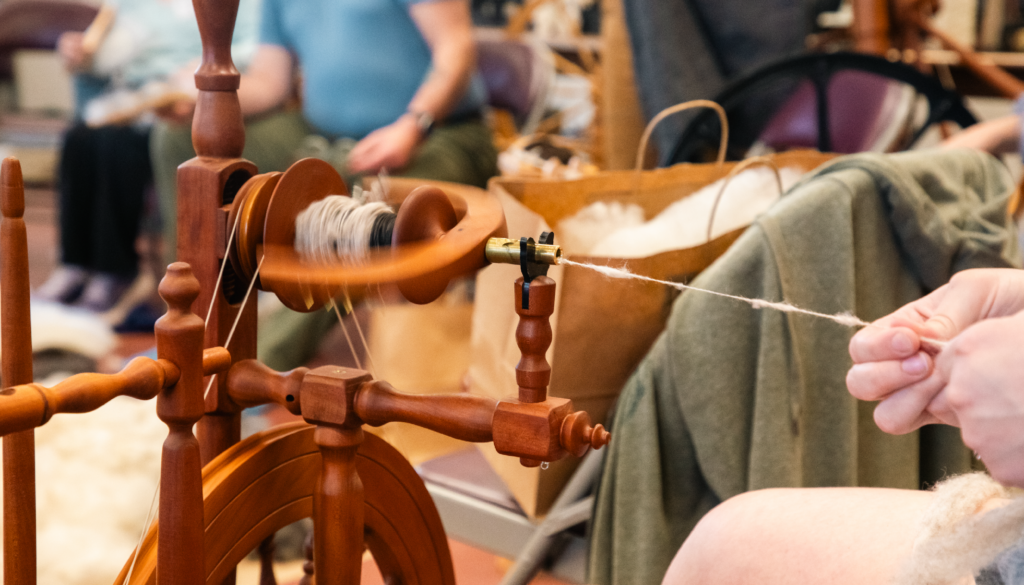
Fiber arts is a broad term for any craft that works with natural or synthetic fibers to create textiles, objects, or art. Wool, cotton, linen, silk, and plant-based materials all fall into this world. No experience is required to get started, and the learning curve is gentler than most people expect.
Many people are drawn to fiber arts for their calming, tactile nature and the satisfaction of making something from scratch. Classes offering fiber arts for beginners provide step-by-step instruction in foundational techniques such as spinning, weaving, dyeing, and stitching, helping students build confidence as they work with natural materials and learn time-honored craft traditions.
Weaving: The Ancient Art Of Interlacing
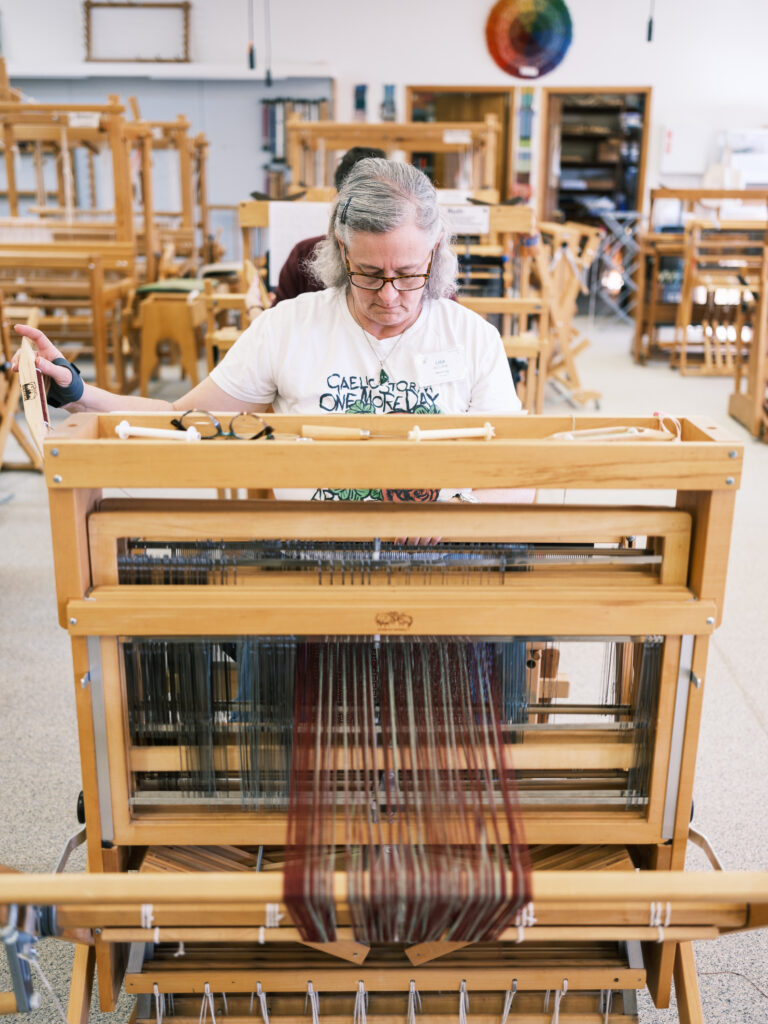
Weaving is one of the oldest crafts, and it’s just as compelling today as it was thousands of years ago. At its core, weaving means interlacing two sets of threads (the vertical warp and the horizontal weft) on a structure called a loom.
For anyone curious about learning to weave, it’s a surprisingly accessible craft. Visible progress happens quickly, and beautiful results like scarves, placemats, and wall hangings are well within reach from the very first lesson.
What draws people in is the rhythm. Weaving has a meditative quality, with every pass of the shuttle building toward something tangible and useful. Visible progress happens quickly, which makes it enormously satisfying for new makers.
Spinning: Turning Raw Fiber Into Yarn
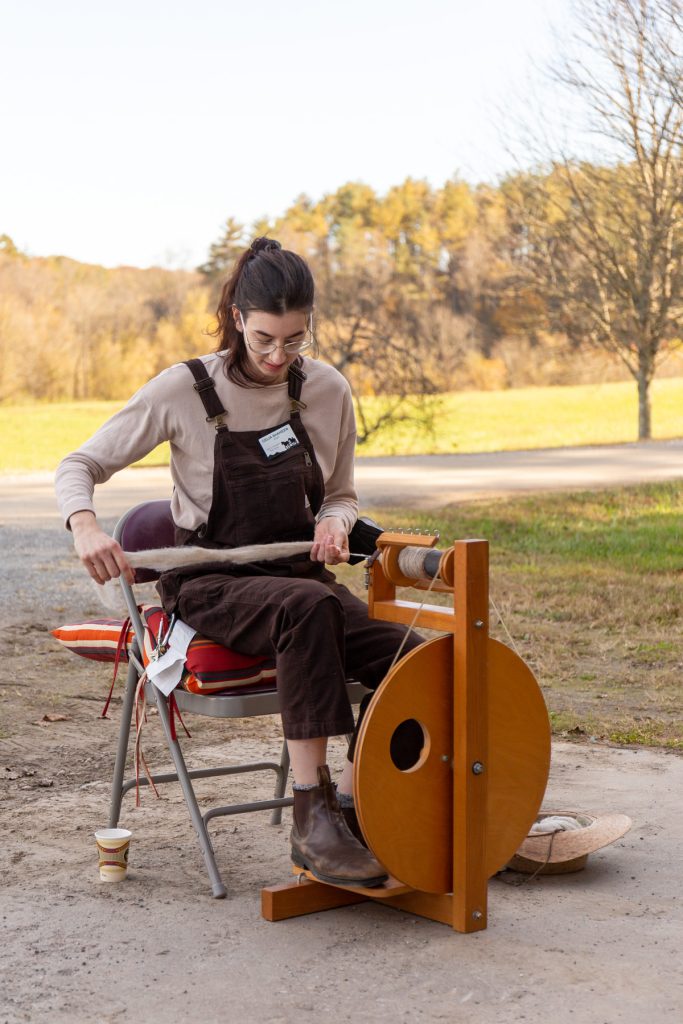
Spinning is the craft of twisting loose fiber into continuous yarn. Raw wool straight from the sheep, silky alpaca, and even cotton and flax can all be spun into usable thread.
Spinning and weaving share a natural kinship. Many weavers eventually learn to spin their own yarn, and many spinners weave with the yarn they spin. Together, they form the backbone of textile traditions around the world.
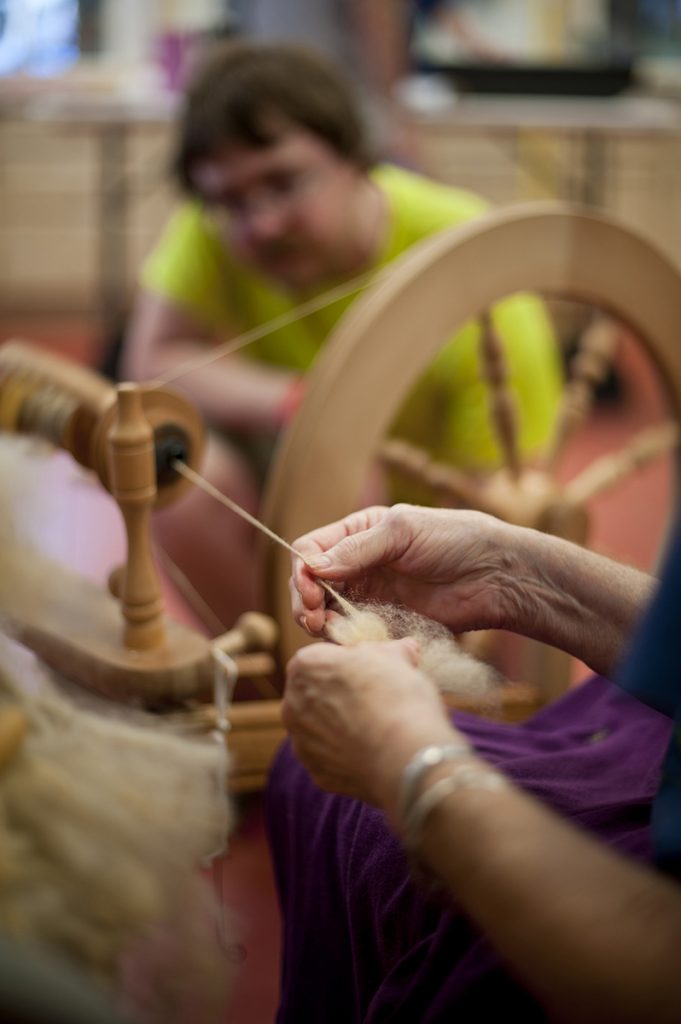
Beginners typically start with a drop spindle: a simple, weighted tool that requires no electricity and very little investment. Hand spinning yarn on a drop spindle teaches the fundamentals of twist and tension in a direct, hands-on way.
A spinning wheel is the next step for those who fall in love with the process. Wheels allow for faster production, and they come in a wide range of styles suited to different fiber types and preferences.
Spinning classes offer a hands-on introduction to transforming raw fibers into yarn, teaching beginners how to control twist, tension, and texture using traditional tools.
Other Fiber Arts Worth Exploring
Traditional fiber crafts cover a much wider territory than weaving and spinning alone. Once you start exploring, you may find yourself drawn to one of the following crafts:
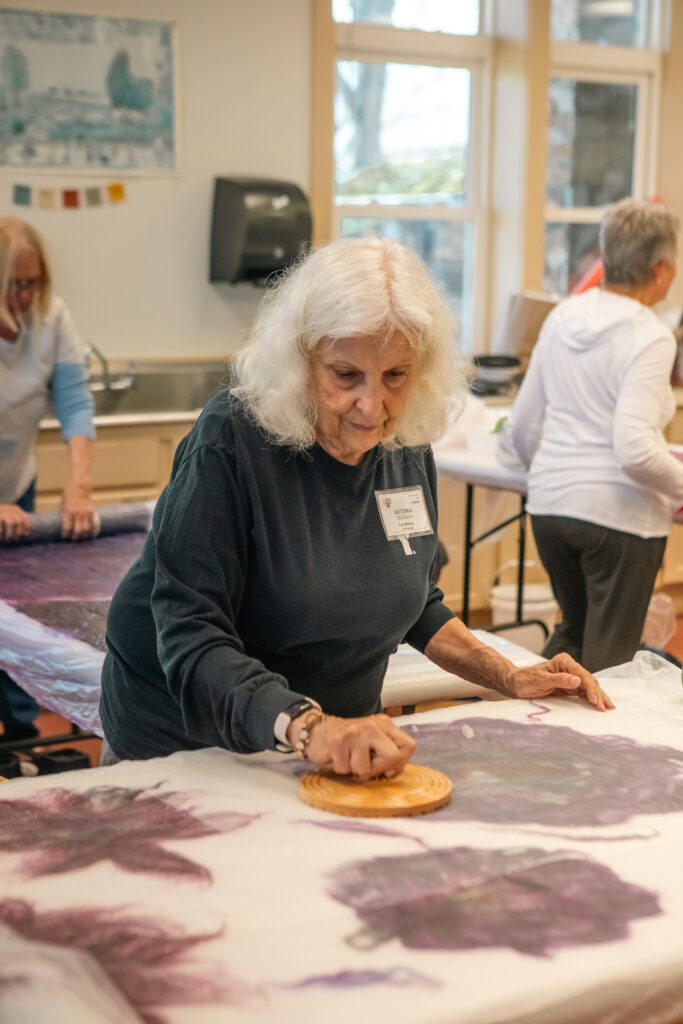
- Felting involves matting wool fibers together using heat, water, or barbed needles to create everything from sculptural forms to functional accessories.
- Rug making is a satisfying way to work with thicker fibers and create durable, heirloom-quality floor coverings.
- Needlework and embroidery involve stitching patterns and textures onto fabric using a needle and thread, with a rich variety of traditions to explore.
- Surface design includes dyeing, printing, and painting on fabric to create one-of-a-kind textiles.
Many of these crafts overlap, so learning one often opens a door to several more.
How To Get Started: Tips For Beginners
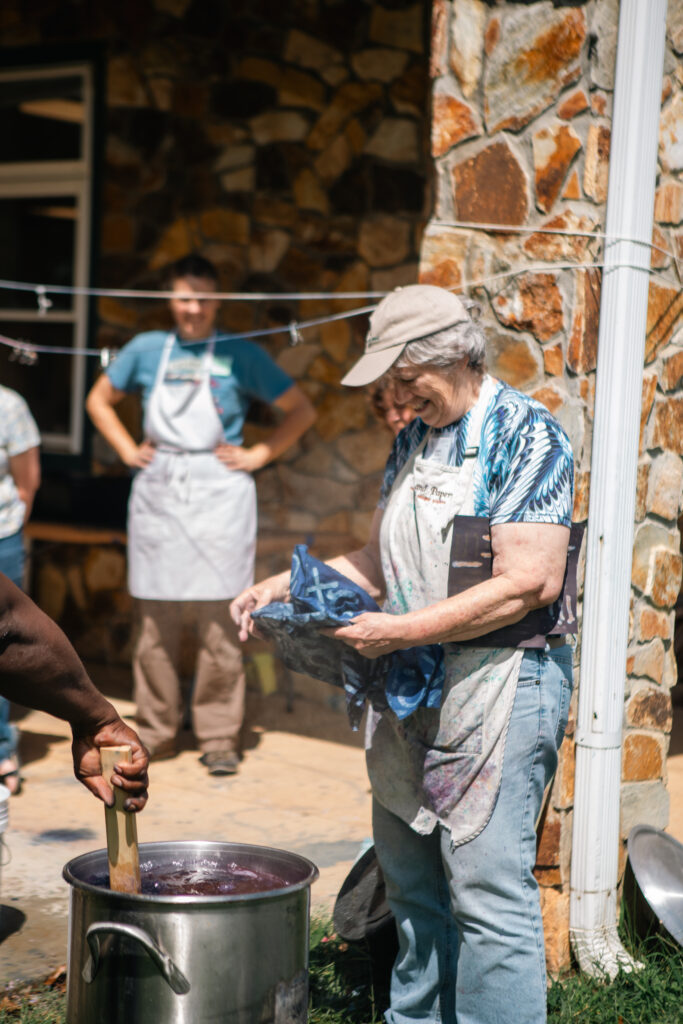
Fiber art workshops are one of the fastest ways to build real skills, because hands-on guidance from an experienced instructor shortens the learning curve considerably. A few other tips to keep in mind:
- Start small and focus. Start with one craft and one simple project before investing in a lot of equipment.
- Learn in person when possible. Look for small, in-person classes where you can ask questions and get immediate feedback.
- Find a community. Connect with a local guild or craft community for ongoing support and inspiration.
- Embrace imperfection. Every maker’s first attempts teach them something valuable.
Your Fiber Arts Journey Starts With A Single Thread
Fiber arts classes open the door to a world that is creative, communal, and deeply satisfying. Whether you are drawn to the structure of weaving, the rhythm of spinning, or the sculptural freedom of felting, there’s a fiber craft waiting for you.
The best time to start is simply whenever you’re ready. Find a class, pick up some fiber, and follow your curiosity.
About The John C. Campbell Folk School
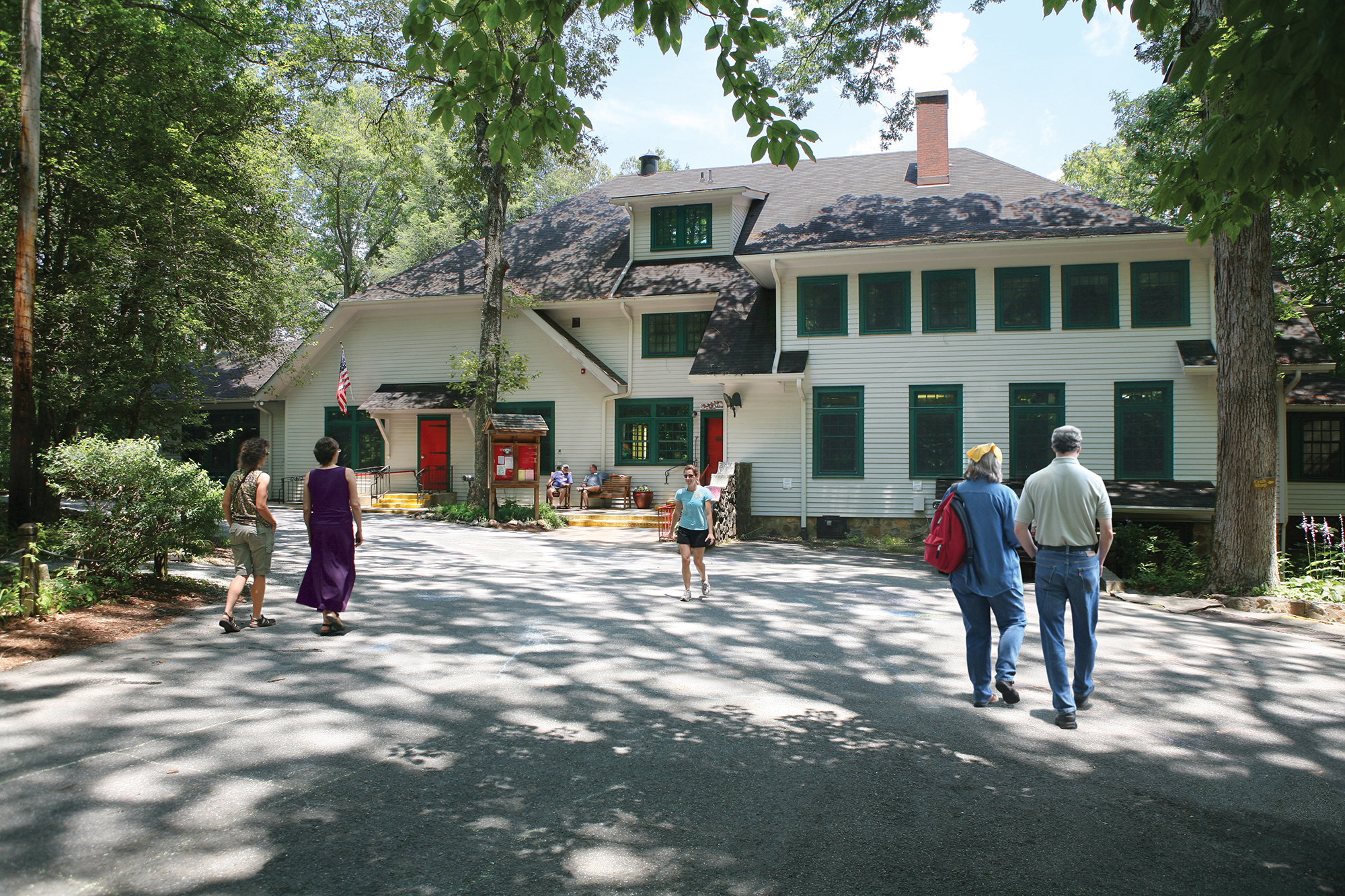
For 100 years, our mission has been to transform lives by bringing people together in a nurturing environment for experiences in learning and community life that spark self-discovery. We believe in the power of non-competitive, hands-on learning across more than 50 craft and art disciplines. From blacksmithing to basketry, music to woodworking, we create space for joy, kindness, and lifelong growth. Every year, we welcome over 6,000 students and 100,000 visitors to our historic campus in Brasstown, North Carolina.
Ready to discover something new? Find a class that speaks to you, or support our mission with a donation to help keep traditional crafts and community learning alive for generations to come.
No Comments