

11 Aug A Woolly Sampler – Felt it! Interview with Felt Making Instructor Beth Moss Aisenbrey
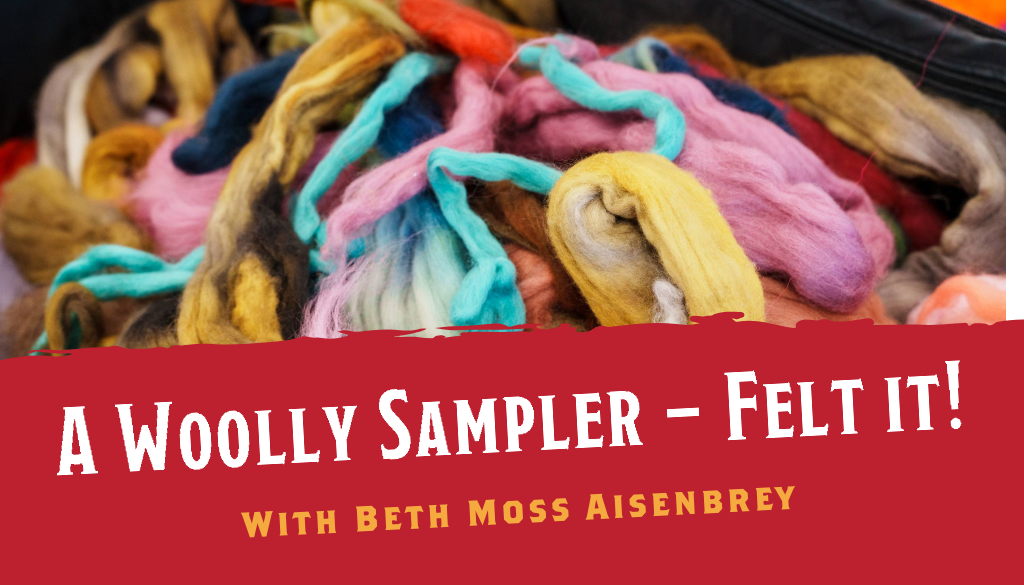
If you have been thinking of taking a class at the Folk School but weren’t sure which class to take, then A Woolly Sampler – Felt it! October 18–23, is for you.
Learn more about this Felt Making experience in our interview below!
JCCFS: Tell us a little about yourself. What’s your background in your medium? How did you get started?
BMA: I am a shepherdess breeding and caring for endangered Gulf Coast Native and Finn sheep on Cherokee land in East Tennessee. I began felting as a way to engage with the wool from my flock of sheep and quickly fell in love with the tactile nature of the work and the ability to create functional, utilitarian art pieces. My home is quite small, and I find it hard to keep making art that I want to display when there are so few walls to adorn. Felt making is an invitation to take your basic home goods and turn them into something personalized, creative, and maybe even a little experimental. The added joy is that you can consistently be touching and handling the art you have made, just enriching the connection already there. When I’m not with my flock or creating, I am a nature guide at a forest school working with children from ages 3 to 13. I get to share my passion for crafting with my students and also get to be consistently surprised and inspired by the creativity of the young people I am with.
JCCFS: Tell us more about your class’s specific technique or process
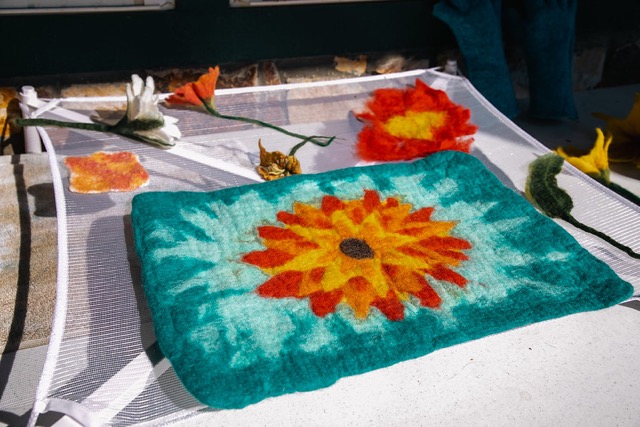
BMA: We will start the class with a lovely assortment of fiber from a spectrum of sheep. We get to talk shop about different wool choices for projects and will wet felt a sample of each breed to demonstrate how they felt (quick, slow, soft, scratchy, small, etc.) The wet felting technique uses warm water, soap, and friction/movement to take loose wool fibers and knot and bind them together into a cohesive, strong textile. Using our newly made samples, we will pair the right type of wool to our projects – a small and durable rug and a decorative ear warmer/neck cowl. As we work on our projects, we will expand beyond just wet felting to create felt, but will also learn how to use a needle to felt and to add decoration, and will learn the basics of nuno felting and moving the wool fibers between the weave of silk cloth as we felt.
JCCFS: What can students expect to leave your class with?
BMA: When you leave this felt making class, you will leave with the knowledge of how to go home and create your own felted piece on your own. You’ll know which fiber to choose for your projects, how to make your own pattern if you are creating something sculptural or 3D, and have the knowledge and confidence to decorate with an assortment of fibers, textiles, and goodies. But wait, there’s more! Along with your newfound knowledge, you will leave with the samples and pieces you made in class to accrue your knowledge. We will be making samples of 5 different sheep breeds to use as a reference for the different types of felt they make (the size to shrink to and the ease or difficulty with which they felt) as well as a small and durable rug and a nuno felted ear warmer/cowl.
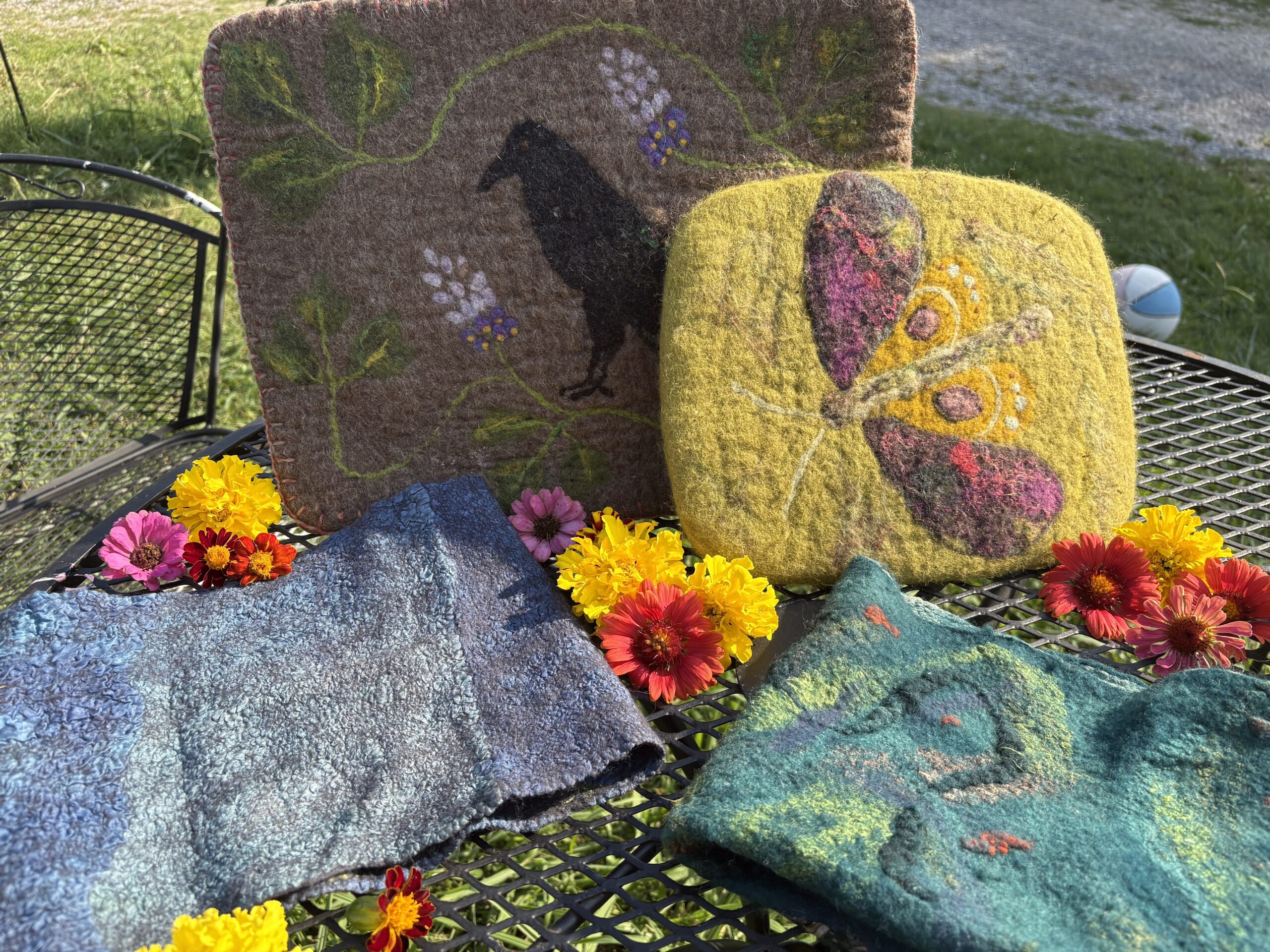
Examples of class projects!
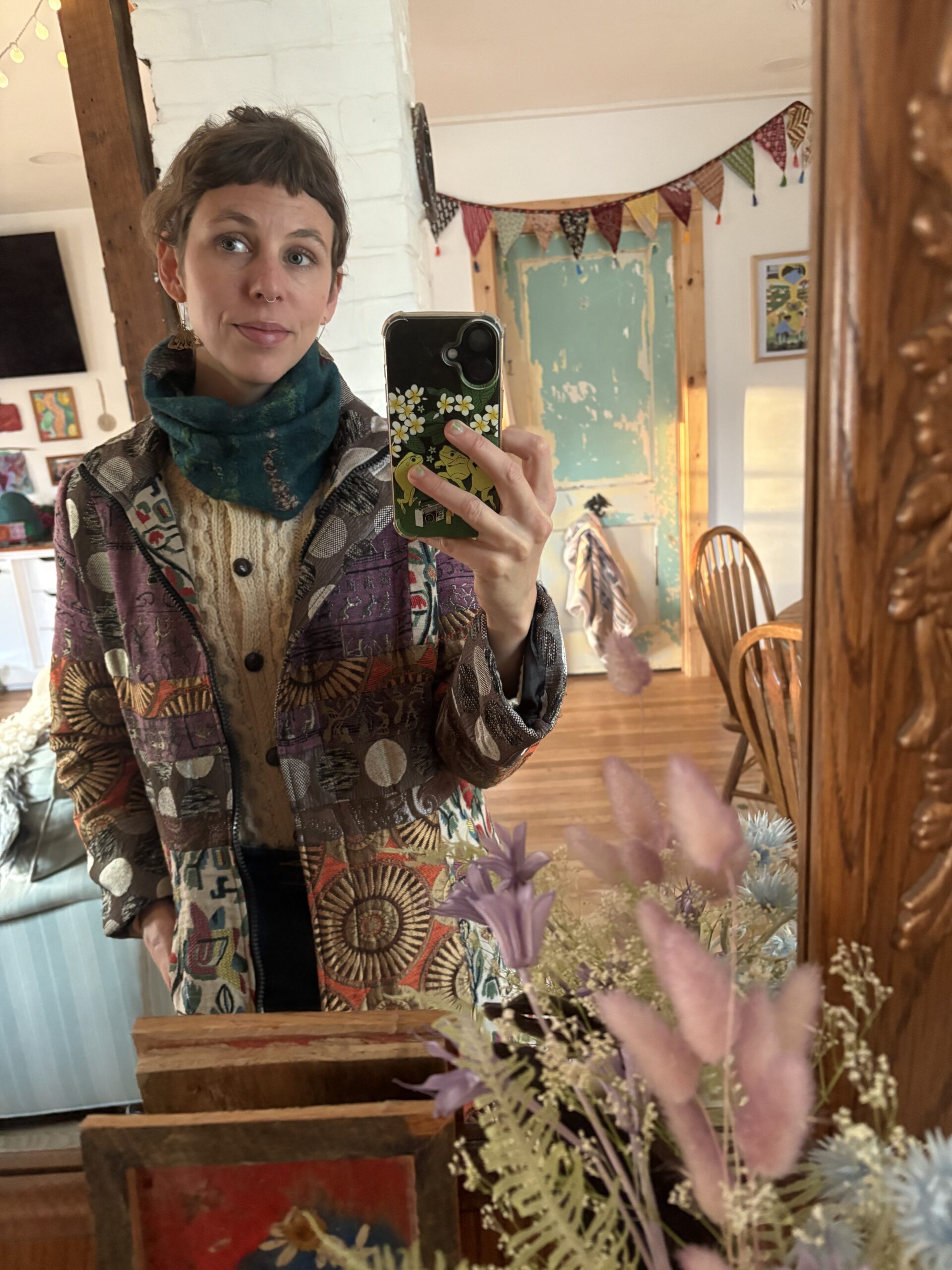
Instructor Beth Moss
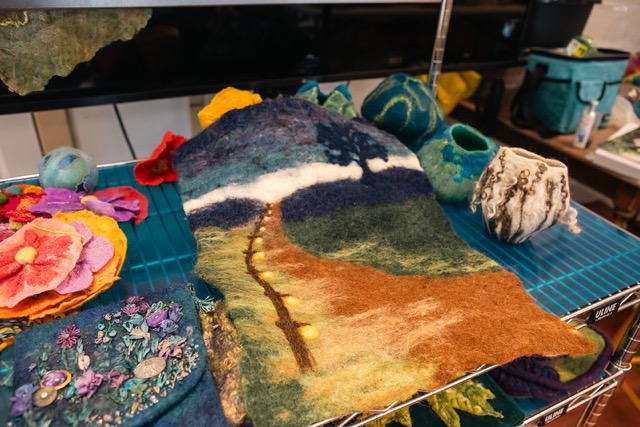
Examples of wet felt making from other Folk School classes.
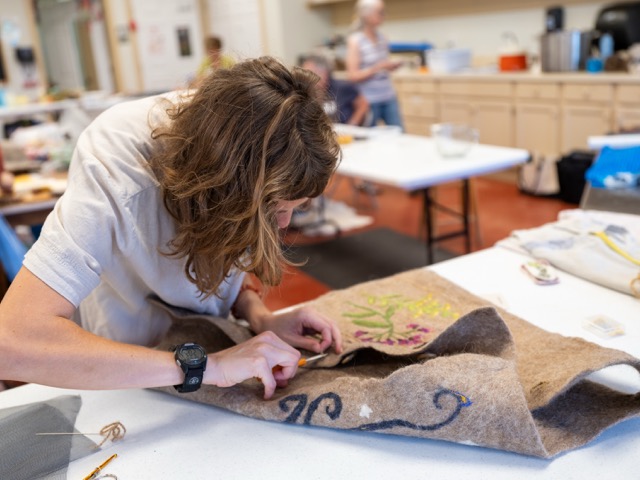
A student working on their felt project!
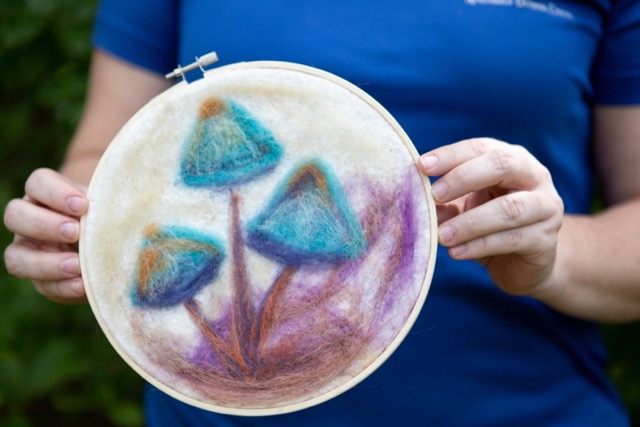
Finished felted piece!
JCCFS: What is your favorite aspect or part of the Folk School? What do you most look forward to when coming back to teach on our campus?
BMA:I first found my way to the Folk School when I was awarded a scholarship to take a class in Wet Felting with Becky Walker and Tasha Miller Griffith. I had been raising sheep for a few years but was struggling to learn wet felting using the internet alone as a teaching tool. Their class (and my first visit to the Folk School) felt like it was putting all the pieces of the puzzle together for me. The pieces of how to wet felt but also these pieces of being an artist. The creative energy at the Folk School is unlike anything I had experienced before and the community the school has created is warm, vibrant, and so accepting. It feels completely full circle to come back to the Folk School and to give back in a way to a place that has given me so much. They put a lot of trust in me to give me a scholarship and I have never taken it lightly. Learning felt making has been like finding a part of me that was missing and began such a fun adventure of creating and connection.
JCCFS: Where do you draw inspiration from for your work?
BMA: I gather much of my inspiration from the natural world around me, symbolism from my Celtic roots, and the creativity of children.
JCCFS: What’s one piece or craft object you’ve made recently that you are proud of, and why?
BMA: I recently made a small vest for my 4-year-old that is made from the lambs wool of one of my family’s favorite sheep named Sambucus, who was born on my farm. It’s a piece that really shows a lot of the progress I have made as an artist and the confidence I’ve gained but also really celebrates the connection to my flock. It also features a simple barn quilt and pink stars, which are very cute on a little 4-year-old and give her a big smile.
JCCFS: What tips would you give a student or aspiring craftsperson? Anything you wish you had known earlier in your career?
BMA: I have found that my favorite pieces are the ones I have planned the least. They are the ones where I am trying something new, letting go of expectations, or just experimenting. I often let my plans and anxiety get in the way of my own creativity and artistic flow, so for any other anxious creatives or perfectionists out there, I suggest that you get out of your own way every once in a while and remember to play and have fun in your creating.
JCCFS: Where can folks find you if they want to stay up to date on your work?
BMA: Instagram @HeyMoonFarm or HeyMoonFarmMatriarch
Upcoming Class with Beth Moss Aisenbrey
A Woolly Sampler–Felt It!
Meet the Instructor
Beth Moss Aisenbrey is a great lover of experimentation, play, and wool. Most of her time is spent teaching at a 100% outdoor forest school with 3-12 year olds, tending a small flock of heritage fiber sheep, and experimenting with wool and thread. Crafting with children brings together all her greatest joys as she gets to share her knowledge and skills, as well as be continuously inspired by their creative thinking, challenged by new ways of seeing the craft, and belly laughing through the process.
No Comments